CO-NELEMixing & Granulation
Across modern industrial manufacturing—ranging from ultra-high-performance concrete (UHPC) and advanced technical ceramics to lithium-ion battery slurry and refractory castables—the benchmark for material processing has shifted dramatically. Traditional static pan mixers and gravity drum agitators are rapidly being replaced by high-shear mixer granulators and planetary counter-current mixing equipment.
The core catalyst behind this transition is the demand for micro-homogeneity (Coefficient of Variation $CV < 3\%$) and precise granule size distribution (PSD). Industrial producers no longer just combine dry powders with liquid binders; they require simultaneous mixing, wetting, dispersion, and agglomeration within a single, highly repeatable process vessel.
Global demand for advanced industrial mixer granulators is expanding at a CAGR of >7.2% through 2030. Key growth drivers include global infrastructure modernization (requiring GFRC, UHPC, and precast elements), the rapid expansion of EV battery manufacturing facilities, and the high-yield production of proppants and refractories.
International procurement teams in North America, Europe, the Middle East, and Southeast Asia are increasingly sourcing specialized equipment from leading China mixer granulator manufacturers. By pairing German-inspired kinematic engineering with high-capacity Chinese manufacturing ecosystems, Chinese original equipment manufacturers (OEMs) provide unparalleled total cost of ownership (TCO) efficiency.
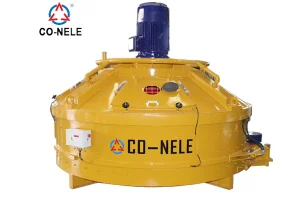
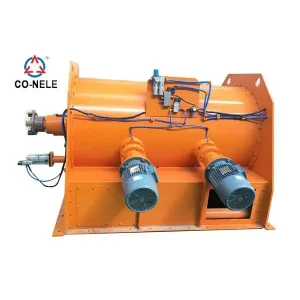
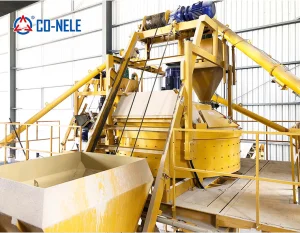
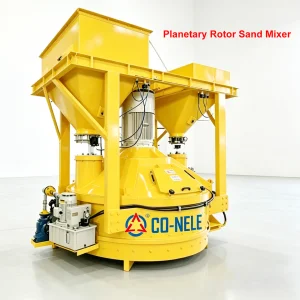
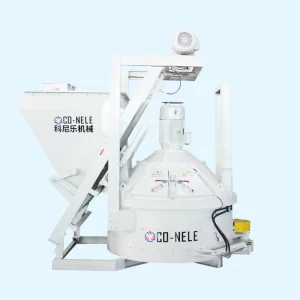
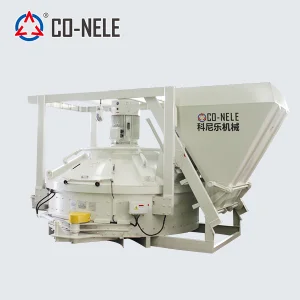
In vertical-shaft planetary mixers (such as the CMP series), mixing arms rotate around a central axis while simultaneously revolving rapidly in the opposite direction on their own planetary axes. This counter-current kinematic trajectory ensures that every square millimeter of the mixing pan is swept within seconds.
By eliminating dead zones at the pan perimeter and floor, planetary motion creates intense turbulent shear fields. Micro-fine silica fume, iron oxides, and fibers are completely dispersed, achieving homogeny in under 60 seconds.
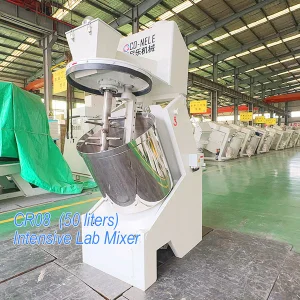
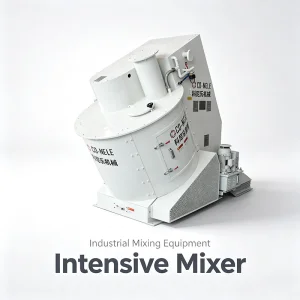
In specialized intensive mixer granulators, the mixing vessel is mounted at an incline and rotates at controlled speeds to transport material upward. Simultaneously, a high-speed rotor (operating at tip speeds up to 30 m/s) counter-rotates inside the moving material bed.
This separates the material movement from the mixing energy input. High shear forces break up agglomerates, while controlled Froude numbers ($Fr > 9$) induce immediate pellet nucleation, growth, and compact rounding (sphericity $>90\%$).
Granulation relies on precise binder fluid atomization. High-pressure liquid dosing nozzles feed atomized liquid into the fluid bed created by the rotor blades. Liquid bridge forces form green granules instantly without localized over-wetting.
Process parameters—such as pan inclination angle (typically $20^\circ-30^\circ$), pan speed, rotor velocity, and binder addition rates—are dynamically regulated via programmable logic controllers (PLCs) for precise batch-to-batch repeatability.
Engineering Rule of Thumb: Unlike conventional tumble granulators that take 20–40 minutes to form granules, forced-action intensive mixer granulators perform dry blending, liquid binder dispersion, pellet nucleation, and final grain rounding in a single vessel within 3 to 7 minutes total cycle time.
| Evaluation Parameter | Leading China Manufacturers (e.g. CO-NELE) | Legacy Western European OEMs | Standard Commercial Pan Mixers |
|---|---|---|---|
| Core Drive & Gearbox Engineering | In-house heavy-duty planetary gearboxes with high torque margin & hardened gears. | Proprietary gearboxes; high replacement part cost and extended lead times. | Standard commercial off-the-shelf single-stage speed reducers. |
| Wear Protection Metallurgy | High-chrome alloy liners (HB600+), tungsten carbide blade cladding, ceramic tiles. | High-chrome or composite tiles (extremely expensive aftermarket spares). | Basic AR400 or mild steel lining plates; rapid wear on abrasive mixes. |
| Process Versatility | Multi-industry design (UHPC, refractories, ceramics, battery slurry, dry mortar). | Rigid dedicated configurations; high cost for custom engineering modifications. | Limited to standard wet aggregate concrete batching. |
| Capex Investment Efficiency | Optimal Benchmark: 40% – 60% lower capital expenditure for equivalent capacity. | High capital investment premium driven by European overheads. | Low initial capital expenditure, but high operating cost due to frequent wear replacement. |
| Delivery Lead Time | 4 – 8 weeks standard production (backed by 30,000 m² scale bases). | 16 – 26 weeks standard lead time. | 2 – 4 weeks. |
The core component determining the operational lifespan of any planetary mixer or granulator is the speed reducer gearbox. Top Chinese manufacturers design and cast their own planetary reducers in-house. Utilizing advanced heat treatment, surface carburizing, and precision gear grinding, these gearboxes withstand severe torsional shocks from dry-mix startup and heavy refractory pastes.
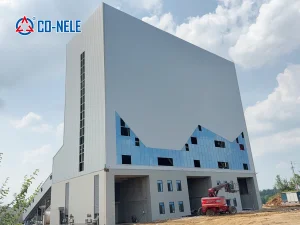
China's fully integrated industrial supply chain in Qingdao enables rapid customization of mixing vessel volumes (from 5-liter laboratory units to 6,000-liter industrial batch monsters), variable speed drives (VFDs), automatic high-pressure washing systems (CIP), atmospheric vacuum sealing, and heating/cooling jackets without blowing out budget constraints or project timelines.
In ceramic tile, oxide ceramic ($Al_2O_3, ZrO_2$), and proppant production, wet granulators replace energy-intensive spray drying towers. Powder mixtures combined with binder solutions are converted into dense, spherical granules with $>90\%$ sphericity, facilitating flawless flowability during dry pressing.
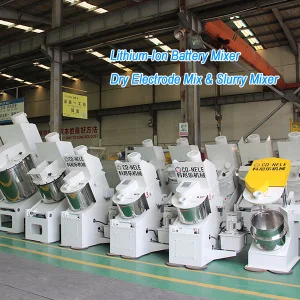
Battery slurry and dry electrode formulation demands complete micro-dispersion of conductive carbon black, active materials (NMC/LFP), and PTFE/PVDF binders. Explosion-proof intensive vacuum mixers guarantee zero agglomates and homogenous viscosity profiles before coating.
Ultra-High Performance Concrete requires dispersing micro-silica fume powders and up to 3% volume steel or glass fibers without clumping (balling). Planetary counter-current mixers provide intense shear to unlock binder reactivity, yielding compressive strengths exceeding 150 MPa.
High-alumina, silicon carbide, and magnesite castables severely erode standard mixers. Intensive mixers equipped with armored chrome liners and ceramic scrapers homogeneously distribute micro-liquids in dry refractory grains within 45 seconds while resisting extreme abrasion.
Glass raw materials (quartz sand, soda ash, limestone, cullet) must be thoroughly wetted and blended without segregation before entering the melting furnace. Granulating mixers optimize batch bulk density, reducing furnace dust carryover and cut fuel usage by up to 10%.
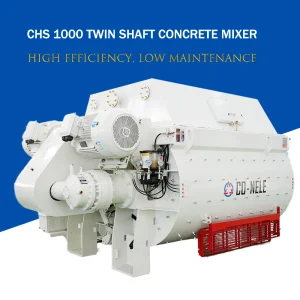
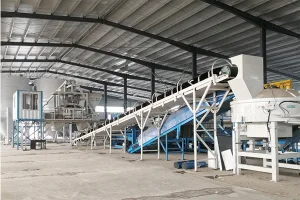
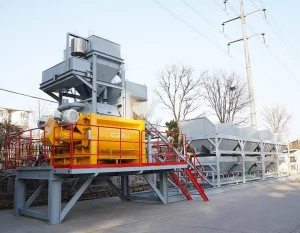
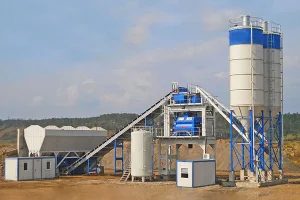
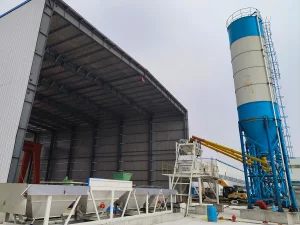
For tile adhesives, self-leveling screeds, and precast block plants, single/twin-shaft compulsory mixers and batching plants ensure exact aggregate grading and instant chemical additive dispersion for consistent batch yield.
Real-time optical and microwave sensors embedded directly in the mixer pan floor measure material moisture levels at 100 readings per second. The automated dosing controller dynamically regulates water/binder injection to hit exact target moisture content within $\pm 0.1\%$ accuracy.
By constantly analyzing drive motor current draw and inverter torque output, the mixing PLC calculates rheological evolution in real time. The batch process automatically transitions from mixing to granulating or discharging exact rheological endpoints without manual sampling.
Vibration signatures, bearing temperature probes, and oil quality sensors feed data to cloud IoT dashboards. Plant operators receive proactive notifications for gearbox oil changes and wear liner replacements, preventing catastrophic unscheduled downtime.
Define bulk density ($kg/m^3$), particle size distribution (PSD), abrasive index, and moisture sensitivity. Select mixer volume based on standard cycle times (typically 1.5 to 3 minutes per batch) to meet required hourly plant output ($m^3/h$ or tons/hour).
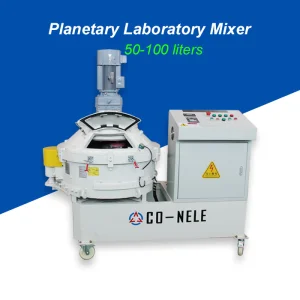
Always request pilot laboratory testing before finalizing equipment contracts. Send 20–50 kg of raw material samples to the factory testing lab in Qingdao to verify granule sphericity, density, binder consumption, and exact scale-up factors from 5-liter lab units to 3,000-liter production units.
Specify local power requirements (e.g., 380V/50Hz, 415V/50Hz, 480V/60Hz) and demand CE certification, ATEX explosion-proof compliance (for organic solvent or dust environments), and ISO9001 factory quality audit documentation.
Confirm that the manufacturer maintains interchangeable spare parts stock (mixing blades, scrapers, liner plates, discharge gate seals) and provides detailed 3D exploded assembly drawings along with English installation/maintenance manuals.