
CO-NELEMixing & Granulation
Explore our core industrial batching, mixing, and granulating equipment engineered for dry mortar, refractories, diamond powders, and high-performance concrete.
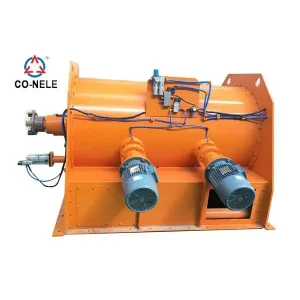
China Single shaft dry mortar mixer Manufacturer, Factory
View Details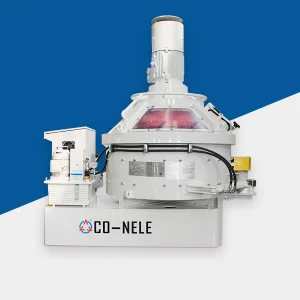
China Laboratory Refractory Mixer Factory, Machine
View Details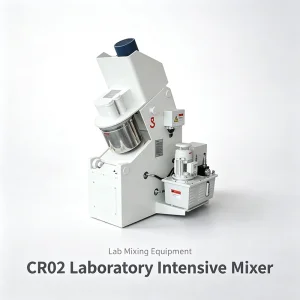
China Diamond Powder Granulator Manufacturer, Factory
View Details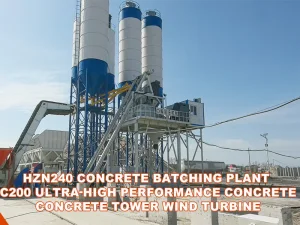
China UHPC Batching Plant for Precast Concrete Wind Turbine Towers Manufacturer, Factory
View Details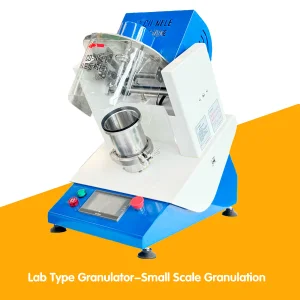
China Misturadores Intensivos de Laboratório CEL1 Manufacturer, Factory
View Details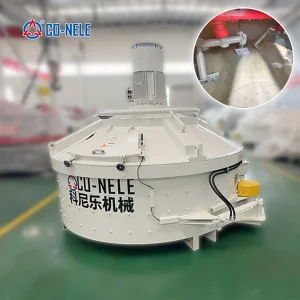
China CMP1000 Planetary Concrete Mixer Factory, Machine
View Details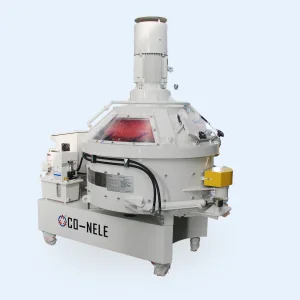
China MP100 Planetary concrete mixer Factory, Machine
View Details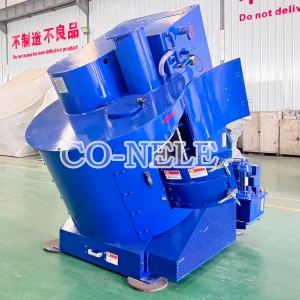
China Intensive Mixer Granulator Manufacturer, Machine
View DetailsUnderstanding the forced-action mixing principles, fluid-dynamic shear stresses, and mechanical design optimizations that drive modern intensive mixers.
The structural core of the RV 19 system relies on a rotating mixing pan combined with an eccentrically mounted high-speed rotor tool. By rotating the pan and the rotor tool in opposing directions (or synchronized counter-current vectors), material streams are subjected to intense velocity gradients. This completely eliminates dead zones, ensuring 100% material circulation per batch revolution.
Unlike standard horizontal or purely vertical mixers, the inclined pan geometry utilizes gravity to continuously feed material into the rotor’s high-shear zone. As material travels upward along the rotating pan wall, it reaches a peak trajectory and falls directly into the high-energy mixing rotor, vastly increasing dispersion speeds while lowering energy consumption per metric ton.
By decoupling the tool speed from the pan speed, operators can independently adjust energy input. High rotor speeds disassemble agglomerates, break down ultrafine silica fumes, and homogenize micro-additives, while low pan speeds handle gentle transport. This micro-shear capability is essential for delicate ceramic matrix composites and battery cathode slurries.
Comparing high-intensive inclined mixer parameters against traditional horizontal twin-shaft and planetary pan configurations.
| Performance Metric | China Eirich Mixer RV 19 / Intensive Class | Standard Planetary Mixer | Twin-Shaft Compulsory Mixer |
|---|---|---|---|
| Mixing Mechanism | Inclined Rotating Pan + High-Speed Rotor | Vertical Axis Planetary Stars | Dual Horizontal Counter-Rotating Shafts |
| Homogeneity (CV) | < 1.5% to 3.0% (Micro-level) | 3.5% - 5.0% | 5.0% - 8.0% |
| Tool Speed Range | 2.0 m/s to 40.0 m/s (Variable) | 1.5 m/s to 5.0 m/s (Fixed/Limited) | 1.2 m/s to 3.5 m/s |
| Dry/Wet Granulation | Capable in Single Step (0.1 - 6mm) | Not Designed for Granulation | Impossible (Mass Agglomeration) |
| Energy Density Transfer | High (up to 120 kW/m³) | Medium (30-50 kW/m³) | Low-Medium (20-35 kW/m³) |
| Discharge Efficiency | > 99.5% Residual-Free Bottom Gate | 97.0% - 98.5% | 95.0% - 97.0% |
| Abrasive Wear Protection | Tungsten Carbide / High-Chrome Liners | Ni-Hard / High-Chrome Cast Irons | Standard Hardened Steel Plates |
Deploying targeted intensive mixing technology across advanced material manufacturing, chemical synthesis, metallurgical processing, and heavy construction.
Precision mixing of carbon-bound refractories, alumina-silica monolithics, and silicon carbide formulations. The intense shear disaggregates micro-fumes and ensures uniform distribution of liquid binders (resins/water glass) at minimal liquid ratios, maximizing cold crushing strength (CCS) and thermal shock resistance.
Processing NCM/LFP precursors and synthetic graphite compounds requires clean, contamination-free processing. Specialized Chinese intensive mixers utilize non-metallic ceramic linings (polyurethane, zirconia, or Si3N4) alongside nitrogen inerting systems to prevent cross-contamination and dust explosion hazards.
In powder metallurgy, uniform distribution of lubricants (wax/stearates) with iron, copper, or tungsten powders is critical for press-density consistency. Intensive granulating mixers convert fine oxide dusts and fly ash into spherical pellets with controlled bulk densities suitable for electric arc furnaces.
UHPC recipes incorporate steel micro-fibers, nanosilica, and low water-cement ratios (w/c < 0.18). The high energy density of the intensive mixing tool breaks down self-desiccating agglomerates, fully dispersing steel fibers without clumping or balling effects.
Encapsulating hazardous industrial sludges, toxic heavy metal ash, and nuclear waste materials into stable cementitious matrices. Rapid dispersion of chemical reagents stabilizes contaminants within seconds before setting occurs.
Uniform blending of quartz sand, soda ash, limestone, and micro-colorants. Pre-wetting liquid dosing within the intensive mixer prevents dust stratification during pneumatic transport to the melting furnace, cutting energy consumption by up to 8%.
Ensuring seamlessly integrated manufacturing solutions backed by international standards, local voltage adaptation, and complete life-cycle support.
Chinese intensive mixers tailored for export markets adhere strictly to CE Directives (2006/42/EC), UL/CSA electrical standards, and ATEX explosion-proof guidelines (Zone 20/21/22) for combustible dust atmospheres. Pressure vessels comply with ASME Section VIII and PED certification.
Systems are custom-built with global multi-voltage transformers accommodating 220V, 380V, 415V, 440V, and 480V grid frequencies (50Hz / 60Hz). Siemens S7-1500 or Allen-Bradley ControlLogix PLCs with multi-lingual HMI interfaces ensure effortless operator adoption in Europe, North America, and Southeast Asia.
To eliminate downtime, critical wear parts (pan scrapers, rotor blades, bottom discharge seals) are precision-machined using standardized ISO bolt profiles. Spare parts are stocked in regional service centers across North America, Europe, and the Middle East, guaranteeing 48-hour dispatched delivery.
Architecting the next generation of smart manufacturing systems powered by dynamic rheological sensing, AI batch optimization, and energy recuperation.
Next-gen intensive mixers integrate contactless microwave moisture sensors and drive-shaft torque telemetry. By measuring instantaneous viscosity and shear resistance changes inside the pan, the PLC dynamically adjusts rotor RPM to match targeted mix plasticity without stopping the cycle.
Cloud-connected IoT modules map real-time vibration, bearing temperature, and gearbox load onto a Digital Twin simulation model. Algorithms predict liner wear rates and signal preventive maintenance alerts weeks before mechanical failure occurs, boosting overall equipment effectiveness (OEE).
Transitioning from traditional V-belt drive gearboxes to direct-drive permanent magnet synchronous motors (PMSM). This architecture reduces mechanical friction loss by 14%, provides instant high-torque starting capabilities under full batch loads, and regenerates braking energy back to the plant grid.
Detailed technical answers addressing common structural, operational, and procurement queries regarding intensive industrial mixers.
Standard vertical pan mixers rely purely on planetary gear rotation at lower velocity. An inclined intensive mixer positions the rotating pan at an angle (typically 20° to 30°) and introduces an independently driven high-speed rotor tool. Gravity delivers material continuously to the rotor, allowing high-shear mixing, micro-dispersion, and controlled granulating within significantly shorter cycle times (often 60 to 120 seconds per batch).
Chinese manufacturers leverage integrated industrial supply chains (in-house reducer casting, CNC machining, and automated hard-facing welding) to reduce initial capital expenditure by 30% to 50% compared to Western OEMs. Concurrently, standardized non-proprietary wear components and highly efficient direct-drive motors minimize long-term power consumption and replacement parts expenses.
Yes. By adjusting the tip speed of the mixing rotor and regulating binder liquid injection, the machine transitions seamlessly from micro-homogeneous dry mixing to wet agglomeration and sphere building. Granule sizes between 0.2 mm and 8 mm can be achieved with high sphericity (>90%) without requiring separate agglomeration discs.
For processing corundum, silicon carbide, or quartz-rich mixtures, pan walls and bottoms are fitted with interchangeable high-chrome iron liners (60-65 HRC) or tungsten carbide hard-faced plates. Mixing blades utilize thermal-sprayed ceramic coatings or brazed tungsten carbide tips, yielding service lifespans exceeding 100,000 batches.
Mixers intended for volatile powders are equipped with ATEX/IECEx certified explosion-proof motors, static grounding brushes on main shafts, nitrogen gas purging seals, dynamic pressure relief valves, and burst disc ports to meet strict industrial safety compliance.
Explore our full range of heavy-duty batching plants, asphalt batching solutions, and specialized lab pelletizing mixers.
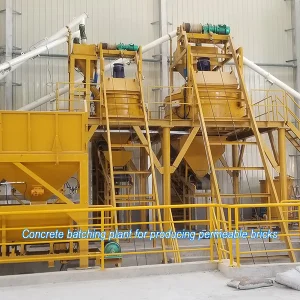
China CBP150 Concrete Batching Plant for producing permeable bricks Manufacturer, Factory
View Details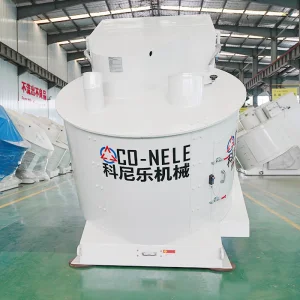
China Magnetic Material Granulator Factory, Machine
View Details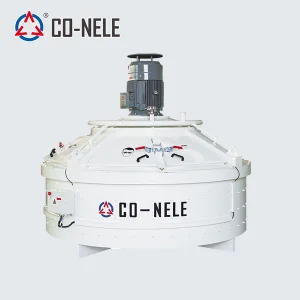
China Planetary Concrete Mixer Type CMP Manufacturer, Factory
View Details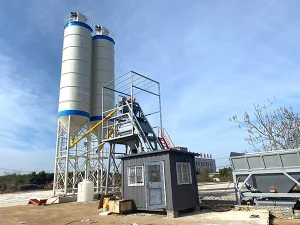
China 25m³/h Small Portable Concrete Batching Plant Manufacturer, Machine
View Details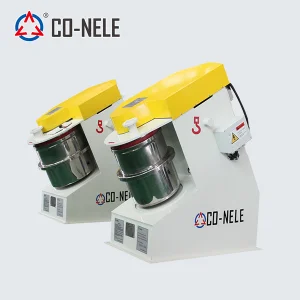
China CEL05 Granulating Pelletizing Mixer Factory, Machine
View Details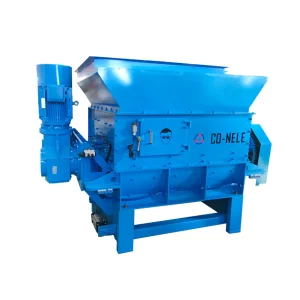
China AMS1200 Asphalt Mixers Machine Factory, Machine
View Details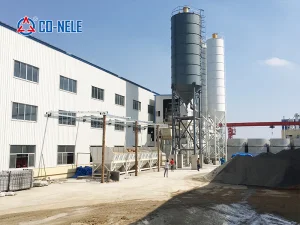
China CO-NELE Delivers High-Efficiency Concrete Pipe Mixing Station to Vietnam Factory, Machine
View Details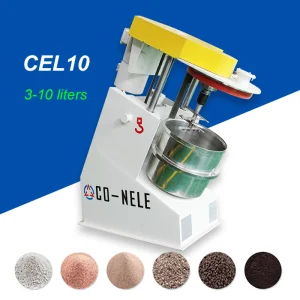
China Lab-scale Granulators type CEL10 Factory, Machine
View Details