CO-NELEMixing & Granulation
Directly engineered solutions tailored for high-volume ready-mix operations, precast pipe casting, UHPC infrastructure, and advanced material processing.
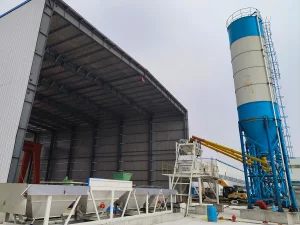
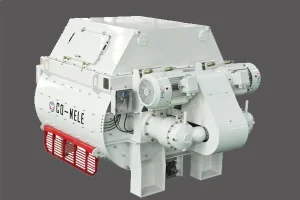
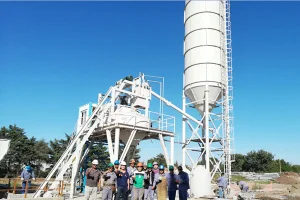
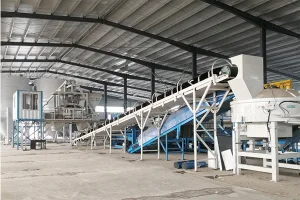
Understanding the cost structures, manufacturing dynamics, and market pricing factors driving concrete batching plant investments from Chinese manufacturers in 2026 and beyond.
When global EPC contractors, ready-mix producers, and precast concrete manufacturers evaluate China Concrete Batching Plant Price dynamics, looking strictly at the upfront Capital Expenditure (CAPEX) FOB figure is no longer sufficient. Enterprise procurement leaders require a holistic Total Cost of Ownership (TCO) perspective that factors in structural steel grades, mechanical drive efficiency, wear-part life cycles, automation compatibility, and local regulatory compliance costs.
Initial machinery acquisition accounts for only 15-22% of a plant's 10-year operational spend. High-efficiency mixing technology dramatically reduces electricity kWh per cubic meter and minimizes raw material cement over-dosing.
Fluctuations in high-strength structural steel (Q355B/Q235), specialized wear-resistant liners (Hardox, high-chrome alloy plates), and European standard electric motors (Siemens/SEW) govern baseline factory pricing.
Chinese machinery hubs like Qingdao integrate complete supply chains—from precision gearbox machining to intelligent PLC system assembly—delivering 30-45% cost efficiency compared to European OEMs.
Selecting the optimal batching plant configuration requires evaluating mixing kinematics, aggregate batching accuracy, and structural layout against product requirements.
| Plant Configuration | Ideal Applications | Mixing Mechanism | Batch Accuracy | Homogeneity (CV) | Typical Price Range (FOB China) |
|---|---|---|---|---|---|
| Planetary Counter-Current Plant | Precast elements, UHPC, GFRC, Block & Paver manufacturing | Vertical-shaft counter-current motion, zero dead angles | ±0.5% Cement / Water | < 3.0% (Micro-level) | $45,000 – $180,000 |
| Stationary Twin Shaft Plant (HZS Series) | Commercial ready-mix concrete, mega infrastructure (Dams, Bridges) | Dual horizontal shaft forced turbulence mixing | ±1.0% Aggregates | < 5.0% (Standard wet) | $55,000 – $380,000 |
| Compact / Foundationless Plant | Leased sites, remote civil works, fast relocation projects | Modular skip-hoist or inclined belt loading | ±1.0% Systemwide | < 5.0% (Standard wet) | $35,000 – $110,000 |
| Mobile Concrete Batching Station | Roadway paving, tunnel linings, emergency repair works | Towed chassis integrated aggregate bins & mixer | ±1.5% Portable scale | < 6.0% (Standard mix) | $28,000 – $95,000 |
| Continuous Asphalt & Dry Mortar Plant | Dry powder mortars, tile adhesives, asphalt surfacing | High-intensity ribbon or double spiral shaft rotor | ±0.2% Micro-additives | < 2.5% (Dry powder) | $40,000 – $220,000 |
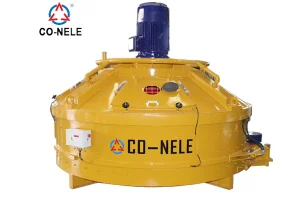
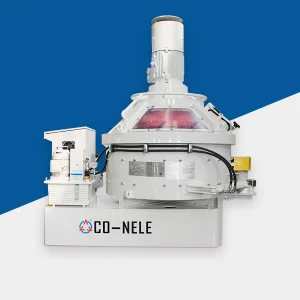
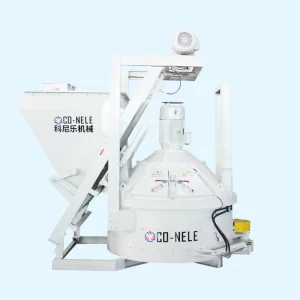
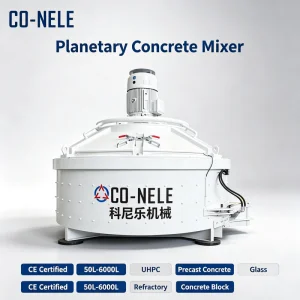
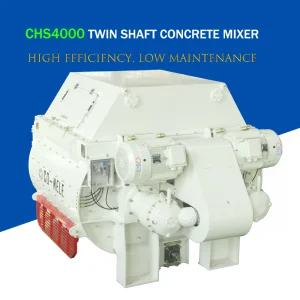
Vertical-shaft planetary concrete mixers utilize revolutionary counter-current kinematics where mixing arms rotate on planetary axes while revolving around the center pan. This produces high-shear mechanical impact ideal for low-slump concrete, fiber dispersion, and Ultra-High Performance Concrete (UHPC). Conversely, twin-shaft compulsory mixers generate dynamic axial counter-rotational vortices, perfect for high-speed discharge of high-slump ready-mix concrete above 2 m³ per batch.
Modern Chinese concrete plants incorporate multi-stage aggregate dosing hoppers linked to industrial load cells with rapid sampling microprocessors. High-precision microwave moisture sensors installed inside aggregate bins and mixing pans deliver dynamic water-compensation feedback in real time, guaranteeing batch-to-batch water-cement ratio consistency down to ±0.5% tolerance.
The convergence of industrial IoT, AI mix adjustment, zero-carbon manufacturing, and predictive maintenance in modern concrete batching machinery.
Next-generation control systems utilize Siemens PLC hardware coupled with cloud SCADA telemetry. Operational managers can track batch logs, aggregate inventory, motor current waveforms, and fault diagnostics remotely via encrypted mobile dashboards.
Strict urban environmental laws demand zero-dust, zero-noise batching installations. Advanced Chinese batching plants incorporate pulse-jet bag filter dust collectors, soundproof sandwich panel housing (<75 dB at site boundary), and closed-loop concrete recycling wash-out systems.
By installing multi-axis vibration and thermal sensors on main mixer planetary gearboxes and shaft seals, AI diagnostics detect bearing wear and lubrication degradation weeks before failure, preventing costly site downtime.
From marine infrastructure to specialized refractory mixing, Chinese concrete plants are field-tested across diverse environmental and industrial applications.
Bridge joint grouting, offshore wind turbine foundation caps, and architectural thin-shell façades require intense shear forces to activate silica fume and distribute steel fibers evenly without balling. Specialized planetary counter-current plants deliver homogeneous UHPC exceeding 150 MPa compressive strength.
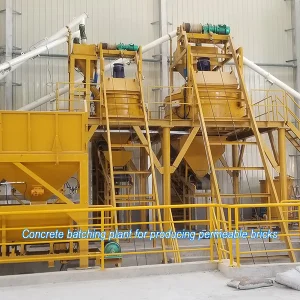
Automated precast factories manufacturing core vibration sewage pipes, culverts, kerbstones, and permeable eco-bricks rely on high-precision batching units integrated with concrete flying buckets. Color pigment dosing systems ensure color uniformity across thousands of batches.
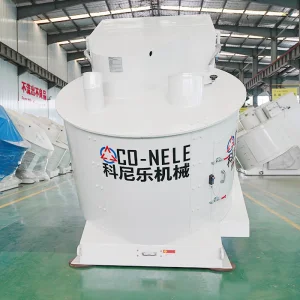
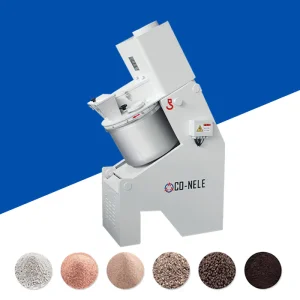
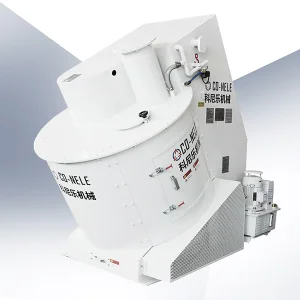
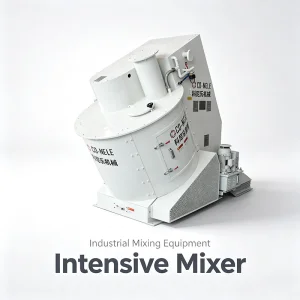
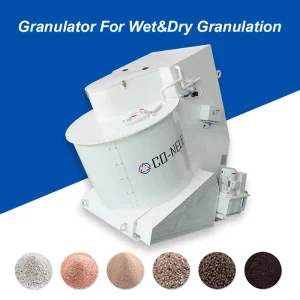
Beyond standard construction concrete, intensive mixing granulators and refractory pan mixers handle severe wear materials such as alumina, silicon carbide castables, diamond powders, and magnetic granulates for steelmaking and ceramic industries.
Ensuring seamless installation, electrical compatibility, and legal operational compliance in over 80 export markets worldwide.
A major concern for international buyers sourcing machinery from China is regional electrical and safety compliance. Leading Chinese batching plant manufacturers provide complete customized engineering to adapt equipment to local grid parameters and regulatory directives.
Expert technical answers addressing key commercial, engineering, and operational questions asked by international equipment buyers.
The price is primarily dictated by: (1) Mixing technology selected (Planetary Counter-Current vs. Twin Shaft); (2) Rated capacity (m³/h output); (3) Aggregate feeding method (Skip-hoist vs. Inclined Belt Conveyor); (4) Number of cement silos and powder screw conveyors; (5) Level of automation (Manual vs. Fully Automated Siemens PLC with moisture probes); and (6) Environmental protection enclosures (open-frame vs. fully cladded steel panels with dust suppression systems).
Planetary counter-current mixers excel in precast applications because their complex star-arm kinematics completely eliminate unmixed dead zones. They deliver superior micro-homogeneity with a coefficient of variation (CV) under 3%, which is crucial for low-slump dry-cast concrete, pigmented blocks, and fiber-reinforced UHPC. Twin shaft mixers are optimized for rapid bulk throughput of high-slump wet ready-mix concrete.
Using standard Ni-Hard high-chrome alloy wear plates (hardness ≥60 HRC), pan liners and mixing blades typically last between 100,000 to 150,000 batches under standard aggregate conditions. For highly abrasive mixes like silica-rich refractories or quartz-dense UHPC, wear lifespan ranges between 40,000 and 60,000 batches. All wear parts feature standardized bolt-on designs for rapid field replacement.
Plant components are modularized for container transport. Compact and mobile plants ship in standard 40HQ containers. Large stationary plants utilize open-top containers and flat racks for pre-assembled mixing towers and aggregate bins. On site, bolt-together structural modules allow complete mechanical assembly within 7 to 15 days under engineer supervision.
Yes. Modern controllers built with Siemens S7 PLC platforms support standard OPC-UA, Modbus TCP/IP, and Profinet protocols. This allows seamless automated data exchange with enterprise ERP systems (SAP, Oracle) and specialized dispatch software for continuous tracking of raw material consumption, invoice generation, and batch recipe downloads.
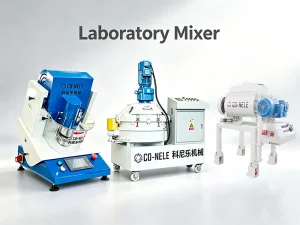
Explore specialized mixing granulators, laboratory research units, and intensive concrete mixing machinery engineered for demanding material applications.