CO-NELEMixing & Granulation
Engineering Whitepaper & Enterprise Buying Guide: Next-Gen Modular Batching Technology, Industry 4.0 Production Resilience, and Global Compliance Frameworks
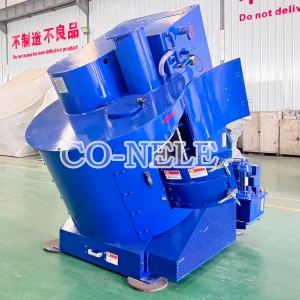
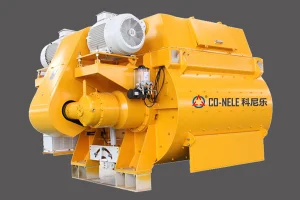
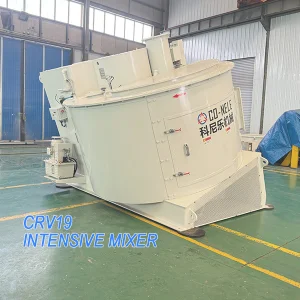
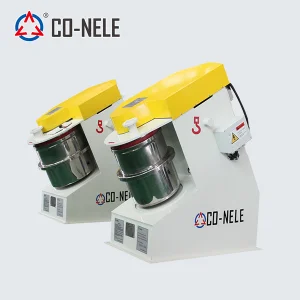
Explore our core mixing, granulating, and laboratory processing equipment portfolio. Engineered under rigorous ISO9001 and CE standards, our solutions serve global ready-mix, precast, refractory, and advanced chemical industries.
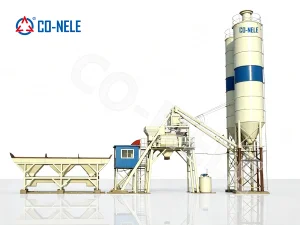
In the contemporary global civil infrastructure landscape, the paradigm of concrete production has shifted dramatically. Traditional stationary batching plants, characterized by extensive civil foundations, lengthy installation cycles, and high footprint footprints, are increasingly complemented—and in many cases replaced—by Next-Generation Compact Concrete Batching Plants. Engineered specifically to bridge the gap between heavy stationary output and mobile agility, modern compact plants deliver production capacities ranging from 25 m³/h to 120 m³/h within a drastically optimized spatial envelope.
As a primary manufacturing hub for industrial machinery, China’s mixing engineering sector has spearheaded this transition. By synthesizing advanced planetary counter-current kinematics, compulsory twin-shaft mixing dynamics, containerized structural modularity, and AI-driven PLC batching controls, Chinese manufacturers are delivering unprecedented total cost of ownership (TCO) advantages to global EPC contractors, ready-mix suppliers, and precast concrete producers.
This technical whitepaper outlines the structural innovations, technological roadmaps, Industry 4.0 supply chain integration, macro-industry application scenarios, and enterprise procurement considerations governing the selection and deployment of high-efficiency compact concrete batching plants manufactured in China.
The structural competitive advantage of Chinese compact concrete batching plant manufacturers lies in the hyper-dense industrial clusters situated in manufacturing powerhouses such as Qingdao, Shandong. Unlike regional assemblers who source major subcomponents from fragmented international vendors, leading Chinese manufacturers maintain end-to-end vertical integration over the entire production lifecycle.
The mechanical heart of any batching mixer is its gearbox. Leading Chinese producers manufacture proprietary planetary gear reducers designed specifically for high-torque, non-uniform rheological loads. Heavy-duty cast iron housings, heat-treated alloy gears, and automated oil-bath lubrication systems guarantee continuous operation exceeding 100,000 work cycles.
Aggregate bins, skip hoists, and mixer chassis undergo automated multi-axis robotic arc welding. Structural steel members are shot-blasted to Sa 2.5 standards and finished with epoxy zinc-rich anti-corrosion marine coatings, ensuring structural durability in extreme salt-mist coastal environments or freeze-thaw sub-zero conditions.
Mixing arms, paddle blades, and liner plates are cast using proprietary high-chromium alloy irons (Cr15Mo3 / Cr26). This delivers exceptional Vickers hardness (≥ HB600), minimizing abrasive wear caused by quartz aggregates, metallic fibers, and dry-cast cementitious blends.
The compact batching plant sector is undergoing a rapid technological convergence involving IoT automation, AI rheology forecasting, dynamic water-cement ratio control, and ultra-low carbon mix formulations. China's research institutes and equipment makers are spearheading three key evolutionary vector phases:
Integration of inline microwave moisture probes in aggregate bins combined with motor drive torque-curve analysis inside the mixer pan. The system calculates real-time batch viscosity, automatically adjusting micro-dosing water volumes to hit exact target slumps without human intervention.
As global decarbonization mandates take effect, compact plants are required to process complex Supplementary Cementitious Materials (SCMs) including calcined clays, alkali-activated slag, and micro-silica powders. Advanced counter-current forced mixing arms eliminate particle agglomeration in low water-binder ratios (w/b < 0.18).
Future compact plants feature self-leveling hydraulic outriggers, plug-and-play quick-connect cabling harnesses, and cloud-linked digital twin diagnostic hubs. Project managers monitor cement silo mass-flow telemetry, wear plate thickness depletion, and energy consumption per cubic meter remotely via encrypted telemetry.
Compact batching plants engineered in China are designed to address specific macro-economic challenges encountered in modern jobsite environments:
| Application Industry | Primary Jobsite Constraints | Recommended Compact Plant Configuration | Key Performance Deliverables |
|---|---|---|---|
| Precast Block & Paver Manufacturing | Tight site layout, strict color uniformity, low-slump/dry-cast concrete requirements. | Compact Plant with Vertical-Shaft Planetary Counter-Current Mixer (HZS35 / HZS50). | Mixing homogeneity coefficient of variation (CV) < 5%; consistent color pigment dispersion; minimal cycle time. |
| Urban Metro & Underground Utilities | Restricted height clearance, low noise emission limits, zero ambient dust rules. | Fully Enclosed Modular Compact Batching Plant with Pulse-Jet Baghouse Dust Collectors. | Dust emission < 20 mg/Nm³; operational sound envelope < 75 dB at perimeter; zero material wastage. |
| High-Speed Rail & Bridge Grouting (UHPC) | Ultra-high strength specs (>150 MPa), micro-steel fiber dispersion, strict batch recording. | Reinforced Compact Batch Plant featuring High-Shear Planetary / Intensive Mixing Unit. | Zero fiber balling; accurate high-shear energy input; 100% cloud-traceable batching reports for QA audits. |
| Island & Remote Civil Infrastructure | High ocean shipping freight costs, absence of fixed concrete foundations, limited power grid. | Containerized Flat-Pad Foundationless Compact Concrete Batching Plant with Integrated Genset. | Shipped inside standard 40ft HQ containers; zero concrete foundation pouring needed; rapid relocation capability. |
When evaluating compact concrete batching plants, procurement managers and Chief Technical Officers must look beyond initial Capital Expenditure (CAPEX) to assess Total Cost of Ownership (TCO). Chinese manufacturing excellence optimizes both sides of the balance sheet:
Foundation Savings: Compact plants utilize steel skid frames or flat-pad steel plates, eliminating up to 75% of the reinforced concrete foundation work required by traditional plants.
Logistics Efficiency: Standard container-sized modular dimensions mean plants fit directly into 40' Open-Top or 40' HQ shipping containers without expensive breakbulk ocean freight surcharges.
Energy Efficiency: High-efficiency direct-coupled electric drives and planetary gearboxes reduce power consumption per cubic meter mixed by 15% to 22% compared to belt-driven open-gear designs.
Wear Component Longevity: High-chrome liner plates and reversible mixing paddles double the operational lifespan between maintenance teardowns, minimizing costly downtime.
Because compact plants can be dismantled, containerized, and re-erected in under a week, EPC contractors maintain higher asset utilization across sequential project contracts, maximizing residual equipment valuation over a 10-year lifecycle.
Exporting machinery to North America, the European Union, the Middle East, and Latin America requires strict compliance with regional electrical codes, safety directives, and operational standards. Leading Chinese compact concrete plant manufacturers offer fully customized localization engineering packages:
Fully compliant with EU Machinery Directive 2006/42/EC, Low Voltage Directive 2014/35/EU, and Electromagnetic Compatibility (EMC) Directive 2014/30/EU. Features dual-channel safety interlocks, emergency stop circuits, and guarded access platforms.
For North American markets, control cabinets are wired using UL-listed components (Schneider, Siemens, Eaton), featuring NEMA 4X weather-proof enclosures, 480V 60Hz step-down transformers, and standardized wire-numbering schematics.
Siemens S7-1200 / S7-1500 PLC control systems paired with high-definition touchscreen HMIs. Pre-installed with multi-lingual user interfaces (English, Spanish, French, Russian, Arabic) featuring cloud recipe databases, automated moisture compensation, and batch ticket printing.
Browse the second division of our specialized machinery product index, spanning high-intensity concrete pan mixers, asphalt batching solutions, and specialized granulating equipment.
In-depth technical answers curated by senior process engineers to resolve complex purchasing, installation, and operational queries.