CO-NELEMixing & Granulation
Explore our core industrial concrete batching mixers, intensive granulators, and specialized production machinery deployed globally.
A rigorous examination of fluid dynamics, compulsory shear mechanics, and structural durability in modern 1m³ batch mixing systems.
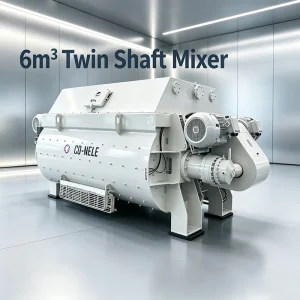
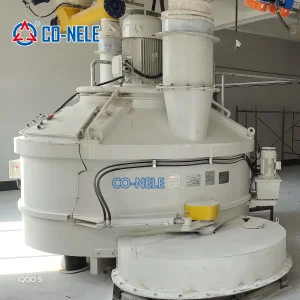
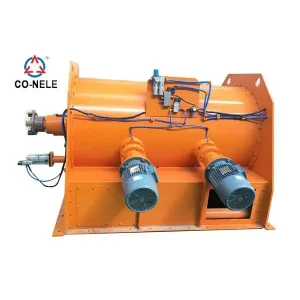
The 1000 Twin Shaft Concrete Mixer (commonly specified under the industrial standard model JS1000 or CHS1000) represents the technological golden standard for high-throughput commercial ready-mix plants and heavy precast concrete manufacturing. Operating on a compulsory dual-shaft counter-rotating motion mechanism, the machine induces intense three-dimensional turbulence within the mixing trough. Aggregate particles, cementitious binders, water, and chemical admixtures are rapidly forced into overlapping shearing zones.
Unlike traditional gravity-tilt mixers that rely solely on free-fall velocity, the twin horizontal shafts feature synchronized mixing arms arranged in a precise helical pattern (typically set at 45° or 60° offset angles). This geometric arrangement generates both axial force (pushing material parallel to the shafts) and radial shear (accelerating material perpendicularly against the curved liners). The dual-action movement forces aggregate particles to collide, scrub, and coat evenly within 30 to 45 seconds of dry-to-wet transition, achieving a coefficient of variation (CV) of less than 5% across dense structural concrete batches.
Technical Innovation Note: China's heavy engineering machinery ecosystem, centered around Qingdao manufacturing hubs, has introduced advanced hydrodynamic shaft geometry that minimizes material dead zones at the end-plates by over 98.5%, significantly reducing energy consumption per batch m³.
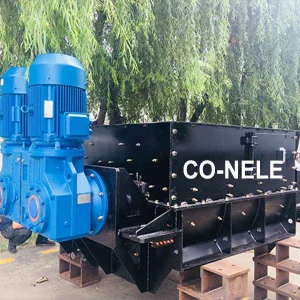
The commercial longevity of a 1000L twin shaft mixer is governed primarily by two failure points in traditional designs: shaft-end slurry leakage and premature abrasion of internal wear plates. Leading Chinese original equipment manufacturers (OEMs) have completely overhauled these critical points through material science and multi-stage seal engineering:
A strategic breakdown of operational benefits, total cost of ownership (TCO) advantages, and industrial design standards.
Achieves full homogenization of stiff, plastic, dry-hard (zero slump), and light-aggregate concrete within 30-45 seconds, maximizing batch plant volume output.
Seamlessly integrates with Siemens/Schneider SCADA controls for automated water ratio tracking, moisture compensation, and batch data logging.
Optimized blade angles lower hydrodynamic drag resistance by 18%, reducing kilowatt-hour power consumption per cubic meter of mixed concrete.
Features a 3-position adjustable hydraulic discharge door equipped with manual emergency pump backup to prevent batch loss during power outages.
Tested under severe ambient temperature shifts (-30°C in Nordic infrastructure to +55°C in Middle Eastern desert projects) without thermal seal breakdown.
Standardized ISO mounting dimensions ensure that replacement arms, scrapers, and seals are available from global stock warehouses with zero lag.
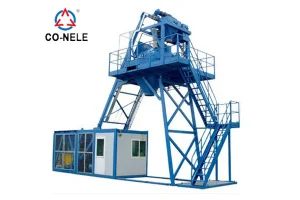
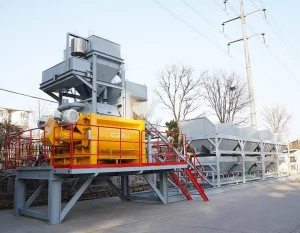
In the global civil engineering landscape—spanning high-speed railway foundations in Southeast Asia, precast concrete culverts in North America, and commercial ready-mix plants in the Middle East—procurement directors are shifting focus from initial capital expenditure (CAPEX) to lifetime operational expenditure (OPEX). The 1000 Twin Shaft Concrete Mixer serves as the core power unit for standard HZS50 (50 m³/h output) and HZS60 (60 m³/h output) batching plants.
When specifying a 1000L twin-shaft machine from China, global commercial enterprises typically evaluate four macro-integration criteria:
As industrial mixing technology transitions into the smart manufacturing era, Chinese manufacturers like CO-NELE are advancing mixing machinery through three core technology roadmaps:
1. AI-Driven Smart Moisture & Viscosity Sensing: Integrating real-time microwave moisture probes directly inside the mixing drum, combined with motor current harmonic torque analysis. This allows the PLC system to dynamically adjust water dosing during the first 15 seconds of the mixing cycle to hit target concrete slump automatically.
2. Predictive Wear Analytics via IoT Telemetry: Gearbox vibration sensors, oil thermal breakdown monitors, and shaft seal pressure telemetry stream data to cloud dashboards. Plant managers receive predictive maintenance alerts weeks before a component fails, eliminating unplanned batching downtime during major pours.
3. Advanced Surface Coatings & Bio-Lubrication: Utilizing nano-structured tungsten carbide thermal spraying on high-wear mixing scrapers, paired with biodegradable automated grease systems to meet strict environmental compliance standards across Nordic and EU territories.
Ensuring seamless integration into regional electrical grids, regulatory frameworks, and jobsite logistics worldwide.
Motors and control panels engineered for 220V, 380V, 415V, 440V, and 480V grid standards at either 50 Hz or 60 Hz, verified by CE certification and UL/CSA component standards.
Every export unit includes structural foundation load diagrams, wiring schematics, recommended spare-parts catalogs, and full English technical maintenance manuals.
Supported by video commissioning assistance, real-time diagnostic remote software support, and field engineering service dispatch from regional spare-part hubs.
Direct answers from industrial mixing experts addressing technical specifications, operations, and mixer selection criteria.
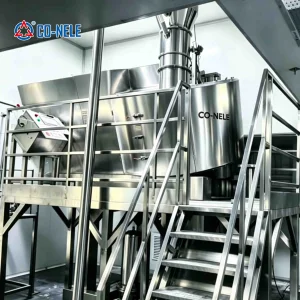
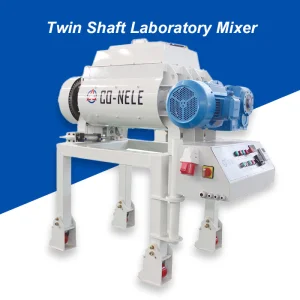
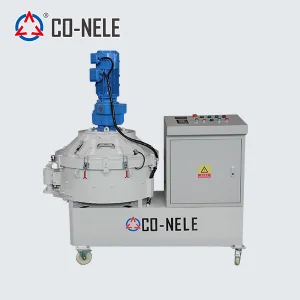
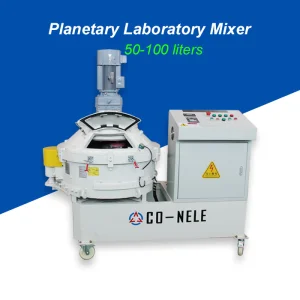
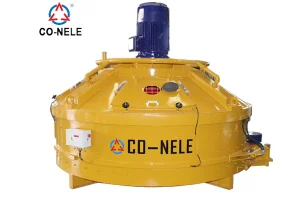
Discover our complete machinery line including R&D lab units, granulators, and ultra-high-performance planetary mixers.