
CO-NELEMixing & Granulation
Direct factory supply of compulsory twin-shaft mixing systems engineered to meet Israeli Standard IS 118 for structural ready-mix and infrastructure applications.
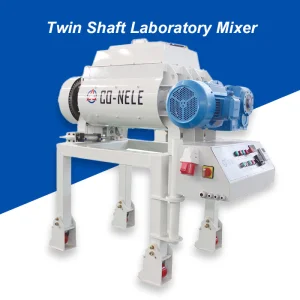
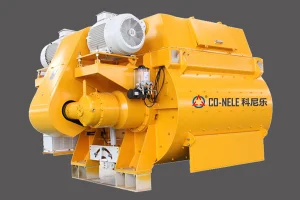
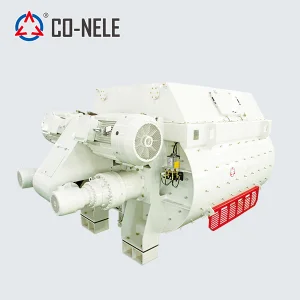
The global concrete construction sector is undergoing a profound paradigm shift. As civil engineering requirements move toward ultra-high performance concrete (UHPC), self-consolidating concrete (SCC), and low-carbon cementitious formulations, traditional mixing technologies—such as gravity drum mixers and single-shaft units—are no longer capable of reaching the required micro-homogeneity within economical cycle times. In high-density urban development hubs and challenging climatic zones like Israel, the demand for forced-action twin shaft concrete mixers has reached unprecedented levels.
This technical whitepaper examines the hydrodynamic mechanics, wear-resistance engineering, micro-homogeneity indicators, and macro-economic factors governing the application of compulsory twin shaft concrete mixers. Specifically designed to serve concrete producers, precast modular plant managers, and civil contractors across Israel (including Tel Aviv, Haifa, Jerusalem, and the Negev region), this document provides verifiable engineering metrics, localized operational strategies, and a 10-year technological roadmap.
By replacing passive tumbling motion with compulsory, counter-rotating fluid kinematics, twin shaft mixing technology reduces cycle times by up to 40% while enhancing compressive strength consistency. For Israeli batching operations operating under rigorous heat conditions and stringent environmental regulations, this transition directly translates to cement savings, lower operational costs, and guaranteed structural compliance.
Israel’s construction sector is characterized by massive transportation and civil engineering projects. Mega-undertakings such as the Tel Aviv Metro Mass Transit System (Green, Purple, and Red Lines), the Haifa Port expansion, nationwide desalination infrastructure, and the expansion of the Trans-Israel Highway (Route 6) demand continuous, high-volume concrete output.
Furthermore, rapid urbanization in the Gush Dan metropolis and new residential developments in Beer Sheva require ready-mix plants to deliver consistent C30/C37 to C60/C75 grade concrete with strict slump retainage under dry ambient conditions.
Operating concrete equipment in Israel requires specialized heat management and aggregate abrasion resistance. In desert environments like the Negev, ambient temperatures routinely exceed 40°C, accelerating initial cement hydration and reducing workability windows.
Additionally, coastal installations near Ashdod and Tel Aviv face elevated sulfate and chloride attack risks, demanding low water-binder ratios (w/b < 0.35) and mineral admixtures (pozzolans, silica fume, and blast furnace slag). Twin shaft mixers deliver intense shear energy to thoroughly disperse these fine micro-silicas without balling or clumping.
To understand the technological superiority of twin shaft concrete mixers, one must evaluate the spatial motion vectors generated within the mixing trough. Gravity drum mixers rely on free-fall velocity, which is ineffective for low-slump or dense aggregate matrices. Single-shaft mixers create circular flow along one axis, leading to material segregation at the shaft ends.
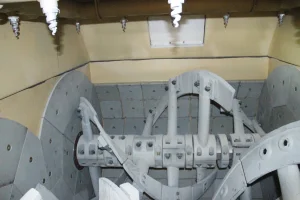
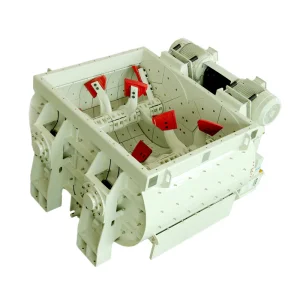
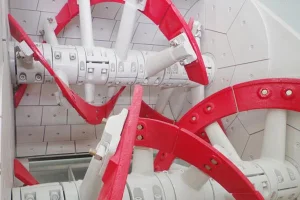
Two horizontal shafts rotate inwardly in opposite directions. Dual-pitched mixing arms positioned at precise 45° and 60° spiral angles force the material into a continuous 3D figure-eight turbulent turbulence zone, eliminating dead zones.
The intense intersection zone creates maximum particle collision frequency. Aggregates, water, cement, and chemical admixtures achieve micro-homogeneity (Coefficient of Variation CV < 5%) within 30 to 45 seconds of charge completion.
By synchronizing the two shafts through heavy-duty helical gearboxes, mixing resistance is evenly distributed across both power units, reducing electrical peak spikes by up to 22% during batch initialization.
| Performance Metrics | Twin Shaft Compulsory Mixer | Planetary Counter-Current Mixer | Single Shaft / Continuous Mixer |
|---|---|---|---|
| Target Application | High-Throughput Ready-Mix & Infrastructure | Precast, UHPC, Dry-Cast Concrete | Low-Spec Mass Concrete & Road Base |
| Mixing Homogeneity (CV) | < 3% - 5% (Within 35s) | < 2% (Requires 60s+) | 8% - 12% (Requires 90s+) |
| Max Batch Output Range | 1.0 m³ to 6.0 m³ per batch | 0.25 m³ to 3.0 m³ per batch | 1.0 m³ to 3.0 m³ per batch |
| Coarse Aggregate Limits | Up to 150 mm (Heavy Duty Crushed Rock) | Up to 80 mm | Up to 100 mm |
| Maintenance Operational Cost | Low (Bolt-on interchangeable wear tiles) | Medium (Complex gearbox linkage) | Medium-High (Uneven shaft end wear) |
Building mixers capable of delivering decades of continuous performance in Israeli conditions requires non-compromised industrial components. Our factory incorporates multi-stage sealing systems, high-chrome alloy casting, and automatic lubrication networks.
The primary point of failure in inferior concrete mixers is slurry leakage into the shaft support bearings. Our twin shaft mixers utilize a patented multi-layer seal system consisting of floating mechanical ring seals, specialized high-pressure grease barriers, polyurethane oil seals, and labyrinth steel covers. This quad-defense system prevents cement slurry from contaminating the heavy-duty spherical roller bearings, even under continuous 2.5 bar hydraulic slurry pressure.
To withstand abrasive crushed limestone, basalt, and silica sand commonly quarried in Northern Israel, our mixing troughs are lined with high-chromium alloy wear tiles (CrContent > 20%). Featuring a Rockwell hardness exceeding 64 HRC and a minimum tensile strength of 800 MPa, these bolt-on tiles deliver an operational lifespan of over 150,000 batches under standard ready-mix formulations.
High ambient heat accelerates grease degradation. Every unit destined for Israel is equipped with a 380V/400V 50Hz automatic electric grease pump. Featuring built-in pressure sensors and digital cycle timers, the pump feeds micro-metered high-temperature lithium grease directly to the four shaft seal faces every batch cycle, completely eliminating manual oversight errors.
Power transmission is managed via customized twin planetary gearboxes engineered for high torque overload capacities. Connected by a rigid universal coupling bar, the shafts maintain precise angular synchronization without gear slippage, protecting drive motors from destructive torsional vibrations.
Space constraints in Gush Dan demand compact, high-output batching plants. Integrating a 3.0 m³ or 4.0 m³ CHS Twin Shaft Concrete Mixer into stationary HZS180 plants allows ready-mix suppliers to load a standard 10 m³ transit mixer truck in under three minutes (3 batch cycles).
Tunnelling works for underground metro rail require specialized fiber-reinforced shotcrete with tight slump tolerances and high early strength. Our twin shaft mixers ensure complete, uniform dispersion of steel and synthetic micro-fibers without clumping or balling.
For precast factories manufacturing prestressed bridge girders for Route 6 upgrades or modular concrete wall barriers, zero-slump dry concrete demands heavy shear. Twin shaft mixers easily handle stiff mixes (slump < 20mm), discharging clean batches via dual hydraulic gates.
As sustainability regulations intensify across Europe and the Middle East, Israeli concrete producers are under pressure to lower the embodied carbon of structural concrete. Our advanced twin shaft mixers are fully compatible with modern decarbonization and digital control technologies.
Every mixer model can be outfitted with high-frequency microwave moisture probes installed directly through the lower wear liner. These sensors measure real-time aggregate moisture levels 25 times per second, allowing the automated PLC batching controller to automatically adjust dosing water within ±0.2 liters per batch before discharge.
Additionally, electrical power signature analysis monitors motor torque amperage to determine the exact mix consistency and slump point, eliminating human operator guesswork.
Reducing Portland cement content requires substituting high proportions of ground granulated blast-furnace slag (GGBS), coal fly ash, or calcined clays. Because these powders vary in surface area and water demand, standard mixers fail to hydrate them uniformly.
The intense compulsory shearing action of our CDS and CHS twin shaft series guarantees complete surface wetting and pozzolanic activation, enabling up to 50% cement replacement while maintaining early 7-day strength requirements.
Variable frequency drive (VFD) smart algorithms that dynamically modify shaft rotational speed during the batching cycle to minimize energy use per cubic meter.
Vibration analysis telemetry on planetary gearboxes to predict bearing fatigue and liner wear weeks before unexpected site breakdowns occur.
Integration of direct-drive electric hydraulic torque motors, replacing conventional mechanical gearboxes for whisper-quiet urban night pours.
Specialized ultra-high shear shaft geometries designed exclusively for mixing carbon-nanotube and steel-fiber reinforced ultra-high performance concrete.
Explore our complete catalog of compulsory twin shaft mixers, planetary units, and concrete batching plant components available for direct factory export to Israel.
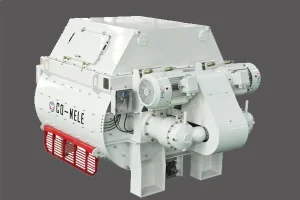
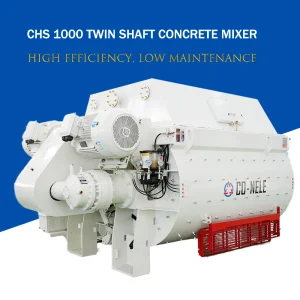
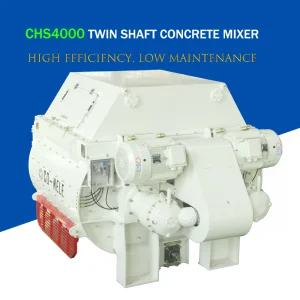
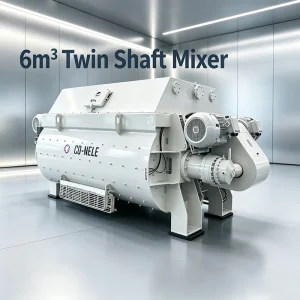
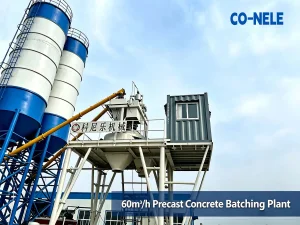
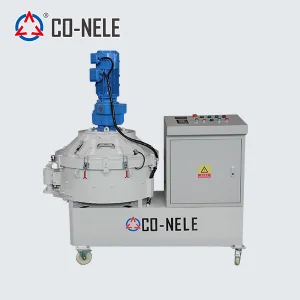
Our CHS and CDS twin shaft series are engineered to deliver micro-homogeneity with a coefficient of variation (CV) of less than 3% within 35 seconds of mixing time. This exceeds IS 118 requirements for structural readymix, precast, and bridge-grade concrete, ensuring consistent cube test compression results across every batch.
All electric drive motors, hydraulic discharge power packs, and automatic central lubrication units are factory-built to match Israel's industrial grid standards: 400V, 50Hz, 3-Phase. Control cabinets incorporate Schneider electric components and Siemens PLCs compliant with CE standards.
Under standard operational conditions with crushed granite or limestone aggregates, our Ni-Hard / High-Chrome liners (64-68 HRC) typically exceed 150,000 batch cycles. Mixing highly abrasive quartz sand or sharp basalt will yield approximately 90,000 to 120,000 batches. All liner segment tiles are standard bolt-on components and easily replaceable in the field.
Our mixers feature a 4-fold mechanical seal combination: floating metallic seal rings, labyrinth steel guards, polyurethane pressure rings, and an automated continuous electric grease pump. The pump forces fresh lithium grease into the seal interfaces continuously during operation, creating an impenetrable positive pressure barrier against fine slurry.
Standard twin shaft mixer units ship within 15 to 20 business days from our Qingdao manufacturing facility. Direct container shipments arrive at Haifa Port or Ashdod Port within approximately 22 to 30 sea-transit days. CO-NELE maintains a comprehensive spare parts inventory with express air courier shipment available within 48 hours.
Consult with our senior mixing process engineers today. Get full technical drawings, customized quotation packages, and laboratory test reports tailored for your concrete recipe.
Send Inquiry Now