CO-NELEMixing & Granulation
Engineered for maximum thermal stability, micro-homogeneity, and high-throughput reliability across European civil engineering applications.
Located in the south of the Grand Duchy of Luxembourg, Dudelange has metamorphosed from a historical steel-making powerhouse into one of Western Europe’s premier multimodal logistics hubs and industrial modernization centers. Home to the expanses of Eurohub South and strategic transport corridors linking Luxembourg directly to France, Germany, and Belgium, the region demands an unprecedented volume of high-grade, heavy-duty asphalt mixtures capable of enduring continuous heavy-freight axle loads.
Modern roadway contracts in the Canton of Esch-sur-Alzette—specifically arterial expansions surrounding the A3 motorway and local industrial logistics parks—enforce rigorous material specifications. Road builders can no longer rely on legacy continuous drum plants that suffer from binder segregation and thermal loss. The local geology and climate, characterized by freeze-thaw cycles in winter and high-stress surface wear during summer freight peaks, necessitate asphalt recipes rich in modified bitumen, precise aggregate grading, and recycled asphalt pavement (RAP) integration up to 50-60%.
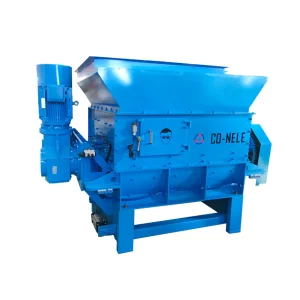
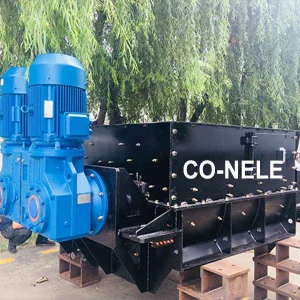
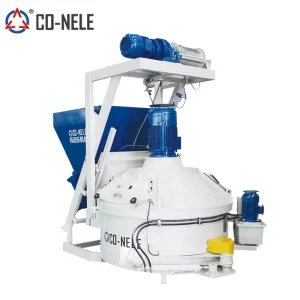
As a premier global Twin Shaft Asphalt Mixers Manufacturer & Factory servicing Dudelange, CO-NELE supplies compulsory batch mixers designed to meet stringent European Norms (EN 13108) and local Public Works Department (Administration des Ponts et Chaussées) directives. By enabling high-precision shear mixing and micro-dosing of polymers and warm-mix additives, our mixing systems empower contractors in Dudelange to deliver dense-graded asphalt concrete (AC), stone mastic asphalt (SMA), and porous asphalt (PA) with absolute batch consistency.
Capable of homogeneously blending up to 60% Reclaimed Asphalt Pavement without aggregate crushing or thermal degradation of bitumen films.
Compulsory twin counter-rotating shafts deliver violent turbulent mixing, reducing dry and wet cycle times down to 30–45 seconds per batch.
Fully sealed oil-bath and double-walled heat-retention shells guarantee minimal thermal loss during extended winter batching operations in Dudelange.
The core physics of asphalt manufacturing revolves around uniform coating: every individual aggregate grain—from fine filler particles (less than 0.063 mm) to coarse stone aggregates (up to 40 mm)—must be enveloped in a uniform film of liquid bitumen measuring between 6 to 10 microns. Single-shaft or free-fall drum mixers struggle to achieve this under tight time windows, resulting in "fat spots" (bitumen bleed) or dry aggregates that trigger premature stripping and pothole formation on European highways.
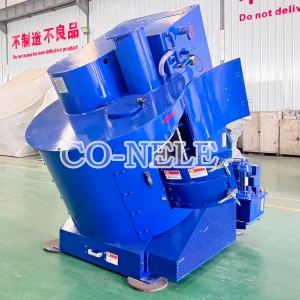
CO-NELE’s compulsory twin-shaft design operates on a synchronized counter-rotating spatial mixing principle. Two horizontal shafts, equipped with paddle arms arranged at precise helical angles, rotate toward each other at high velocity. This creates a three-dimensional fluidized turbulent zone in the center of the mixing chamber.
| Model Series | Batch Capacity (kg) | Mixer Power (kW) | Mixing Cycle Time (s) | Aggregate Size Max (mm) | Thermal Loss Rate |
|---|---|---|---|---|---|
| AMS 1200 | 1200 kg | 2 x 22 kW | 35 – 45 s | ≤ 40 mm | < 1.5°C / min |
| AMS 1500 | 1500 kg | 2 x 30 kW | 35 – 45 s | ≤ 45 mm | < 1.2°C / min |
| AMS 2000 | 2000 kg | 2 x 37 kW | 30 – 40 s | ≤ 50 mm | < 1.0°C / min |
| AMS 3000 | 3000 kg | 2 x 55 kW | 30 – 40 s | ≤ 50 mm | < 0.8°C / min |
During the dry mixing phase (typically 5 to 8 seconds), aggregates and mineral fillers are homogenized thoroughly. When hot liquid bitumen is injected under high pressure across multiple spray bars, the intense shear forces created by the overlapping paddle radii disperse the binder instantly. This completely eliminates localized bitumen enrichment and guarantees a Coefficient of Variation (CV) of less than 3% throughout the batch.
Combining world-class metallurgical engineering, rigorous ISO 9001:2015 quality control, and direct-from-factory pricing advantages to elevate plant profitability.
Asphalt mixing is inherently abrasive due to crushed granite, basalt, and reclaimed road milled materials. CO-NELE equips every mixer with exchangeable lining plates and mixing paddles cast from proprietary high-chromium alloy (Ni-Hard & Cr26 alloy steel with hardness exceeding HRC 62). Under standard batching conditions in Western Europe, our wear parts routinely exceed 120,000 to 150,000 batch cycles before requiring maintenance.
The primary vulnerability of inferior twin shaft mixers is bitumen seepage into the drive bearings, leading to catastrophic bearing failure and unscheduled plant shutdown. CO-NELE addresses this with a patented multi-layer floating seal system combined with automatic continuous greasing pumps. Driven by robust synchronized gearboxes—engineered and load-tested in-house—our drive trains operate continuously even under 120% overload conditions.
The European Union’s decarbonization targets and Luxembourg's National Energy and Climate Plan (PNEC) place heavy requirements on road paving equipment. Plant operators in Dudelange face strict emissions thresholds and energy consumption caps. CO-NELE twin shaft mixers are purpose-built to facilitate green asphalt manufacturing technologies:
Integrated organic additive and foam bitumen injection ports reduce mixing temperatures by 30°C to 40°C, lowering burner fuel consumption by up to 25% and reducing greenhouse gas emissions on site.
Equipped with specialized steam relief gates and anti-sticking inner wall geometry to handle high proportions of reclaimed aggregate without binder caking or shaft fouling.
Sealed mixing chamber cover plates featuring negative-pressure vacuum collection connection points prevent volatile organic compound (VOC) fugitive emissions from escaping into the surrounding environment.
By selecting CO-NELE as your OEM equipment partner, your facility in Dudelange achieves full compliance with European environmental directives while securing lower lifecycle operating costs (OPEX) through reduced kilowatt-hour consumption per ton produced.
Procuring heavy equipment for Western European deployment requires strict technical alignment with safety, electrical, and mechanical regulations. CO-NELE provides comprehensive support for EPC contractors, plant manufacturers, and independent quarry operators across Luxembourg and the greater Benelux region:
Explore our wider range of planetary concrete mixers, intensive granulators, mobile batching plants, and specialized material preparation systems.
Expert answers provided by CO-NELE application engineers for plant operators and procurement directors.
Compulsory twin shaft batch mixers offer precise control over batch weights, temperature, and mixing time per cycle. In jurisdictions like Luxembourg with strict binder specifications (SMA, PMB) and high RAP inclusion requirements, batch mixers guarantee 100% aggregate coating and eliminate aggregate-binder segregation common in drum mixing.
Our standard Cr26 high-chromium casting liners and paddle arms deliver between 120,000 to 150,000 batches under normal aggregate processing. When using highly abrasive quartz stone or high RAP contents, wear life typically averages 80,000 to 100,000 batches. All liners are modular, reversible, and field-replaceable with simple bolt connections.
Yes. We regularly supply replacement mixing units engineered with custom mounting dimensions, discharge gate configurations, and drive interface positions to fit existing asphalt towers (e.g., retrofitting older Benninghoven, Ammann, or Marini tower frameworks).
CO-NELE uses a triple-seal system comprising floating mechanical seals, labyrinths, and high-pressure automatic grease purge systems. This continuous positive grease pressure prevents fine dust and hot liquid bitumen from entering the bearing house, extending bearing lifespan significantly.
All export units bound for Dudelange and the EU market feature CE certification, built to 400V 50Hz electrical specs, equipped with Schneider or Siemens switchgear, IP65 junction enclosures, and dual-channel safety interlocks meeting ISO 13849 standards.