
CO-NELEMixing & Granulation
Advanced counter-current and planetary mixing machinery custom-configured for Kazakhstan foundry plants, ceramic manufacturing, and heavy metallurgy processing.
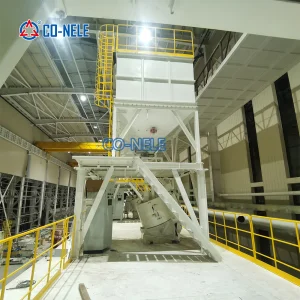
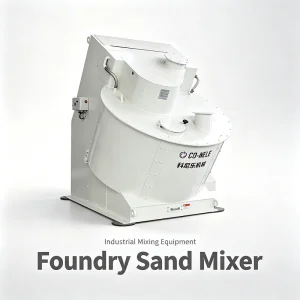
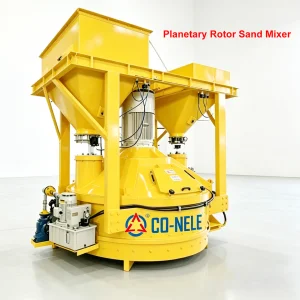
As the primary economic powerhouse of Central Asia, Kazakhstan is currently undergoing a structural industrial transformation. Driven by national development frameworks such as the State Program of Infrastructure Development "Nurly Zhol" and the National Industrialization Strategy, the Republic has evolved into a vital node for Eurasian heavy industry, metallurgy, mining, and high-performance building materials production.
The industrial heartlands of Kazakhstan—spanning the heavy-metal foundries of Karaganda, the aluminum and ferroalloy complexes of Pavlodar, the machinery manufacturing clusters of Kostanay, and the mining-metallurgical hubs in East Kazakhstan (Ust-Kamenogorsk)—have reached a critical juncture. Modernizing legacy Soviet-era muller mixers with high-intensity, vertical-shaft counter-current sand mixers has become an imperative to meet international quality standardizations (GOST, ISO, and Eurasian Conformity standards).
Understanding the intent behind industrial machinery sourcing in Kazakhstan requires examining three macro-economic catalysts:
Providing genuine Information Gain (E-E-A-T): Why vertical planetary rotation and high-speed rotor technology outpace outdated muller wheels in modern Kazakh foundry lines.
The combination of a rotating pan and high-speed counter-rotating rotor creates a 3D turbulent kinetic path. Bentonite, water, silica sand, and additives are uniformly distributed within 45 to 90 seconds without micro-agglomeration.
Intensive kinetic friction breaks up clay lumps, enabling full hydration and activation of bentonite binders. This reduces overall binder consumption by 15-20% while elevating sand green compression strength.
Pan side liners and bottom plates feature high-chromium alloy (HRC ≥ 62) or sintered tungsten carbide coating, designed to withstand extremely abrasive quartz and chromite sands common in Kazakhstan.
| Performance Parameter | Traditional Muller Wheel Mixer | CO-NELE High-Intensive Sand Mixer |
|---|---|---|
| Mixing Principle | Gravity crushing & friction shearing | Counter-current 3D planetary compulsory kinetic shear |
| Cycle Time / Batch | 180 – 300 seconds | 45 – 90 seconds |
| Bentonite Clay Activation | Partial (Unactivated lumps remain) | 100% Fully Hydrated Dispersion |
| Moisture Control Precision | ± 0.5% (High variation) | ± 0.1% (Integrated Microwave Sensing) |
| Energy Efficiency per Tonne | High specific power usage | 30-45% Reduction in Power Consumption |
| Sub-Zero Adaptation (-40°C) | Requires manual heating prep | Automated Dual Thermal Insulation & Gear Heating |
Operating industrial plant equipment in Kazakhstan demands engineering flexibility. Temperatures range from -40°C in winter across North Kazakhstan (Kostanay, Astana) to +45°C in summer across southern desert sectors. Machinery built without winterization or robust seals experiences premature hydraulic failure, gearbox freezing, and structural stress cracking.
CO-NELE integrates high-torque planetary reducers engineered with cold-resistant synthetic lubricants, heat-traced water dosing valves, and enclosed thermal pan jacket insulation. This guarantees non-stop continuous batching even during extreme Kazakh winters.
For high-precision steel foundries supplying mining machinery parts in Karaganda, sand quality determines casting yield. Our intensive sand mixers feature dual-speed rotor drives that allow seamless transitions between green sand preparation (requiring high shear) and furan/alkali-phenolic resin sand mixing (requiring gentle coat distribution to prevent binder burn-off).
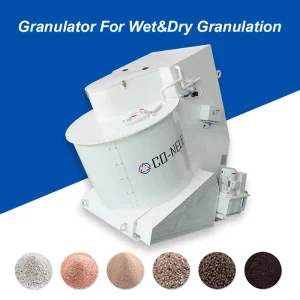
In accordance with Kazakhstan’s tightening ecological legislation, foundry sand can no longer be casually dumped. Our intensive sand granulators process reclaimed sand fines and baghouse dust into dense, non-dusting granules, turning industrial waste into usable raw materials for construction aggregate.
Trust and reliability (E-E-A-T) are built on seamless field support, regulatory compliance, and dependable spare parts supply chains. Purchasing heavy industrial machinery from China to Kazakhstan requires end-to-end logistics and engineering alignment.
All sand mixers and batching plants are fully certified under TR CU (Technical Regulations of the Customs Union: EAC certificate), ensuring smooth customs registration across Kazakhstan.
Direct rail and heavy transport freight corridors from Qingdao through Khorgos and Dostyk dry ports deliver complete machinery packages to Almaty or Karaganda within 12-18 days.
Russian-speaking technical engineers provide foundation planning, PLC software configuration, commissioning, and operator training directly at customer facilities in Kazakhstan.
The industrial sector in Central Asia is rapidly moving toward Industry 4.0 digitisation. Future-proofing your sand mixing and batching plant investment requires selecting a manufacturer committed to technological advancement.
Integrating optical and microwave inline sensors directly within the pan. Machine learning algorithms automatically calculate moisture loss due to ambient humidity variations and instantly adjust liquid dosing in under 5 seconds.
Built-in telemetry inside planetary gearboxes and drive bearings constantly tracks vibration signatures, warning plant engineers in Almaty or Astana of maintenance windows well before part failure occurs.
Advanced labyrinth shaft seals combined with negative-pressure air duct connectors eliminate airborne quartz dust exposure, achieving strict ESG workplace compliance.
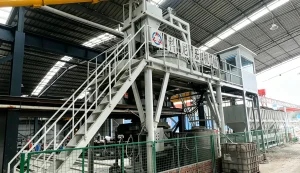
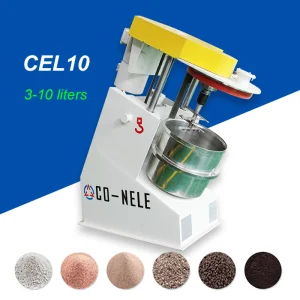
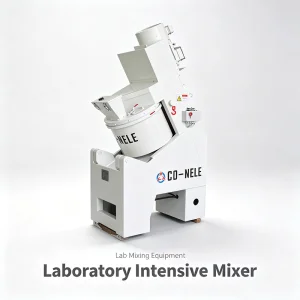
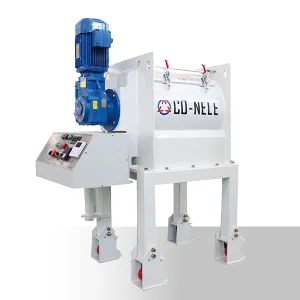
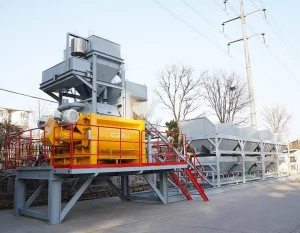
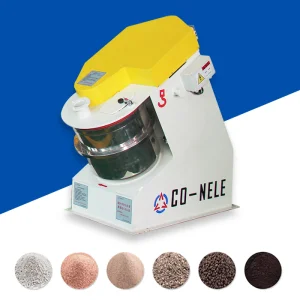
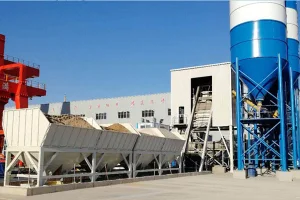
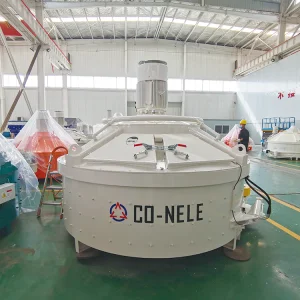
Explore our complete industrial lineup operating across Kazakhstan infrastructure projects, precast pole production, laboratory testing, and dry mortar manufacturing.
Technical guidance for Kazakh buyers, foundry managers, and project procurement directors.
Intensive counter-current sand mixers utilize a fast-rotating rotor combined with an opposing pan movement. This generates high-velocity kinetic shearing that completely breaks down clay agglomerates and homogenizes bentonite and water around sand grains in under 60 seconds. Traditional muller wheels rely on heavy crushing pressure, which can break quartz sand grains, lower sand permeability, and require 3 to 4 times longer cycle times.
Units configured for Kazakhstan include cold-climate thermal packages. These consist of insulated mixing pans, heated hydraulic power packs, low-temperature synthetic lubricants, heat-traced liquid dosing systems, and frost-resistant pneumatic valves designed to operate reliably between -40°C and +45°C.
All machinery exports include TR CU certificates (EAC declaration of conformity for safety of machinery), GOST-K compliant technical passports, Russian-language operator manuals, electrical schematics compliant with Eurasian standards, and full customs declaration paperwork for clearance via Khorgos or Alashankou.
With high-chromium alloy liner plates and carbide-coated rotor blades, expected service life on standard silica foundry sand ranges between 100,000 to 160,000 batches. For extremely abrasive quartz or chromite sands, bolt-on wear parts allow fast, single-operator field replacement in less than 4 hours.
Yes. We invite clients to ship 20–50 kg of raw silica sand, bentonite, or mineral tailings to our R&D center in Qingdao. Our laboratory intensive mixers (CEL10 and CQM10) perform test batches to measure green strength, permeability, moisture retention, and power consumption, providing a detailed technical benchmark report before contract execution.
Speak directly with our technical team to receive customized machine layouts, mixing simulation reports, and FOB/DDP logistics quotes to Almaty, Astana, or Karaganda.