
CO-NELEMixing & Granulation
Engineered specifically for pilot plants, mining test labs, and academic research institutions across Sydney, Melbourne, Perth, and Brisbane. High-repeatability mixing designed for 100% linear scale-up.
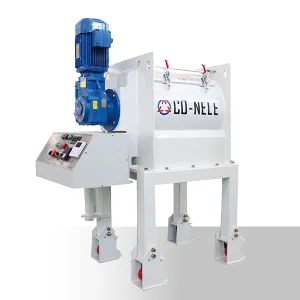
Designed for high-accuracy dry powder blending, polymer mortar formulation, and additive shear dispersion under Australian AS 3972 testing standards.
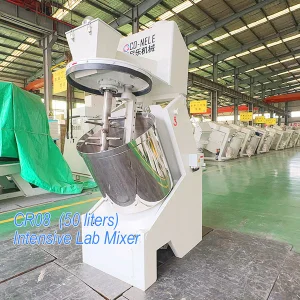
Variable rotor speed up to 3000 RPM. Ideal for lithium spodumene processing, battery cathode formulation, and abrasive mining slurry homogenization.
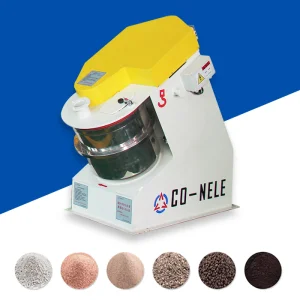
Compact 10L capacity with inclined mixing pan technology. Provides 100% reproducible micro-mixing for high-tech ceramics and rare earths.
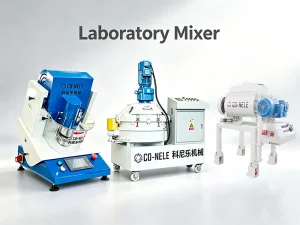
Counter-current star mixing motion engineered for alkali-activated materials, fly ash geopolymers, and steel-fiber UHPC mix designs.
Australia's industrial backbone is undergoing a massive transformation driven by decarbonization imperatives, critical mineral refining, and advanced civil infrastructure mandates. From the Pilbara iron ore corridor and the Kwinana lithium processing belt in Western Australia to green concrete labs across Victoria and New South Wales, the requirement for ultra-homogeneous, repeatable mixing at laboratory scale has never been more vital.
E-E-A-T Technical Benchmark: Modern material science demands a Coefficient of Variation (CV) < 3% in micro-component distribution. Legacy paddle and ribbon mixers fail to eliminate dead zones, causing wide standard deviations in mechanical strength and chemical stability. Precision laboratory mixers engineered by CO-NELE bridge the critical gap between lab R&D and industrial mass production.
Australia dominates the global supply of spodumene (lithium), nickel, cobalt, and rare earth elements. Processing these raw materials into battery-grade precursor chemicals requires exact liquid-solid dispersion, acid leaching homogenization, and dust-free pelletization/granulation. Laboratory intensive mixers allow process engineers to optimize residence times and binder ratios with sample sizes as small as 5 to 15 liters.
With Australia’s aggressive targets for zero-carbon infrastructure, concrete producers are replacing traditional Portland cement with Blast Furnace Slag (GGBFS), fly ash, and calcined clays. Alkali-activated geopolymers exhibit high liquid viscosity and rapid shear-thinning behavior. CO-NELE counter-current laboratory mixers deliver high kinetic energy input to completely activate silicates and disperse synthetic fibers without balling.
Standard drum mixers, twin-shaft mixers, and planetary food-type mixers are fundamentally unsuited for technical powder mixing and ultra-high-performance slurries. To achieve true micro-homogeneity, the mixer vessel must impart localized velocity gradients and multi-directional shear vectors.
In a CO-NELE planetary lab mixer, the mixing star revolves eccentrically around a central axis while rotating rapidly in the opposite direction. Simultaneously, wall and bottom scraper blades divert material continuously into the path of the high-speed mixing rotor.
CO-NELE intensive laboratory mixers (CR and CQM series) feature an inclined rotating vessel combined with a high-speed rotor tool running at peripheral speeds up to 30 m/s.
| Mixer Parameter | Laboratory Planetary Mixer (CMP/CDW) | High-Shear Intensive Mixer (CR/CQM) | Traditional Twin-Shaft / Drum |
|---|---|---|---|
| Batch Capacity Range | 10 L – 150 L | 5 L – 75 L | 50 L – 500 L |
| Mixing Kinematics | Counter-Current Star Kinematics | Inclined Vessel + High-Speed Rotor | Fixed Horizontal Parallel Shafts |
| Homogeneity (CV%) | < 2.5% (Very High) | < 1.5% (Ultra-High) | 5% – 8% (Moderate) |
| Application Focus | UHPC, Precast, Dry Mortar, GFRC | Lithium Powders, Refractories, Ceramics | Standard Concrete Ready-Mix |
| Granulation Capability | Limited | Excellent (0.5 – 8mm Sphericity > 90%) | None |
| Scale-Up Correlation | 1:1 Direct Volumetric Transfer | Direct Kinematic Velocity Transfer | Non-linear scale-up errors |
For Australian enterprise buyers and laboratory managers, sourcing capital equipment requires a balance between precision engineering standards and total cost of ownership (TCO). Qingdao CO-NELE Machinery Co., Ltd. represents the apex of specialized Chinese heavy-machinery manufacturing.
Unlike competitors who assemble third-party commercial gearboxes, CO-NELE designs and machines proprietary planetary reducers specifically built to absorb extreme torsional shocks caused by dry steel-fiber concrete and abrasive mining pastes.
Standard steel liners wear out within months when processing quartz silica, iron ore, or corundum. CO-NELE equips laboratory and industrial mixing pans with replaceable high-chrome alloy liners (Cr26) rated at >60 HRC hardness for maximum operational lifespan.
Operating out of 3 major production bases spanning 30,000 m² in Qingdao, CO-NELE delivers tailored lab-to-factory equipment within 30 to 45 days, integrated with Australian electrical standards (415V, 50Hz, Schneider/Siemens PLCs).
Challenge: A Western Australian mining research facility needed to evaluate wet binder dispersion in fine spodumene concentrate powders before industrial pelletizing.
Solution: Deployment of a CO-NELE CR08 High-Shear Intensive Lab Mixer. The combination of counter-rotating pan motion and 2500 RPM rotor speed yielded spherical granules with uniform moisture distribution, reducing drying energy in downstream kilns by 18%.
Challenge: A architectural precast producer in NSW experienced micro-cracking due to uneven distribution of 13mm straight steel fibers in ultra-dense concrete mix designs (>150 MPa).
Solution: Implementation of a CMP Series Planetary Counter-Current Lab Mixer to refine mix recipes. The 3D star-kinematic action completely dispersed 3% volume steel fibers in 90 seconds, securing flawless surface finishes and zero fiber clumping.
Challenge: A refractory manufacturer supplying aluminum smelters required precise addition of micro-silica fumes (<1 micron) into alumina-magnesia castables.
Solution: CO-NELE CQM10 Laboratory Intensive Mixer provided precise energy input, de-agglomerating ultrafine particles and reducing water demand by 2.5%, boosting cold crushing strength after firing.
Challenge: University researchers testing brown coal fly ash and slag combinations required repeatable chemical liquid-solid dosing under variable ambient temperatures.
Solution: CDW Laboratory Dry Mortar Mixer with jacketed liquid dosing injectors enabled precise chemical activation recording, allowing seamless transition to full-scale batching plant production.
Procuring industrial equipment for Australian operations requires strict compliance with local safety codes, electrical standards, and structural engineering integrity. CO-NELE ensures total peace of mind through rigorous export quality assurance.
All laboratory and production mixers shipped to Australia are configured for standard 415V, 3-Phase, 50Hz electrical supply. Wiring and control cabinets strictly adhere to AS/NZS 3000 (Wiring Rules) with CE and UL-certified Siemens/Schneider components and IP65 telemetry protection.
Operational safety is paramount. Mixer access covers feature dual-channel safety limit switches, captive key interlocks, and emergency stop circuits conforming to Australian Machinery Safety Standards (AS 4024.1).
CO-NELE maintains standard replacement wear parts, mixing blades, seal kits, and sensors in regional warehouses. Air-freight service guarantees replacement parts arrive at major Australian capital cities within 3 to 5 business days.
Our application engineers will assess your material density, viscosity, shear requirements, and batch sizes to recommend the ideal laboratory or production system.
Send Inquiry NowSeamlessly transfer your validated laboratory mixing recipes to commercial scale. CO-NELE manufactures industrial batching systems up to 6000L batch capacity, fully compatible with lab scale-up kinematics.
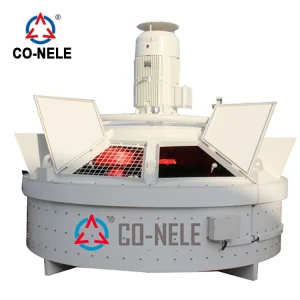
3000L output capacity. Engineered for precast bridge beams, railway sleepers, and structural dams across Australian civil contracts.
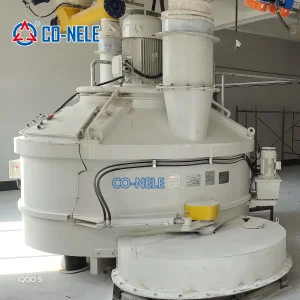
Dust-tight sealed design for silica sand, soda ash, and cullet batching. Prevents raw material segregation prior to furnace melting.
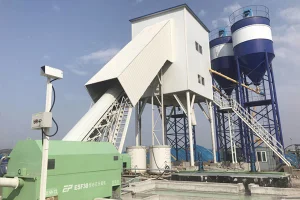
90 m³/h commercial production plant equipped with twin-shaft or planetary compulsory mixer, automated aggregate dosing, and moisture sensors.
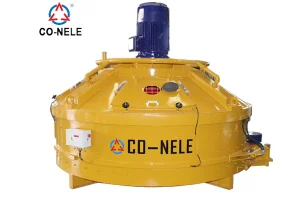
1500/1000L capacity. The gold standard for precast concrete pipes, pavers, kerbs, and architectural wet-cast products.
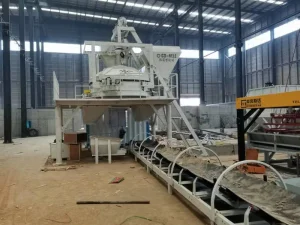
Complete integrated batching solution optimized for hollow-core slabs and structural precast wall panel manufacturing lines.
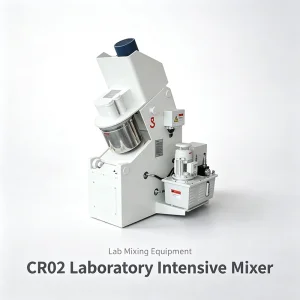
Specialized micro-granulator for diamond grit, CBN powders, and tungsten carbide tool manufacturing with ultra-high sphericity.
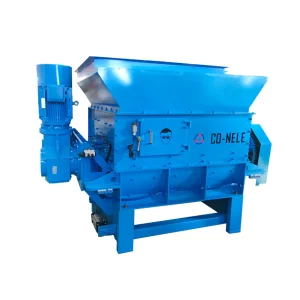
Thermal-jacketed compulsory twin-shaft asphalt mixer for polymer-modified bitumens, stone mastic asphalt (SMA), and recycled asphalt pavement (RAP).
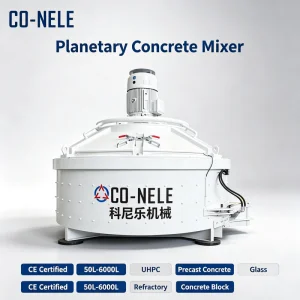
Reinforced high-torque drive system engineered to handle extreme shear resistance during fiber-reinforced UHPC batching cycles.
In-depth technical answers addressing common questions regarding laboratory scale-up, wear life, material trials, and voltage compatibility.
CO-NELE laboratory mixers (such as the CR08 and CQM10) are designed using identical kinematic geometry and Froude numbers as our industrial-scale intensive and planetary mixers. By maintaining linear peripheral tip speeds (m/s) and swept volume ratios between lab pans (5–75L) and production pans (500–4000L), process data—including mixing duration, energy input per ton, torque resistance, and moisture activation curves—can be directly scaled up with a 1:1 correlation factor without expensive trials on full-scale plants.
Yes. CO-NELE operates an advanced process testing facility at our headquarters in Qingdao. Australian mining, ceramic, and concrete research entities can send 10 kg to 50 kg raw material samples (e.g., spodumene concentrate, fly ash, micro-silica, or refractory aggregate). Our engineering team will perform high-shear mixing and granulation tests, record energy/rheology curves, test granule density and sphericity, and return a comprehensive technical trial report with high-definition video documentation prior to equipment purchasing.
Absolutely. Export models destined for Australia are built from the ground up to operate on 415V 3-Phase 50Hz electrical grids. Electrical control cabinets utilize CE/UL-listed Siemens PLCs, Schneider contactors, and variable frequency drives (VFDs). Wiring diagrams are labelled in English and meet AS/NZS 3000 and AS 4024 machinery safety standards, including dual-channel safety door switches and emergency stop relays.
Depending on material abrasiveness, CO-NELE mixing pans and mixing tools can be equipped with tungsten carbide thermal spray coatings, high-chrome cast alloy liners (Cr26, HRC > 60), or interchangeable ceramic/elastomer liners. For ultra-pure electronic grade powders or battery materials where metal contamination is prohibited, we offer polyurethane and alumina ceramic lining options.
Manufacturing lead time for standard laboratory mixers is typically 20 to 30 days. Direct sea freight from Qingdao Port to major Australian ports (Sydney, Melbourne, Fremantle/Perth, Brisbane) takes approximately 12 to 18 days depending on the shipping line. Fast-track air freight is also available for compact lab units (CDW100 / CR08) when project deadlines require expedited delivery within 7 days.
Partner with Qingdao CO-NELE Machinery Co., Ltd.—the global leader in planetary and intensive mixing technology. Talk with our senior application engineers to receive custom technical drawings, scale-up proposals, and formal price quotes.
Send Inquiry Now