
CO-NELEMixing & Granulation
Advanced lab-scale intensive mixers engineered for precise formula development, pilot tests, and seamless scale-up across Norwegian research centers and industrial laboratories.
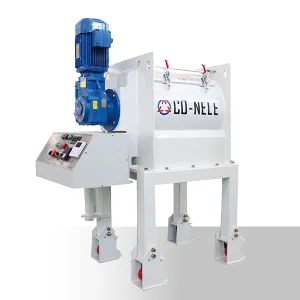
High-precision laboratory dry mortar batching mixer designed for specialized Nordic polymer-modified mortar and dry powder formulations.
View Machine Details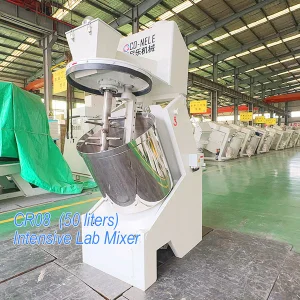
Vertical inclined intensive pan mixer providing high-shear micro-homogeneity for advanced ceramics, battery compounds, and fine refractories.
View Machine Details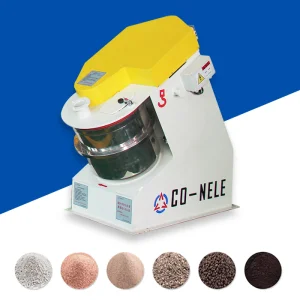
Compact 10-liter lab intensive mixer delivering controlled kinetic energy for pilot-scale wet granulation and ultra-fine dispersion test trials.
View Machine Details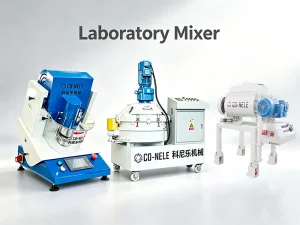
Planetary counter-current laboratory concrete mixer optimized for testing Ultra-High-Performance Concrete (UHPC) and cold-weather binder mixes.
View Machine DetailsNorway stands at the global forefront of green industrial transformation, high-value marine engineering, and advanced low-carbon materials research. Driven by strict Nordic environmental mandates, the Norwegian manufacturing and construction sectors demand extreme precision in raw material preparation. Key growth vectors including offshore wind foundations, deep-water fjord subsea tunnels, low-carbon geopolymer concretes, and the rapidly expanding Nordic battery production hub (such as operations in Mo i Rana and Grimstad) require industrial mixing systems that go far beyond standard agitation.
In materials engineering, the quality of the final sintered, cured, or compacted product is strictly governed by the homogeneity of the initial wet or dry mixture. In laboratory settings across institutions like NTNU (Norwegian University of Science and Technology) and SINTEF, as well as private corporate R&D divisions, raw material formulations involve high-viscosity slurries, sub-micron silica fume powders, synthetic fiber additives, and reactive binders. Standard tilt-drum or basic ribbon blenders create dead zones and micro-agglomerations, leading to structural failures under harsh Arctic stress tests.
Achieving micro-homogeneity at the laboratory phase is the single most critical factor in eliminating batch variance during industrial scale-up. A laboratory mixer must precisely mirror the mechanical energy input, shear forces, and residence time distributions of production-scale planetary and intensive mixers.
The CO-NELE laboratory mixing technology operates on advanced counter-current kinematic principles, engineered to solve the complex physics of multi-phase material homogenisation. Unlike conventional vertical mixers where mixing tools revolve around a fixed axis, our intensive and planetary laboratory units separate the rotation of the mixing pan from the rotation of the high-shear mixing tools.
Detailed Kinematic Breakdown:
Deploying machinery in Norway requires meeting tough local operational constraints, including low ambient operational temperatures, stringent NORSOK offshore anti-corrosion standards, and strict worker safety regulations under the Norwegian Labour Inspection Authority (Arbeidstilsynet).
The core objective of investing in a high-end laboratory mixer is to establish predictable, mathematical scale-up parameters for industrial manufacturing. A key point of failure in chemical and concrete plant engineering occurs when lab-scale recipes behave unpredictably when transferred to large-capacity production mixers.
CO-NELE solves this challenge through Geometrically Identical Kinematic Scaling. Our laboratory series (e.g., CR08, CQM10, CDW100) shares exact proportional geometry, blade tip speed ratios ($\text{v} = 15 - 32\text{ m/s}$), and specific energy dissipation rates ($\text{kW/m}^3$) with our heavy industrial CMP planetary and CQ intensive mixer lines.
1. Laboratory Trial ($5\text{L} - 10\text{L}$): Determine optimal mixing sequence, fluid add-time, and peak torque point via live PLC logging.
2. Pilot Validation ($50\text{L} - 100\text{L}$): Measure rheological yield stress, slump flow retention, and air void stability.
3. Industrial Execution ($1000\text{L} - 3000\text{L}$): Direct transfer of VFD mixing profiles without adjusting chemical admixture dosage ratios.
Need customized lab mixer configurations, ATEX ratings, or material testing reports? Connect directly with our engineering team today.
Send Inquiry NowHeavy-duty, full-scale industrial mixing plants and specialized granulating equipment engineered for high-throughput Norwegian infrastructure, mining, refractory, and precast manufacturing projects.
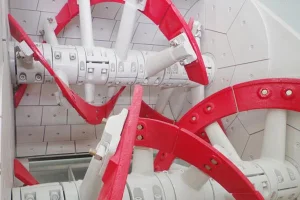
High-efficiency dual-shaft continuous compulsory mixer optimized for heavy civil infrastructure works and dam construction projects.
View Machine Details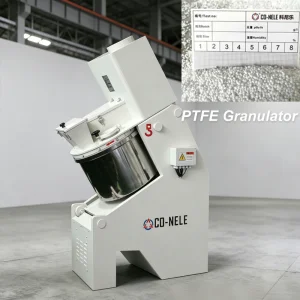
Specialized chemical-grade intensive mixing granulator for high-density PTFE powders and advanced polymer composite compounds.
View Machine Details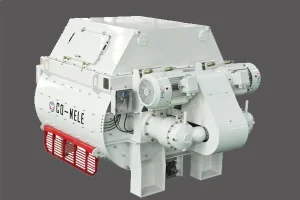
Heavy-duty double spiral shaft compulsory mixer delivering rapid homogenisation for large-volume ready-mix batch plants.
View Machine Details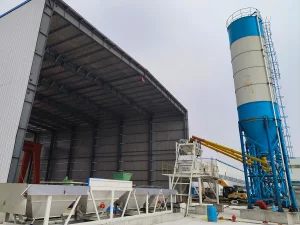
Automated 60m³/h concrete batching plant specifically designed for high-density core vibration concrete pipe and precast element production.
View Machine Details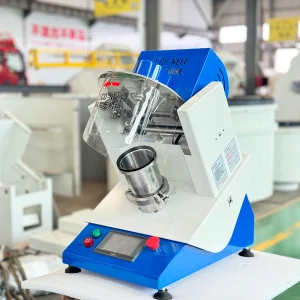
High-yield wet granulator for alumina ceramic powders, featuring 90%+ granule sphericity and optimized bulk density for hydraulic pressing.
View Machine Details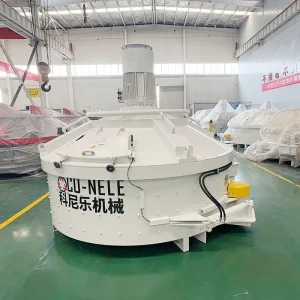
Counter-current planetary mixer with high-chrome interchangeable wear liners engineered for mixing dense abrasive refractory castables.
View Machine Details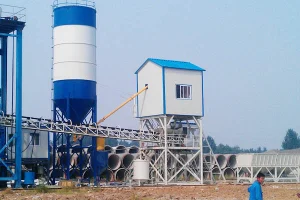
Integrated mixing plant engineered for low-slump dry-cast concrete used in environmental sewage and drainage pipe manufacturing.
View Machine Details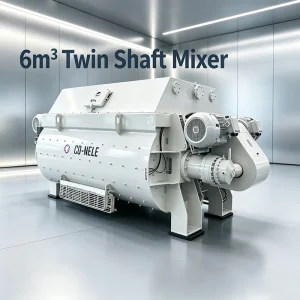
Massive 6 cubic meter batch output compulsory twin-shaft mixer equipped with dual hydraulic discharge gates for mega infrastructure projects.
View Machine DetailsHow CO-NELE aligns with Nordic engineering standards, CE directives, digital twin automation, and sustainability metrics for procurement across Norway.
Procuring capital machinery for installation in Norway mandates adherence to both European Union directives and specialized Norwegian building standards (TEK17) and workplace codes.
The industrial mixing landscape is shifting rapidly toward Industry 4.0 automation, smart sensors, and zero-emission processing lines.
Expert answers to the most common engineering, shipping, operational, and financial questions asked by Norwegian buyers and process managers.
A: Vertical-shaft planetary counter-current mixers provide superior micro-homogeneity for dry, zero-slump, fiber-reinforced, or highly viscous mixtures such as Ultra-High Performance Concrete (UHPC), battery slurries, and advanced ceramics. While twin-shaft mixers excel in high-throughput wet ready-mix concrete ($> 2\text{ m}^3$), planetary counter-current kinematics eliminate dead zones completely, keeping the Coefficient of Variation ($CV$) below 3% in under 60 to 90 seconds of mixing time.
A: Yes. While most European industrial sites operate on a 400V TN-S grid, several regions in Norway utilize a 230V IT-grid system. CO-NELE electrical engineers build custom control panels, transformers, and VFD drives certified for 230V 3-Phase 50Hz IT-grid operation or standard 400V 3-Phase 50Hz, fully compliant with CE safety standards.
A: We offer a comprehensive trial testing program. Norwegian clients can ship 15 kg to 50 kg of raw powder, aggregate, or slurry to our Qingdao Material Test Laboratory. Our process engineers run trial batches on 5L to 75L laboratory mixers, recording torque curves, energy absorption, granule size distribution, and sphericity. We provide a full technical report and scale-up recommendations prior to contract signing.
A: CO-NELE mixers feature bolt-on, easily replaceable high-chrome alloy liners (hardness $\ge HRC 62$) or optional ceramic/polyurethane liners for non-metal contamination requirements (such as battery materials or white quartz powder). Liners and mixing arms typically withstand 100,000 to 150,000 batches under standard conditions, and spare parts are permanently available from stock.
A: Deliveries are shipped directly via container sea freight to major Norwegian ports including Oslo, Bergen, Stavanger, and Trondheim. All equipment is packed in export-grade wooden cases with moisture-proof vacuum wrapping and rust-inhibitor coatings. Spare parts order dispatches occur within 24 to 48 hours via air express (DHL/FedEx).
A: All standard machines include a 12-month full drive train warranty (gearbox, electric motor, frequency converter). Technical assistance is offered 24/7 via remote video commissioning, PLC online diagnostics, and optional on-site resident engineer dispatch for installation supervision and operational training.
Partner with QINGDAO CO-NELE MACHINERY CO., LTD. for field-proven planetary mixers, intensive granulators, and turnkey batching plants engineered to Nordic quality standards.