
CO-NELEMixing & Granulation
High-torque, forced-action planetary batching systems engineered to meet Austrian ÖNORM B 4710-1 and EN 206-1 standards.
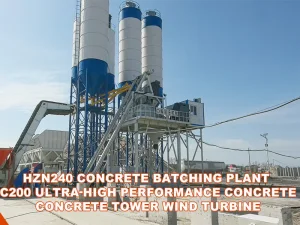
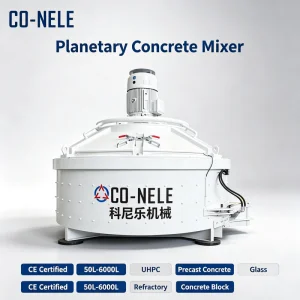
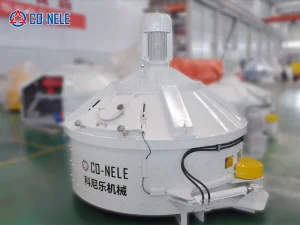
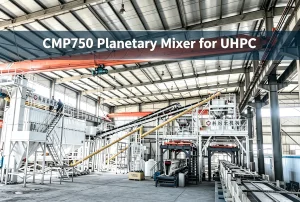
Austria’s civil engineering landscape is undergoing a profound structural evolution driven by severe alpine climactic exposure, stringent environmental regulations, and demanding durability requirements set forth by national bodies such as the ASFINAG (Highway & Infrastructure Authority) and ÖBB (Austrian Federal Railways). As the Alpine nation accelerates its transit modernization, bridge rehabilitation programs, and renewable energy infrastructure, conventional concrete formulations are rapidly reaching their physical limitations.
Ultra-High Performance Concrete (UHPC)—characterized by a dense particle packing design, water-binder ratios below 0.18, compressive strengths exceeding 150 to 220 MPa, and exceptional resistance to freeze-thaw cycles and deicing salts (Exposure Classes XF4 and XD3 under ÖNORM B 4710-1)—has transitioned from an academic novelty to a mission-critical structural material in Austria. However, the production of UHPC presents unique physical and rheological challenges that standard twin-shaft ready-mix batchers or legacy vertical pan mixers cannot resolve.
The mixing physics of UHPC differ fundamentally from standard ready-mix concrete. Due to the high proportion of ultrafine powders (micro-silica, quartz flour, fly ash) and specialized polycarboxylate ether (PCE) superplasticizers, raw UHPC mixes exhibit extreme yield stress and initial dry viscosity prior to chemical activation. Traditional twin-shaft compulsory mixers often suffer from severe "blind spots", material wrapping around mixing shafts, and incomplete breakdown of agglomerated silica fume clusters.
Furthermore, when high-tensile steel micro-fibers (typically 2.0% to 3.5% by volume, with aspect ratios L/D > 65) are introduced to meet Austrian ductility requirements, conventional agitation causes fiber balling ("hedgehoging"). This creates localized structural weak points that jeopardize bridge joints, precast wind tower segments, and thin-walled architectural facades across Vienna, Linz, Graz, and Innsbruck.
Understanding the mechanical motion vectors that deliver complete micro-homogeneity and zero dead-zone batching for complex Austrian formulations.
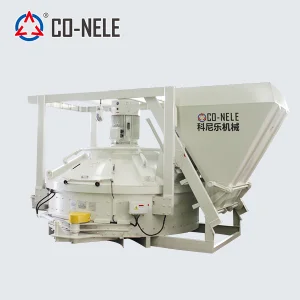
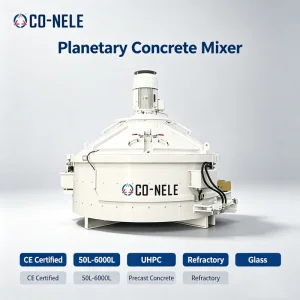
The mixing blades rotate on planetary axes while simultaneously revolving around the central pan axis. This creates complex, non-repeating cycloidal paths that cover 100% of the pan floor every 4 rotations.
Mechanical shear forces instantly break down micro-silica agglomerates, ensuring full dispersion of PCE superplasticizers and reducing the liquid activation window by up to 40% compared to horizontal twin-shaft units.
Specially contoured planetary arms separate steel micro-fibers along fluid streamlines. Fiber balling is mathematically eliminated, delivering isotropic tensile strength throughout the concrete matrix.
From Alpine pass tunnels to urban architecture, CO-NELE UHPC mixing machinery is engineered for Austria's specific geographic and regulatory conditions.
Highway bridges along the A1 West Autobahn and A13 Brenner Autobahn require ultra-thin, impermeable UHPC wear layers (30–50 mm) capable of withstanding heavy truck axle loads, freeze-thaw cycles, and liquid deicing agents. CO-NELE mobile and stationary mixers guarantee zero micro-cracking and flawless bond strength between old substrate and new overlay.
Deep alpine tunneling projects such as the Semmering Base Tunnel and Koralm Railway demand extreme fatigue resistance and fire spalling defense. Our planetary batchers produce dense UHPC invert elements with PP micro-fiber and high-tensile steel fiber blends, fulfilling ÖBB structural engineering guidelines.
Austrian contemporary architecture demands ultra-slender, highly intricate, self-compacting UHPC curtain wall panels and public furniture. CO-NELE CMP series mixers maintain precise color uniformity, eliminate surface air voids (bugholes), and achieve high-fidelity mold replication.
Empirical comparison based on laboratory trials and field batching data under European testing standards.
| Performance Metrics | CO-NELE Planetary UHPC Mixer | Standard European Twin-Shaft | Legacy Ring Pan Mixer |
|---|---|---|---|
| Micro-Homogeneity (CV) | < 2.5% (Exceptional) | 5.5% - 8.0% (Moderate) | 4.0% - 6.0% (Fair) |
| Steel Fiber De-clumping | 100% Uniform Dispersion | Frequent Fiber Balling | Partial Fiber Clustering |
| Mixing Cycle Time (UHPC) | 180 - 240 Seconds | 360 - 480 Seconds | 300 - 420 Seconds |
| Wear Life (Chromium Liner) | > 120,000 Batches | 45,000 - 60,000 Batches | 50,000 - 70,000 Batches |
| Energy Consumption / m³ | Reduced by 22% | Baseline High | Baseline Moderate |
| CapEx Cost Advantage | 35% - 45% Savings | Premium High Cost | Moderate High Cost |
CO-NELE operates three state-of-the-art production bases covering over 30,000 square meters in Qingdao, China. By combining rigorous Chinese heavy manufacturing scale with top-tier European drive and automation components, we deliver unmatched industrial equipment reliability tailored for the Austrian market.
Unlike assemblers who outsource gearboxes, CO-NELE engineers and manufactures its heavy-duty planetary reducers in-house with custom hardening treatment to withstand extreme torsional shock loads during dry UHPC batching.
Equipped with Siemens S7-1500 PLC control systems, SEW-Eurodrive or NORD gearmotors, Schneider electrical components, and SKF/FAG heavy-duty bearings, guaranteeing effortless local maintenance across Austria.
Fully certified under Machinery Directive 2006/42/EC and EN 12151. Complete technical documentation in English and German, complete with EU Declaration of Conformity and full electrical schematics.
As the global construction sector pivots toward decarbonization and digitized jobsite management, CO-NELE is pioneering smart mixing innovations designed to integrate seamlessly into Industry 4.0 precast plants across Central Europe.
Integrated drive torque profiling and high-frequency microwave moisture probes monitor slump, shear resistance, and fluid transition in real time, automatically adjusting PCE dosing without operator intervention.
OPC-UA cloud connectivity allows Austrian plant managers to monitor gear oil temperature, vibration spectral data, and wear liner remaining lifespan directly from smartphone or desktop dashboards.
Engineered mixing profiles designed for calcined clay (LC3), geopolymers, and high-slag binder systems, facilitating Austria’s strict 2030 CO2 reduction targets for infrastructure materials.
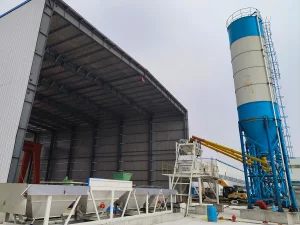
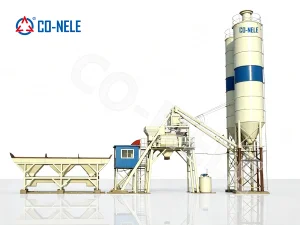
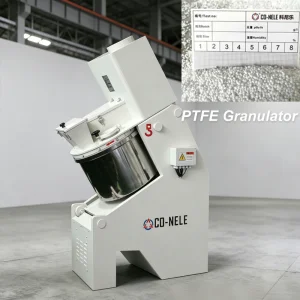
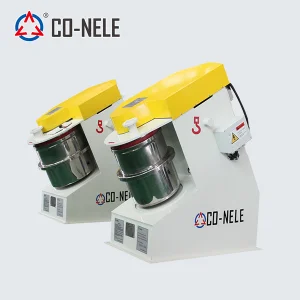
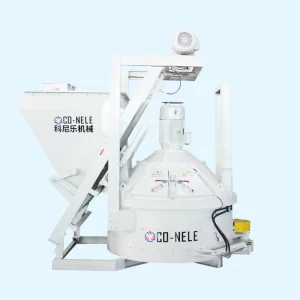
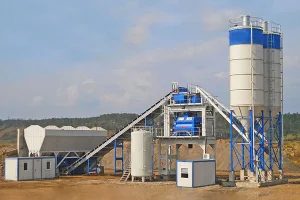
Versatile industrial solutions for readymix, precast, pipe manufacturing, granulating, and dry mortar production.
Addressing technical compliance, logistics, wear life, and local installation services for Austrian contractors.
CO-NELE mixers and batching plants are built strictly in accordance with European Machinery Directives (2006/42/EC), EN 12151, and EN 60204-1. Our batching software generates complete digital batch records matching ÖNORM requirements for traceability, cement/water ratio accuracy (±1%), aggregate dosing (±2%), and high-precision PCE admixture dosing (±1%).
Twin-shaft mixers push material in counter-rotating horizontal arcs, which often causes high-aspect ratio steel micro-fibers to bundle together in low-velocity zones near shaft seals. CO-NELE vertical planetary mixers create complex three-dimensional flow paths. The high-speed planetary arms continuously slice through the fluid paste, pulling individual fibers apart along shear planes to ensure complete isotropic fiber distribution.
For extreme abrasion recipes common in Austria (such as heavy silica fume and ground quartz matrices), CO-NELE supplies wear plates cast from high-chromium alloy (HRC ≥ 62) or optional tungsten carbide surfaced blades. Under typical UHPC production conditions, our liners regularly exceed 40,000 to 60,000 batches before requiring bolt-on replacement.
All export machinery shipped to Austria is wired for 400V 3-Phase 50Hz electrical grids, utilizing standard European industrial colors and terminal numbering. We integrate Siemens PLC controls, Schneider contactors, and SEW/NORD gearmotors so spare parts can be acquired locally within 24 hours anywhere in Austria.
Yes. Customers can ship 20-50 kg samples of local Austrian cements, aggregate fractions, and micro-powders to our Qingdao R&D testing center. Our engineers will perform mixing trials, record torque-time curves, analyze slump flow, measure fiber dispersion, and provide a full technical laboratory report prior to contract execution.
Contact our technical sales engineers to receive a customized plant layout proposal, mixing trial evaluation, or direct quotation for your upcoming Austrian project.