
CO-NELEMixing & Granulation
Engineered specifically for high-accuracy formulation testing, micro-granulation, and rapid material scale-up across Osaka’s advanced battery, ceramic, and chemical laboratories.
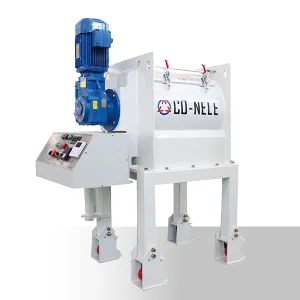
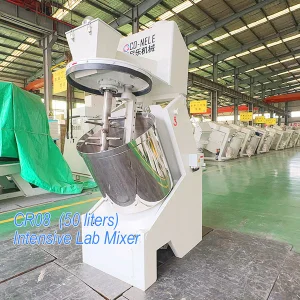
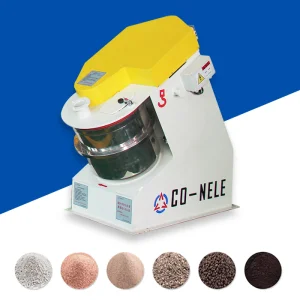
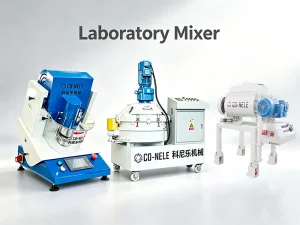
The Osaka Bay Industrial Zone and the broader Keihanshin (Osaka-Kyoto-Kobe) metropolitan area represent one of the world's most dense concentrations of advanced material R&D, fine chemical manufacturing, and next-generation battery development. As Japanese industrial leaders transition from traditional manufacturing toward ultra-high-precision electronics, solid-state battery cells, structural ceramics, and specialized cementitious matrixes, the fundamental metric of process success has migrated from gross volumetric throughput to micro-scale dispersion homogeneity.
For enterprise research institutes located across Sakai, Suminoe, and Kansai Science City (Keihanna), acquiring high-performance laboratory equipment from leading Chinese manufacturers—specifically specialized forced-action planetary and intensive mixers—has become a strategic lever. By bridging world-class engineering execution with lean manufacturing structures, Chinese laboratory mixers deliver superior torque control, variable-shear rotor dynamics, and contamination-free vessel options at a fraction of European equipment capital expenditure, fully compliant with JIS (Japanese Industrial Standards) and CE guidelines.
Standard laboratory mixers often fail to predict industrial-scale fluid dynamics because they rely on simple low-rpm agitation. CO-NELE intensive laboratory units employ variable-speed rotor-to-pan planetary velocity ratios, enabling researchers in Osaka to isolate shear stress from residence time. This eliminates empirical trial-and-error when transitioning formulations from 5-liter lab batches to 3,000-liter factory plants.
Understanding the physics of counter-current forced mixing: how mathematical scaling models convert lab research into industrial reality.
High-viscosity cathode/anode mixing requires intensive shear energy to deagglomerate nano-scale conductive additives without fracturing active crystal structures. Controlled kinetic energy input prevents localized hot spots.
Granulation of sub-micron alumina, zirconia, and silicon nitride powders demand binder dispersion with exact moisture control to achieve granule sphericity >90% for subsequent dry pressing.
Ultra-High Performance Concrete (>150 MPa) formulated with silica fume and steel micro-fibers requires high particle packing density. Lab mixers must strip air pockets and distribute fibers without balling.
| Kinetic Parameter | Formula / Ratio Indicator | Laboratory Scale (CR08 / CQM10) | Production Scale (CMPS / CHS) | Process Impact on Final Formula |
|---|---|---|---|---|
| Froude Number (Fr) | \( Fr = \frac{v^2}{g \cdot R} \) | Dynamic tuning (0.5 – 3.2) | Fixed baseline (1.8 – 2.5) | Determines material flight vs. sliding motion in pan |
| Tip Speed Ratio (\(v_{tip}\)) | \( v = \pi \cdot d \cdot n \) | Up to 30 m/s (Rotor) | 18 – 25 m/s (Main Star) | Controls agglomerate breakdown and shear rate |
| Power Density | \( P_v = \frac{P_{motor}}{V_{batch}} \) | 15 – 45 kW/m³ | 8 – 22 kW/m³ | Ensures macro dispersion in under 60 seconds |
| Mixing Uniformity | Coefficient of Variation (CV) | < 1.5% | < 3.0% | Guarantees identical mechanical specs batch-to-batch |
Traditional gravity drum or horizontal twin-shaft laboratory mixers present inherent limitations when applied to modern high-tech material synthesis. They create significant dead zones near vessel sidewalls and suffer from low shear rates that leave micro-fine powders unmixed.
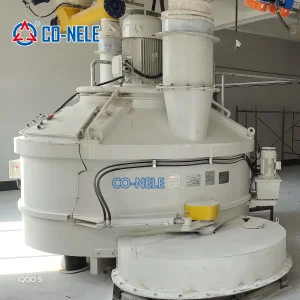
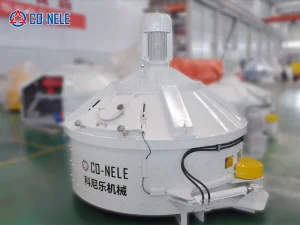
CO-NELE laboratory mixers overcome these physics barriers through two distinct patented kinematic architectures:
The mixing star revolves on a central axis while simultaneously rotating at high speeds around its own shaft. This counter-current trajectory ensures 100% pan coverage per revolution without material segregation.
Combining an inclined rotating pan with an eccentrically mounted high-speed rotor tool. Material is carried upward by pan rotation and directed straight into the intense shear zone of the rotor, enabling mixing, dispersion, and wet granulation in a single step.
Tailored technological solutions responding directly to Kansai’s specialized industrial focus areas.
Context: Osaka’s coastal hubs (Suminoe, Sakai) are at the forefront of lithium-ion energy storage innovation. R&D facilities require precise homogenizing of solid electrolytes and conductive carbon black.
Solution: The CQM10 Intensive Laboratory Mixer equipped with vacuum-sealed mixing chambers, ceramic tile vessel interiors, and jacketed heating/cooling controls ensures uniform binder distribution without solvent evaporation.
Context: Production of sub-micron ceramic substrates for electronic components demands micro-spherical granules with narrow particle size distribution for flawless automated press die filling.
Solution: The CR08 Lab Mixing Granulator converts powder, water, and organic binders into spherical granules (0.2–2.0 mm) within 3–5 minutes, replacing high-energy spray dryers.
Context: Infrastructure engineers require Ultra-High-Performance Concrete (UHPC) and ductile fiber-reinforced cementitious composites for bridge reinforcement.
Solution: Planetary Laboratory Concrete Mixers deliver extreme shear forces capable of breaking down dry micro-silica agglomerates and dispersing up to 3% volumetric steel/polypropylene fibers without clustering.
Context: Developing unshaped refractory castables and ladle linings capable of withstanding >1700°C thermal shock requires complete wet-out of low-water formulations.
Solution: Heavy-duty planetary drive units handle high viscosity, low-moisture (<4% water content) refractory recipes with instant torque response and automatic power logging.
Pioneering next-generation mixing technology with real-time sensor integration and predictive scale-up analytics.
Integrating microwave moisture probes and continuous motor torque analysis directly into the mixing pan, giving researchers real-time curves of viscosity evolution during binder addition.
Proprietary software translates lab torque and speed profiles into exact frequency inverter parameters and blade angle recommendations for 1,000L – 4,000L industrial units.
Vacuum-tight seals and inertia gas purging (Argon/Nitrogen) for reactive metal powders, battery electrolytes, and oxygen-sensitive advanced ceramic synthesis.
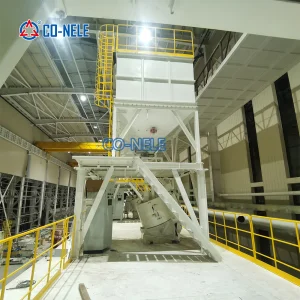
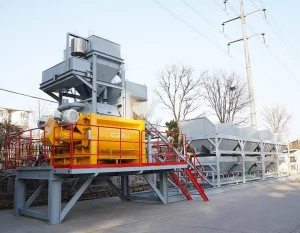
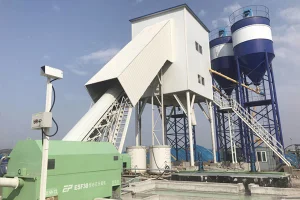
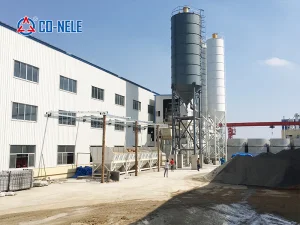
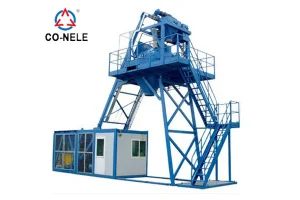
CO-NELE does not merely manufacture standalone laboratory units. We provide complete process continuity. Our engineering team designs pilot lines and industrial batching facilities that mirror the exact mixing mechanics validated during lab trials.
This complete capability guarantees that Osaka manufacturers can scale new material formulations smoothly without risking batch inconsistency, unmixed raw materials, or unexpected wear issues.
Direct engineering answers regarding Japanese electrical standards, wear part availability, and technical trial procedures.
Extending lab precision to high-throughput factory installations across glass, refractory, UHPC, and commercial concrete production.
Contact our technical team today to request a customized CAD layout proposal, arrange a material test run in our Qingdao laboratory, or receive an official quotation tailored to your voltage and application requirements.