
CO-NELEMixing & Granulation
Engineered to meet rigorous European quality standards, providing micro-homogeneity, high thermal efficiency, and zero aggregate segregation.
The construction and building materials landscape in France is currently experiencing an unprecedented transformation. Driven by stringent environmental regulations such as RE2020 (Réglementation Environnementale 2020) and national thermal efficiency initiatives like MaPrimeRénov', the French market has shifted massively toward high-performance dry-mix mortars. Job-site traditional mortar mixing (site-mixed mortar) is being rapidly phased out in favour of factory-produced, pre-blended dry mortars due to strict quality controls, labor shortages in regions like Île-de-France and Auvergne-Rhône-Alpes, and carbon reduction mandates.
Modern building applications in France demand specialized formulations: ETICS (External Thermal Insulation Composite Systems / ITE) adhesive mortars, ultra-thin tile adhesives (C2TE S1/S2 grades per EN 12004), self-leveling floor screeds (Chape Liquide), and low-carbon lime-cement restoration renders for historic masonry across Paris, Lyon, and Marseille. Achieving the technical requirements for these advanced formulations requires industrial powder mixers capable of dispersing minor additives—such as Hydroxypropyl Methylcellulose (HPMC), redispersible polymer powders (RDP), defoamers, and accelerators—at concentrations lower than 0.1% of total batch weight with zero agglomeration.
The modern French dry-mix mortar market demands zero-margin-for-error dosing and micro-homogeneity. Chinese industrial mixing technology, led by pioneers like CO-NELE, now combines high-shear plowshare and compulsory counter-current kinematics to meet European Norms (EN 998-1 and EN 998-2) at significantly lower capital investment costs.
In dry mortar manufacturing, achieving a homogeneous mix is not merely a matter of rotation time; it is a complex fluid-dynamics problem involving solid particles ranging from fine calcium carbonate (microns) to coarse silica sand (0.1–3.0 mm) and lightweight aggregates (expanded glass, perlite). Standard horizontal ribbon blenders often fail in these applications due to dead zones, slow batching cycles, and thermal degradation of polymer additives.
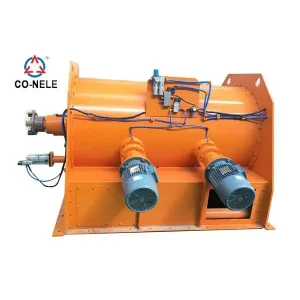
Utilizes shovel-shaped mixing elements operating at fluidizing speeds (Froude number > 1). Particles are thrown into a three-dimensional mechanical fluidized bed, ensuring 99.9% dispersion within 60 seconds.
Strategically mounted high-speed side choppers operating at 1,400–2,800 RPM break down fiber bundles (polypropylene/cellulose) and prevent agglomeration of fine pigments or HPMC polymer clusters.
Equipped with replaceable Hardox 500 or High-Chrome alloy liners (HRC ≥ 62) and tungsten carbide tipped mixing blades, delivering an operational life exceeding 150,000 batches even with abrasive quartz aggregates.
| Mixing Technology | Mixing Coefficient of Variation (CV) | Batch Cycle Time | Fiber Dispersion Ability | Ideal French Market Application |
|---|---|---|---|---|
| Single-Shaft Plowshare Mixer | < 2.5% | 45 – 70 sec | Excellent (With Choppers) | ETICS Adhesives, Technical Tile Glues, Polymer Renders |
| Twin-Shaft Non-Gravity Paddle Mixer | < 3.0% | 30 – 60 sec | Very Good | Masonry Mortars, Standard Plasters, Bricklaying Mortar |
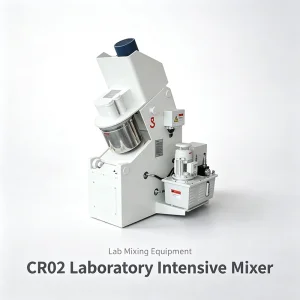
| Planetary Vertical Shaft Mixer | < 1.5% | 60 – 90 sec | Outstanding (High Shear) | Ultra-High-Performance Concrete (UHPC) & Heavy Grout |
| Traditional Ribbon Blender | > 6.0% | 180 – 300 sec | Poor (High Agglomeration) | Low-grade Sand-Cement Mixes (Outdated for EU Specs) |
Historically, French building material producers relied exclusively on domestic or European equipment suppliers based in Germany, Italy, or France. However, over the past decade, leading Chinese manufacturers—epitomized by Qingdao CO-NELE Machinery Co., Ltd.—have completely redefined the value proposition for global industrial buyers.
By investing heavily in internal R&D, establishing proprietary heavy machining facilities, and obtaining European safety certifications (CE compliance, ATEX dust-explosion proof ratings), top-tier Chinese manufacturers offer unique competitive advantages:
The transition toward eco-responsible building materials in France is driving new mixing challenges. The introduction of bio-sourced aggregates (such as hemp shives / chènevotte for hempcrete, wood fibers, and recycled glass beads) alongside low-carbon binders (calcined clays, blast furnace slag, and pozzolans) requires mixing equipment that operates with extreme gentleness yet absolute uniformity.
Compulsory single-shaft and planetary mixers designed by Chinese engineers feature variable-frequency drives (VFD) via Siemens SCADA control systems. This allows French plant operators to dynamically adjust tip speeds and shear rates during the batching sequence—preventing the destruction of delicate bio-aggregates while ensuring complete wetting and micro-dispersal of low-carbon cementitious matrices.
Expert answers addressing compliance, voltage specs, wear life, logistics, and technical customization for the European Union market.
Yes, absolutely. All export-grade machinery destined for France and the broader European Union is built strictly to CE standards. This includes EN 12100 for machine safety, EN 60204-1 for electrical equipment, interlocked safety switches on access doors, and optional ATEX-certified dust explosion prevention devices (rated for Zone 22 organic dust environments such as cellulose fiber or starch additives).
For standard mortar mixes with silica sand up to 2.5 mm, our High-Chrome alloy liners (Cr26) and tungsten-carbide-coated plowshares deliver a service life between 100,000 to 150,000 production cycles. All wear parts are fully bolt-on and easily replaceable in the field, minimizing plant downtime during scheduled maintenance.
Yes. Motors, drives, and control panels are custom-built to French standard industrial supply: 400V 3-Phase, 50Hz. Automation components feature world-leading brands including Siemens S7-1500 PLC systems, Schneider Electric relays, and ABB or Danfoss variable frequency drives (VFDs), with multi-lingual HMI touchscreens (French / English / German).
We strongly encourage material trial testing! Clients can ship 15–50 kg of raw material samples (aggregate, binder, specific polymers) to our testing laboratory in Qingdao. Our process engineers conduct mixing homogeneity tests, record power draw curves, measure shear behavior, and return a comprehensive technical trial report complete with video documentation prior to contract signing.
Standard manufacturing lead time is typically 30 to 45 days upon technical drawing approval. Ocean freight from Qingdao Port to major French sea hubs (Le Havre, Marseille-Fos, Dunkirk) takes approximately 28 to 35 days, providing an end-to-end delivery schedule of under 80 days.
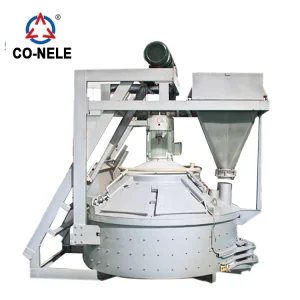
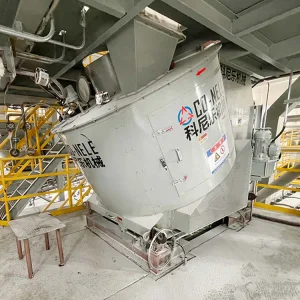
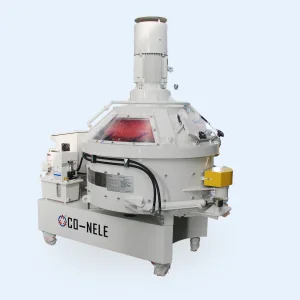
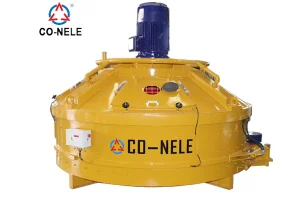
Explore our entire industrial product line designed for dry mortars, concrete products, refractories, and technical granulations.
Contact our senior process engineers today to receive a complete plant design layout, ROI assessment, and technical quotation customized to your raw material requirements.
Send Inquiry Now