CO-NELEMixing & Granulation
Direct factory access to precision-engineered planetary, twin-shaft, and intensive mixing systems deployed across global civil engineering projects.
When global EPC contractors, commercial ready-mix suppliers, and precast concrete manufacturers evaluate China twin shaft concrete mixer price dynamics, the initial FOB procurement figure represents only a fraction of total lifecycle expenditure. Understanding the key cost drivers enables procurement officers to optimize both CapEx and OpEx.
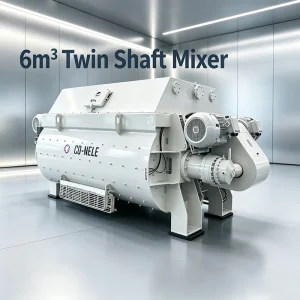
Industrial twin shaft mixers are priced based on discharge volume (typically ranging from 0.5m³ to 6.0m³ per batch). Larger models require heavy-duty synchronized gearboxes, reinforced structural frames, and multi-motor drive units, driving baseline pricing from $12,000 USD for compact units up to $120,000+ USD for high-throughput infrastructure mixers.
Gearbox engineering dictates operational longevity. Premium Chinese manufacturers incorporate planetary reducers, dual-shaft mechanical synchronization, and heavy-duty electric motors (such as Siemens or ABB options). High-efficiency drives cut power loss by up to 14% over standard spur-gear transmissions.
The operational lifespan of mixing paddles and liner plates depends on alloy composition. Upgrading from standard Ni-Hard cast iron to high-chromium alloy steel (Cr26+) increases batch life from 50,000 to over 150,000 cycles, reducing overall replacement downtime by up to 65%.
| Mixer Capacity (Discharge) | Theoretical Yield (m³/h) | Typical Price Range (FOB China) | Recommended Industrial Application | Key Engineering Feature |
|---|---|---|---|---|
| 0.5 m³ (CHS500 / JS500) | 25 m³/h | $8,500 – $14,500 USD | Small precast plants, rural road construction | Single-motor belt drive, manual hydraulic gate |
| 1.0 m³ (CHS1000 / JS1000) | 50 m³/h | $16,000 – $24,000 USD | Commercial ready-mix plants, foundation batching | Dual-reducer synchronization, high-chrome liners |
| 2.0 m³ (CHS2000 / JS2000) | 100 m³/h | $32,000 – $48,000 USD | High-speed railway projects, bridge infrastructure | Quadruple shaft-end seals, automated lubrication |
| 3.0 m³ to 4.5 m³ (CHS3000+) | 150 – 225 m³/h | $55,000 – $88,000 USD | Mega dam construction, port infrastructure | Planetary multi-stage reducer, moisture sensor port |
| 6.0 m³ (CHS6000 Heavy Duty) | 300 m³/h | $95,000 – $135,000 USD | Ultra-large commercial ready-mix hubs | Dual hydraulic discharge gates, continuous lube monitoring |
Why twin-shaft compulsory mixers outperform conventional drum and single-shaft units: fluid dynamic simulation, counter-rotating shear zones, and multi-layer shaft protection systems.
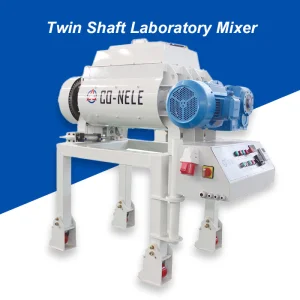
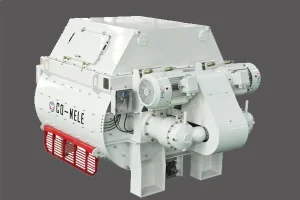
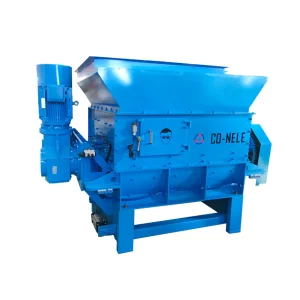
The twin-shaft architecture utilizes twin horizontal shafts fitted with staggered mixing arms and spiral blades. Rotating in opposite directions at synchronized speeds, the mixing blades propel aggregate, cement, water, and chemical admixtures both axially and radially.
This creates a 3D turbulent fluid turbulence zone in the center of the mixing tub. Aggregates collide in mid-air, rapidly achieving micro-homogeneity with a coefficient of variation (CV) < 5% within 30 to 45 seconds of mixing.
The most common failure point in twin shaft concrete mixers is cement slurry ingress into the main shaft bearings. Premium Chinese manufacturing solves this with a 4-stage seal protection matrix:
Understanding mechanical shear rate, energy consumption per cubic meter, and batch cycle times across mixing technologies.
Mixing Time: 30 - 45s
Shear Mechanics: Forced counter-current collision
Best For: High-volume ready-mix & infrastructure (>1.0m³)
Mixing Time: 60 - 90s
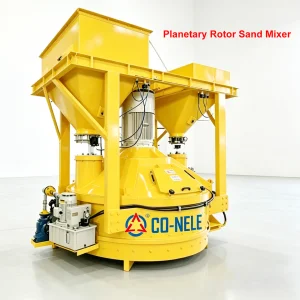
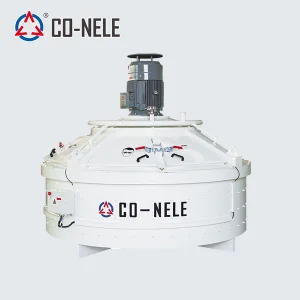
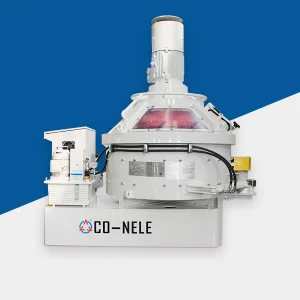
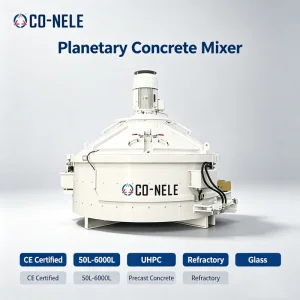
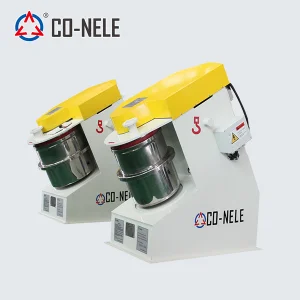
Shear Mechanics: Zero-dead-zone orbital planetary arms
Best For: UHPC, precast elements, dry-cast & color blocks
Mixing Time: 90 - 180s
Shear Mechanics: Gravity fall action
Best For: Low-grade slump concrete, small mobile sites
Leading Chinese manufacturers are integrating digital monitoring, AI batch optimization, and low-carbon concrete compatibility directly into twin-shaft mixing platforms.
In-pan microwave sensors detect moisture content 100 times per second, dynamically adjusting water dosing to maintain precise target slump tolerances.
Vibration and thermal telemetry monitor gearbox stress and shaft alignment, predicting wear component end-of-life before unplanned failures occur.
High-shear paddle geometries are optimized to homogenize high-percentage supplementary cementitious materials (fly ash, GGBS, calcined clay).
Adaptive RPM control modulates paddle speed throughout the batch cycle, reducing peak power demand by up to 22% during initialization.
Custom engineering configurations tailored to demanding operational environments globally.
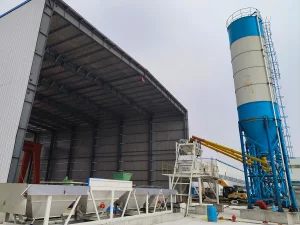
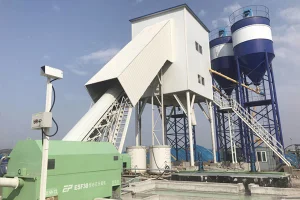
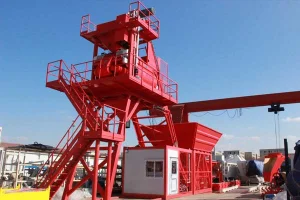
Continuous batching lines operating 24/7 require heavy-duty CHS series twin shaft mixers. Integrated with automated high-pressure washdown systems and dual hydraulic discharge gates to process up to 300 cubic meters per hour without batch cross-contamination.
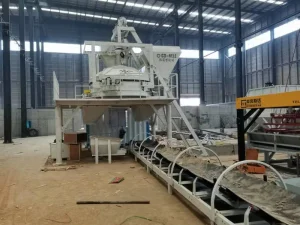
Combined with precision batching plants, twin shaft mixers deliver stable slump consistency for hollow-core slabs, precast wall panels, and utility culverts. Optional flying buckets and aggregate moisture compensation ensure uniform concrete density.
Mass concrete placement for dam walls and rail ballast beds demands handling zero-slump mixes containing large aggregates (up to 120mm). Reinforced mixing arms, oversized planetary gearboxes, and extra-thick wear plates handle harsh impact loading.
Exporting industrial mixing equipment requires adherence to electrical, safety, and mechanical regulations across international markets.
Every twin shaft concrete mixer and batching plant exported conforms to European Union CE directives (Machinery Directive 2006/42/EC and Low Voltage Directive 2014/35/EU). Manufacturing facilities operate under ISO 9001:2015 Quality Management Frameworks.
Motors, solenoid valves, and PLC control cabinets are customized to regional electrical standards: 220V/380V/415V/440V/480V at 50Hz or 60Hz. Schneider Electric and Siemens breakers ensure international spare availability.
Factory-trained service technicians manage foundation layout validation, mechanical assembly supervision, PLC commissioning, and operator safety training worldwide. OEM spare parts ship from centralized regional warehouses.
Direct answers to crucial commercial and engineering questions asked by global plant managers and buyers.
Complete concrete batching, granulating, and asphalt production systems built to withstand harsh industrial duty cycles.
Speak directly with our process engineering team to evaluate your batching requirements, review technical blueprints, and receive direct factory FOB/CIF pricing within 24 hours.