CO-NELEMixing & Granulation
Precision-engineered mixing solutions for precast, ready-mix, and specialized powder processing.
In modern civil engineering, concrete is no longer merely a structural commodity; it is a precisely engineered composite material. As infrastructure developments demand higher strength grades (C60 to C120), Ultra-High Performance Concrete (UHPC), self-compacting properties, and reduced carbon intensity through supplementary cementitious materials (SCMs), traditional batch mixing equipment faces severe fluid-dynamic limitations.
Key Engineering Takeaway:
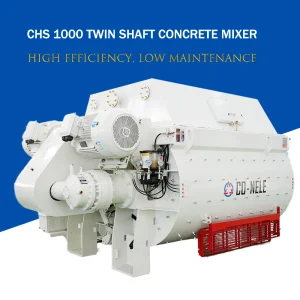
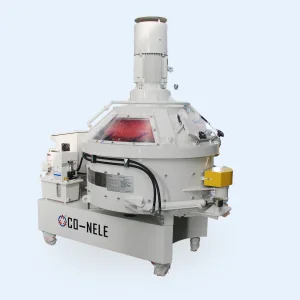
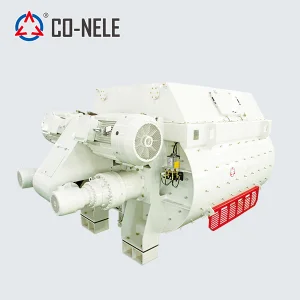
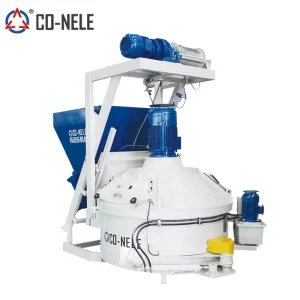
The Double Spiral Twin Shaft Concrete Mixer represents a quantum leap over conventional sequential paddle configurations. By replacing isolated mixing arms with continuous overlapping spiral ribbons, the system induces a 3D axial and radial counter-current convection pattern, yielding homogeneous dispersion of micro-silica, nano-admixtures, and fine fibers up to 45% faster while reducing drive energy consumption by 15–20%.
The international concrete and construction equipment market is undergoing structural shifts influenced by stringent environmental mandates, rising raw material costs, and project timeline compression.
With global commitments to net-zero concrete, batch plants are incorporating higher percentages of fly ash, granulated blast-furnace slag (GGBS), and calcined clays. These fine powders increase mix viscosity and require intense shear mechanisms that double spiral ribbons effortlessly provide without balling or segregation.
Infrastructure mega-projects (high-speed rail bridges, oceanic tunnels, wind turbine foundations) demand UHPC formulations containing steel or synthetic micro-fibers. Continuous spiral agitation prevents fiber clumping and ensures uniform spatial distribution throughout the entire batch volume.
Global EPC contractors and commercial ready-mix suppliers are transitioning focus from initial Capex to lifetime Opex. Energy savings of 1.5–2.5 kWh per cubic meter mixed translate to hundreds of thousands of dollars in operational savings over a mixer’s lifecycle.
Understanding fluid mechanics under forced-action compulsory mixing condition.
| Performance Parameter | Double Spiral Twin Shaft Mixer | Standard Blade Twin Shaft Mixer | Planetary Counter-Current Mixer |
|---|---|---|---|
| Mixing Kinematics | Continuous 3D Spiral Ribbon Convection | Segmented Radial & Axial Blade Pushing | Planetary Star Arm Orbital Circulation |
| Mixing Cycle Time (Standard Mix) | 30 – 45 seconds | 45 – 60 seconds | 60 – 90 seconds |
| Homogeneity (Coefficient of Var.) | CV < 3% (Micro-level) | CV < 5% (Macro-level) | CV < 2% (Ultra-micro) |
| Energy Consumption per m³ | Lowest (Optimized Hydrodynamics) | Moderate to High | Moderate |
| Fiber Concrete Dispersibility | Exceptional (No Clumping/Balling) | Moderate (Prone to Tangling) | High |
| Wear Material Longevity | Uniform Wear Pattern (+35% life) | Localized Wear on Blade Tips | High Rim & Floor Wear |
| Primary Ideal Applications | High-Volume Ready Mix, UHPC, HSR, Dams | General Commercial Ready-Mix Concrete | Precast Elements, Pavers, Refractories |
Why leading international engineering firms source their core compulsory mixing machinery from specialized Chinese manufacturers like CO-NELE.
China's integrated heavy industry supply chain allows direct access to high-chrome alloy wear parts (Chromium content ≥ 26%, hardness ≥ 62 HRC) and Ni-Hard cast iron liners. Specialized foundry processes ensure optimal abrasion resistance against high-quartz aggregates and harsh slag additives.
Unlike manual welding of traditional mixing arms, double spiral continuous ribbons require complex 3D helical bending and multi-axis robotic laser welding. This ensures perfect pitch symmetry, dynamic balancing, and minimal hydrodynamic resistance during high-speed rotation.
Leading Chinese OEM facilities house full-scale planetary and parallel-shaft gearbox assembly plants equipped with load-torque testing benches. Every reducer undergoes oil-leakage pressure checks, noise vibration analysis (NVH), and thermal stability verification before dispatch.
Adaptability across harsh environmental working conditions and specialized concrete recipes globally.
Continuous pouring for hydro-electric dam projects demands ultra-dry RCC mixes with low slump and large aggregate sizes (up to 80mm). The double spiral continuous mixing action generates intense shear force to fluidize zero-slump mixes quickly, preventing segregation at discharge.
Deployed in extreme cold environments (-30°C), double spiral mixers integrated with automated thermal steam injection ports ensure rapid batch heating and consistent hydration without freezing binder particles or damaging shaft seals.
Operating under ambient temperatures exceeding +50°C in Middle Eastern desert sites, the forced cooling lubrication systems and multi-layer floating labyrinth shaft seals prevent fine silica dust ingress while maintaining low oil temperatures during continuous 24/7 operations.
Direct answers from Senior Application Engineers to help global buyers evaluate double spiral concrete mixers.
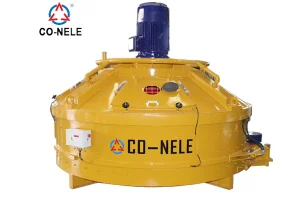
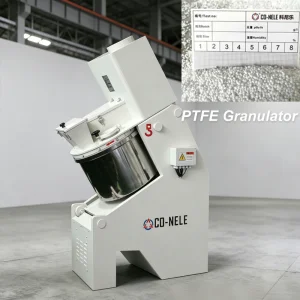
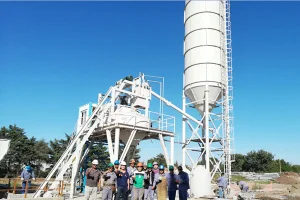
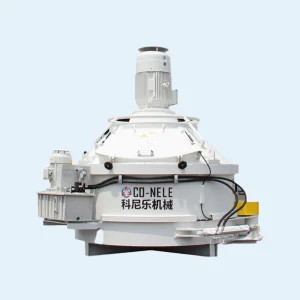
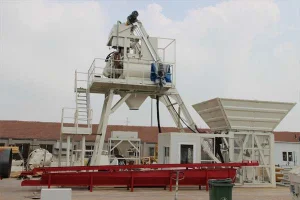
Explore our full lineup of mobile batch plants, castable mixers, and intensive laboratory granulators.
Whether you are engineering a high-speed railway concrete batching plant, upgrading a precast pipe facility, or developing proprietary UHPC formulations, our application engineers provide complete design support, custom 3D layouts, and raw material lab trial reports.