
CO-NELEMixing & Granulation
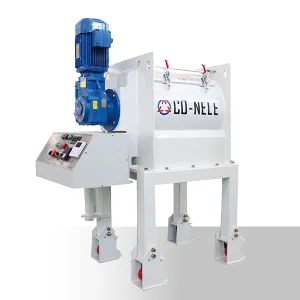
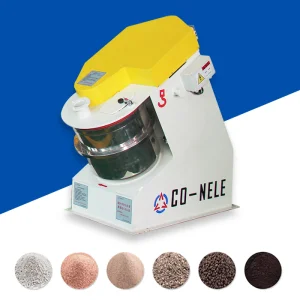
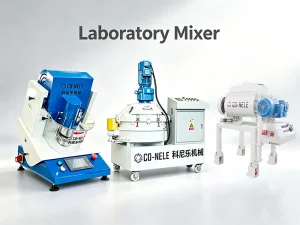
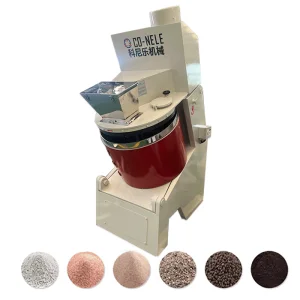
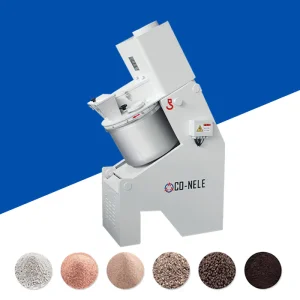
High-homogeneity laboratory intensive mixers designed for rapid formula development, scalable pilot testing, and complex multi-component batch synthesis.
Understanding the high-density innovation corridors of Pangyo Techno Valley, Magok Industrial Complex, and the Gyeonggi Semiconductor Belt.
The Seoul Capital Area (SCA) hosts the global R&D headquarters for South Korea's "Big Three" battery manufacturers and tier-1 chemical suppliers. Developing next-generation high-nickel NCM/NCA cathodes, solid-state electrolytes (SSE), and silicon-carbon anodes demands mixing equipment capable of sub-micron powder dispersion without introducing metallic contamination. CO-NELE laboratory mixers offer ceramic-lined mixing vessels and controlled atmosphere (vacuum/inert gas) processing tailored to Korean electrochemical laboratories.
Along the Yongin-Pyeongtaek semiconductor mega-cluster, research facilities focus heavily on advanced ceramic substrates (Alumina, Silicon Nitride, Aluminum Nitride) and thermal interface materials (TIM). Achieving uniform grain boundary distribution during laboratory trial batches requires three-dimensional counter-current shear forces. CO-NELE lab intensive mixers eliminate agglomerates in ceramic slurries within 60 to 90 seconds, setting the benchmark for precision.
In South Korea's hyper-competitive R&D environment, laboratory equipment must deliver more than simple mechanical rotation. Engineers in Seoul demand repeatable data telemetry, linear scale-up mathematical modeling, and zero dead-zone batching. Traditional laboratory mixers often fail to replicate full-scale industrial physics, resulting in expensive reformulations when transferring recipes from R&D to pilot plants. CO-NELE lab mixers integrate exact kinematic scaling to industrial planetary and intensive production models, drastically shrinking product time-to-market for South Korean manufacturers.
Why standard laboratory mixers struggle with ultra-fine powders and high-viscosity formulations, and how forced counter-current action solves shear distribution.
By rotating the mixing pan and high-speed rotor tools in opposing or synchronized directions at variable speed ratios, materials are subjected to intense mechanical energy inputs. Dead zones are physically impossible, achieving a Coefficient of Variation (CV) below 2.0% even with 1:100,000 micro-tracer additives.
Rotor tip speeds can be precisely adjusted from 2 m/s up to 40 m/s via frequency inverters. This allows Seoul researchers to gently coat fragile micro-spheres without fracturing or apply high-energy shear to break hard agglomerates in nano-powder dispersions.
Combine dry homogenization, liquid binder injection, moisture distribution, and spherical pelletizing within a single process vessel. Eliminating transfer steps prevents batch oxidation and reduces total clean-down cycles in multi-recipe laboratory environments.
The mathematical framework embedded in CO-NELE laboratory mixers guarantees that power density ($kW/m^3$), Froude number ($Fr$), and tip speed vectors align perfectly across scale transitions.
Comprehensive engineering comparison matrix for research scientists, process development managers, and laboratory procurement leads in South Korea.
| Model Series | Useful Capacity (L) | Main Drive Power (kW) | Pan Drive Power (kW) | Vacuum System | Primary Seoul Industry Target |
|---|---|---|---|---|---|
| CEL1 / CR02 Series | 1 – 5 Liters | 1.5 – 3.0 kW | 0.55 kW | Optional (-0.095 MPa) | Battery Cathode/Anode Formula Screening |
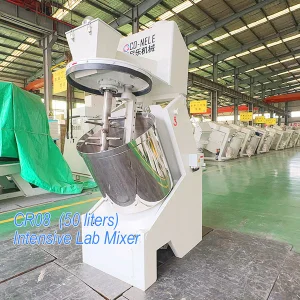
| CR08 / CQM10 Series | 8 – 15 Liters | 4.0 – 7.5 kW | 1.1 kW | Optional (-0.095 MPa) | Advanced Ceramics & Semiconductor Slurries |
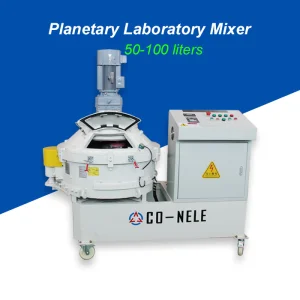
| CMP50 / CMP100 Series | 50 – 100 Liters | 7.5 – 15.0 kW | 2.2 kW | N/A (Cover Sealed) | UHPC Concrete & Refractory Castable R&D |
| CDW100 Series | 100 Liters | 11.0 – 18.5 kW | 3.0 kW | Optional | Dry Powder Mortar & Construction Chemicals |
Seamless integration with Korean electrical standards, KC certification compliance, and dedicated technical service across the Seoul-Incheon-Gyeonggi area.
All laboratory mixing machinery supplied to the Seoul market complies strictly with South Korea's KOSHA electrical safety specs, KC certification guidelines, and European CE directives. Control panels feature dual-channel safety interlocks and emergency stop circuitry.
Minimizing downtime in high-throughput research facilities is paramount. CO-NELE maintains a fast-response logistics network to deliver standard wear parts (blades, scrapers, ceramic liners) to Gyeonggi-do and Seoul research parks within 24 hours.
Prevent metallic iron pickup in sensitive battery or electronic materials with our customizable contact surfaces, including High-Purity Alumina ($Al_2O_3$), Zirconia ($ZrO_2$), Silicon Carbide (SiC), Tungsten Carbide coatings, and SS316L mirror-polished vessels.
Discover how top-tier research institutes and industrial labs in Korea and globally leverage CO-NELE mixing technology.
A leading South Korean battery research institute replaced conventional planetary centrifugal mixers with a CO-NELE vacuum-tight intensive lab mixer (CEL1 series). The result was a 45% reduction in mixing time for high-viscosity paste and a complete elimination of micro-voids, boosting battery sample trial yield by 32%.
Engineering teams working on ultra-high-performance concrete (UHPC) for iconic bridge and skyscraper projects in Songdo International Business District utilized the CMP50 laboratory planetary mixer. Steel fiber dispersion reached 100% uniform distribution without balling, fulfilling stringent structural standards.
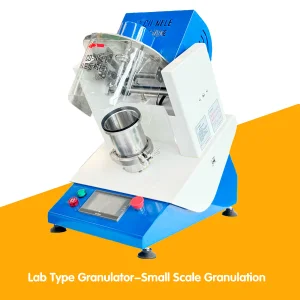
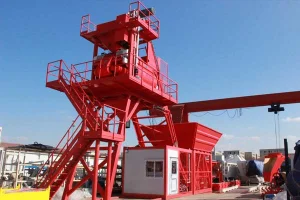
Explore our broader line of laboratory agitators, intensive granulators, and heavy-duty industrial mixing machinery engineered for demanding applications.
Direct technical clarification on operational mechanics, scaling math, vessel options, and delivery timelines.
Standard planetary mixers often struggle with high-viscosity pastes or dry micro-powders because their mixing elements travel along fixed paths, creating temporary dead spots. An intensive counter-current mixer combines a rotating pan with a high-speed rotor turning in opposing directions. This forces 100% of the material through high-shear zones within seconds, making it essential for advanced Korean industries like battery electrode synthesis, technical ceramics, and UHPC formulation where micro-homogeneity below 2% CV is mandatory.
CO-NELE engineers design lab units (CEL and CR series) with exact geometric, kinematic, and dynamic similarity to full-scale production mixers. Key parameters—including rotor tip speed ($m/s$), pan rotational velocity, and energy density per unit volume ($kW/m^3$)—are mathematically linked. Consequently, formulations developed in a 5-liter lab unit translate directly to 1,000L–3,000L industrial intensive or planetary mixers with over 99% accuracy in batch consistency and torque demand.
For sensitive battery cathodes (NCM/LFP), solid electrolytes, or high-purity semiconductor ceramics, CO-NELE provides comprehensive metal-free contact surfaces. Options include high-purity alumina ($Al_2O_3$) ceramic tile linings, Zirconia oxide ($ZrO_2$) rotors, Polyurethane/Rubber vessel coatings, or tungsten carbide thermal spraying on mixing blades. This ensures zero iron ($Fe$) pick-up during high-intensity batching.
Yes. Custom lab models delivered to the Seoul market can be engineered with fully sealed vacuum hoods capable of maintaining vacuum levels down to -0.095 MPa for removing entrained air bubbles in thick slurries. Additionally, jacketed mixing pans allow circulation of hot oil or chilled water to precisely regulate batch temperature between -10°C and 180°C during exothermic chemical reactions.
All export units destined for Seoul, Incheon, or Gyeonggi-do are custom-built to match South Korea’s standard electrical supply (typically 220V 1-phase or 380V/440V 3-phase at 60Hz). Systems are outfitted with Schneider or Siemens VFDs, CE-marked components, KC safety compliance design, comprehensive English/Korean operational manuals, electrical schematics, and factory calibration test certificates.
Whether you are formulating next-generation lithium battery slurries, ultra-dense ceramics, or high-performance mortar, CO-NELE process engineers are ready to assist. Contact our team today for custom technical proposals, scale-up modeling, and competitive factory-direct quotations.