
CO-NELEMixing & Granulation
High-homogeneity mixing technologies engineered specifically for zero-slump, high-density concrete block manufacturing in Belgium.
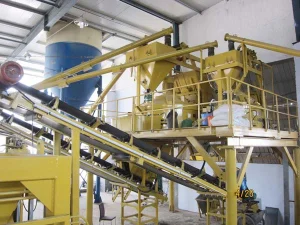
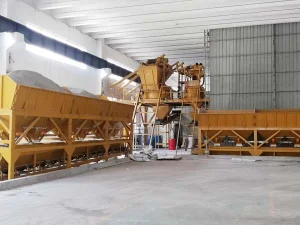
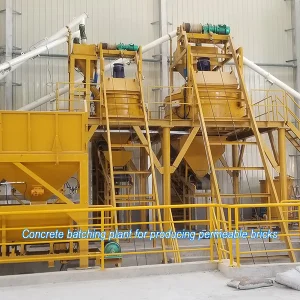
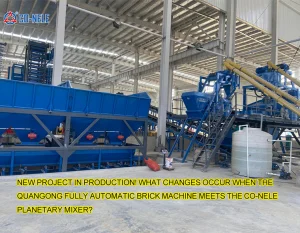
Belgium occupies a central logistical position in the European Union, connecting the major industrial hubs of France, Germany, and Netherlands via extensive waterway networks, high-density freight corridors, and major port infrastructure in Antwerp and Zeebrugge. Consequently, the Belgian construction and civil engineering sectors demand exceptionally rigorous standards for precast concrete products, including masonry blocks, paving stones, retainment elements, and specialized acoustic barriers along key motorways like the E40, E19, and E314.
Building codes in Flanders, Wallonia, and the Brussels-Capital Region are anchored by stringent European standards, notably NBN EN 771-3 (Aggregate concrete masonry units) and NBN EN 1338 (Concrete paving blocks), reinforced by localized BENOR quality certification. Achieving compliance requires concrete block batching plants to maintain absolute repeatability in compressive strength, low moisture absorption, dimensional tolerance (±1 mm), and color uniformity across multi-shift continuous production runs.
Traditional twin-shaft or gravity pan mixers struggle with low-water cement ratio (≤0.30) dry-cast block mixtures. Incorporating vertical-shaft counter-current planetary batching technology eliminates micro-balling, ensuring homogenous pigment distribution and optimal compaction density for premium block making machines (e.g., Hess, Masa, Zenith, Quadrant).
Why vertical-shaft planetary mixers are the gold standard for concrete block manufacturing plants operating under strict European quality benchmarks.
Planetary mixing arms rotate on their own axis while revolving around the central axis of the mixing pan. This dual-kinematic motion ensures 100% coverage of the mixing pan floor and sidewalls every 4 seconds, eliminating unmixed dry spots.
High-shear mechanical action breaks down agglomerated iron oxide pigments, micro-silica, and efflorescence-reducing admixtures within 30 seconds, guaranteeing batch-to-batch color stability across architectural paving blocks.
Equipped with real-time microwave moisture probes (e.g., Hydronix Hydro-Mix) at the bottom pan. System automatically adjusts added water within milliseconds to account for variations in sand moisture content.
In accordance with Belgium’s circular economy roadmap and European carbon neutral targets for 2030/2050, concrete block manufacturers in Flanders and Wallonia face increasing pressure to substitute traditional Ordinary Portland Cement (CEM I) with alternative supplementary cementitious materials (SCMs). These include Ground Granulated Blast-Furnace Slag (GGBFS / CEM III), pulverized fly ash (PFA), metakaolin, and calcined clays.
Furthermore, Belgium leads Europe in the aggregate circularity index, utilizing up to 30–50% recycled concrete aggregates (RCA) complying with NBN EN 12620. However, high-substitution low-carbon concrete mixes exhibit distinct Rheological behaviors:
CO-NELE concrete block batching plants feature custom-programmed mixing curves via Siemens S7-1500 PLCs, enabling multi-stage speed adjustments (inverter-driven planetary gearboxes) that optimize energy dissipation and particle packing density for eco-friendly concrete block recipes.
Combining heavy-duty engineering, patented drive technology, and competitive total cost of ownership (TCO) for Belgian and European operators.
While European machinery brand names carry legacy reputation, CO-NELE (Qingdao CO-NELE Machinery Co., Ltd.) has redefined high-end mixing machinery since 2004. With over 10,000 installations across 80+ countries, CO-NELE operates three state-of-the-art production bases spanning 30,000 m².
Unlike assemblers who outsource critical components, CO-NELE engineers and manufactures its proprietary vertical-shaft planetary gearboxes in-house. Designed specifically for shock-load tolerance against coarse aggregates, these gearboxes deliver zero fluid leaks, noise levels below 75 dB, and an extended operational lifespan exceeding 15 years.
Tailored aggregate batching, weighing, and mixing setups for high-spec civil engineering and urban infrastructure demands.
Widely deployed in Flemish urban water-management projects (Ghent, Antwerp, Leuven). Requires coarse open-graded friction course concrete mixed with strict water-cement ratio control to preserve interconnected void ratios without sacrificing block strength.
For port terminal paving in Antwerp-Zeebrugge and intermodal freight depots. Plants are configured with dual-planetary mixers to handle high-tonnage C50/60 aggregate mixes with extreme abrasion resistance.
Specially formulated sound-absorptive lightweight concrete blocks installed along Belgian motorways. Requires continuous micro-pore aeration mixing using dosage-controlled foaming agent injectors.
Select from mobile, stationary, lab-scale, and heavy-duty industrial mixing stations engineered for export markets.
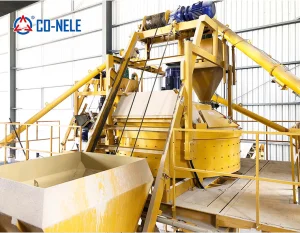
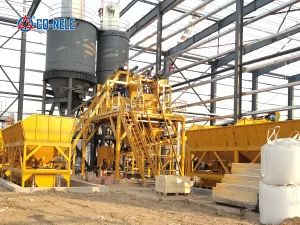
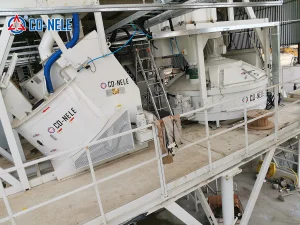
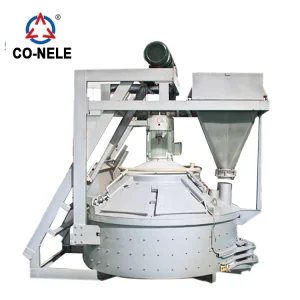
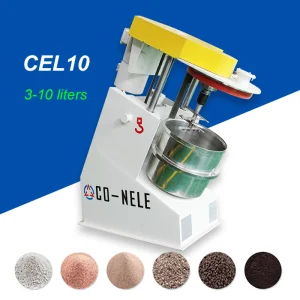
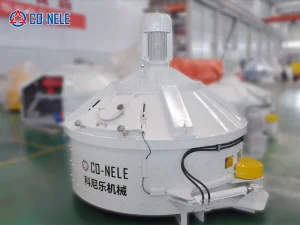
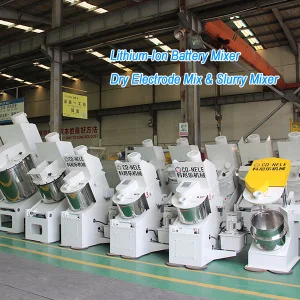
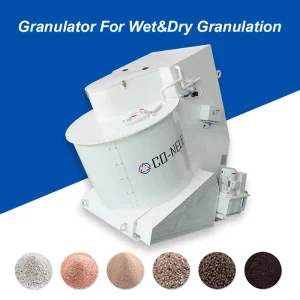
Purchasing heavy machinery internationally requires seamless execution across engineering customization, shipping logistics, electrical compliance, and field installation support. CO-NELE provides end-to-end turnkey service structured for European plant operators:
Plants are pre-assembled and tested at our Qingdao facility prior to dispatch. Component structures are designed to fit into standard 40ft High Cube (HC) and Open-Top containers, arriving directly at Port of Antwerp or Zeebrugge with minimal freight surcharge.
Control cabinets feature Siemens PLCs, Schneider contactors, and Rittal-style IP54 enclosures built to 400V/50Hz European three-phase power standards. Emergency stop safety circuits and safety switch interlocks meet EN ISO 13849-1 certification.
Integrated VPN routers allow CO-NELE software engineers to perform real-time PLC debugging and recipe calibration remotely. Wear parts (mixing blades, liners) ship from central inventory with guaranteed 48-hour dispatch.
Expert insights from CO-NELE process engineers on machinery selection, compliance, and plant integration.
Concrete block production utilizes zero-slump, earth-moist (dry-cast) concrete with low water content (≤0.30 w/c ratio). Twin-shaft mixers rely primarily on fluid dynamics and material gravity to fold wet concrete, which causes dry-cast materials to ball up or leave unmixed cement pockets. CO-NELE planetary mixers utilize forced-action vertical counter-current blades that mechanically shear and distribute aggregates, pigments, and water uniformly across the entire pan volume within 45 to 60 seconds.
BENOR certification demands rigorous aggregate weighing accuracy (±2%) and cement/water dosing precision (±1%). CO-NELE batching plants integrate load cells with high-frequency digital signal transmitters and Siemens PLC software. Batch logs are recorded automatically into an SQL database, generating printable batch receipts that verify compliance with BENOR quality control audits and EN 206 concrete performance requirements.
Under standard block-making aggregate abrasive conditions (quartz sand, gravel up to 12mm), CO-NELE high-chrome alloy wear plates (hardness HB≥600) typically achieve between 120,000 to 150,000 batch cycles before replacement is needed. All wear tiles are segmented and bolt-on, enabling targeted replacement of high-wear zones without removing the entire pan lining.
Yes. CO-NELE automation engineers design software signals to match leading block making machines (including Hess, Masa, Zenith, Poyatos, and Rekers). Profinet, Ethernet/IP, or dry contact hardware interlocks synchronize concrete discharge gate opening times directly with the block machine’s hopper level sensors.
Standard plant manufacturing and factory pre-assembly take approximately 30 to 40 business days. Ocean transit from Qingdao Port to Antwerp Port takes roughly 28 to 35 days. On-site installation, mechanical assembly, and commissioning under CO-NELE engineer supervision take 10 to 14 days.
Contact our engineering team to request customized plant layout drawings, mixing trial reports, or a detailed quotation tailored for your Belgian facility.
Send Inquiry Now