
CO-NELEMixing & Granulation
Precision-engineered mixing stations optimized for rapid deployment across Addis Ababa, regional corridors, and extreme Ethiopian terrains.
Ethiopia stands as the economic anchor of the Horn of Africa, experiencing an unprecedented demand for modern building materials driven by major national infrastructure mandates. Under the Ten-Year Development Plan (2021–2030), the Federal Democratic Republic of Ethiopia has prioritized massive transport corridors, urban residential densification, energy sector expansions (such as the Grand Ethiopian Renaissance Dam - GERD peripheral networks), and industrial park ecosystems (e.g., Hawassa, Bole Lemi, and Adama Industrial Parks).
However, executing large-scale engineering projects across Ethiopia presents unique geographical and industrial hurdles:
To mitigate the logistics cost of centralized ready-mix concrete—which can exceed $35 USD per cubic meter in remote Ethiopian zones—contractors are rapidly transitioning to on-site compact concrete batching plants. By bringing batching machinery directly to project job sites (such as road construction along the Modjo-Hawassa Expressway or residential construction under the Ethiopian Housing Development Project), builders cut transportation expenses by up to 40% while gaining complete control over concrete quality and hydration timing.
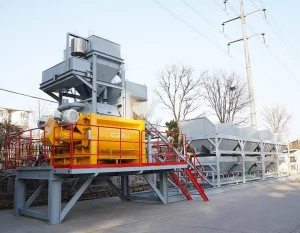
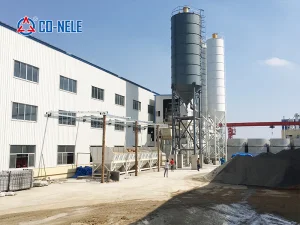
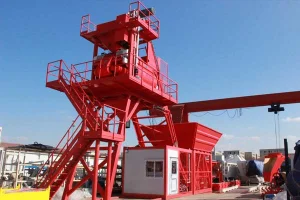
A compact concrete batching plant must balance a minimized footprint with high-output mechanical durability. Standard modular configurations (such as the HZS35 and HZS50 series) integrate aggregate storage bins, inclined belt or skip-hoist elevators, accurate weighing hoppers, and high-intensity forced mixers into a unified structural frame.
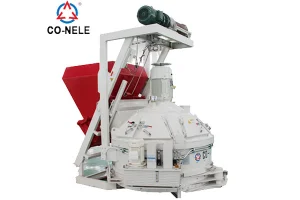
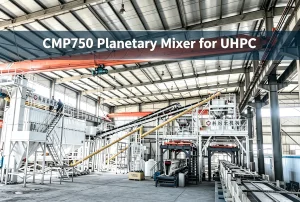
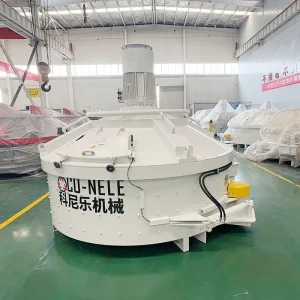
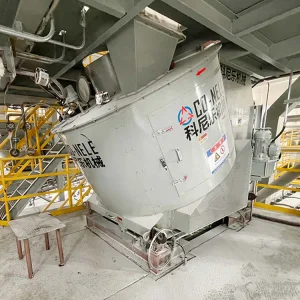
Unlike conventional twin-shaft mixers that struggle with dry-cast precast recipes, vertical-shaft counter-current planetary mixers rotate on twin revolution axes. This eliminates dead zones and ensures perfect dispersion of fibers and fine powders in high-performance concrete (UHPC).
Equipped with IP55, Class H insulated heavy-duty electric motors engineered specifically for operating at altitudes exceeding 2,000 meters without thermal throttling, paired with custom-designed planetary reducers built in-house.
Multi-language Siemens PLC control system featuring dynamic moisture compensation sensors. Automatically adjusts added water volumes per batch based on real-time aggregate moisture readings in hot, arid Ethiopian climates.
| Performance Metric | Planetary Counter-Current Mixer | Twin-Shaft Compulsory Mixer | Reversing Drum Mixer |
|---|---|---|---|
| Target Applications | Precast, UHPC, Block Making, High-Spec Infrastructure | Commercial Ready-Mix, Mass Dam Concrete, Road Base | Low-Spec Rural Construction, Small Foundations |
| Mixing Homogeneity (CV) | < 5% (Micro-Homogeneity achieved in 45s) | < 8% (Standard Homogeneity in 30s) | > 15% (High risk of segregation) |
| Wear Life with Basalt/Scoria | 120,000+ Batches (High-Chrome Chromium Alloy Liners) | 80,000 Batches (Standard Ni-Hard Plates) | 15,000 Batches (Mild Steel Shell) |
| Energy Consumption per m³ | Optimized (Low power per mixing cycle) | Medium-High | High (Extended mixing cycles required) |
When international EPC contractors (such as Chinese, Turkish, and European joint ventures) and native Ethiopian builders purchase concrete batching machinery, the capital expenditure (CAPEX) is only a fraction of the total operational equation. Equipment selection must be governed by Total Cost of Ownership (TCO) calculated over a 10-year service lifecycle.
The concrete machinery sector is undergoing a profound paradigm shift towards sustainability, digitalization, and decarbonization. In East Africa, where raw material costs are vulnerable to global currency fluctuations, operational efficiency is paramount.
Future iterations of compact mixing plants destined for African markets will incorporate DC-bus frequency drives capable of integrating directly with site-installed solar PV arrays and battery energy storage systems (BESS). This reduces diesel generator fuel consumption by up to 65% during peak daytime batching hours.
Integrating microwave sensors inside the mixer pan paired with machine learning algorithms allows real-time adjustment of water-cement ratios. As aggregate absorption fluctuates dynamically throughout rainy seasons (Kiremt season in Ethiopia), the control system automatically adjusts batching parameters on a millisecond scale.
Ethiopia possesses vast natural pozzolan and pumice reserves. Next-generation compact plants are engineered with multi-silo weighing hoppers designed specifically to handle high-volume calcined clay and volcanic ash cement substitution, lowering the embodied carbon of concrete by up to 40%.
Navigating the regulatory framework in Ethiopia requires structural alignment with local engineering standard bodies and import regulations overseen by the Ethiopian Investment Commission (EIC) and the Ethiopian Conformity Assessment Enterprise (ECAE).
Expert answers to common engineering, procurement, and operational questions regarding concrete plants in Ethiopia.
Explore our complete range of high-performance planetary, intensive, and mobile batching solutions supplied globally.
Partner with Qingdao CO-NELE Machinery Co., Ltd.—over 20 years of mixing innovation, 80+ patents, and dedicated global technical support.
Send Inquiry Now →