
CO-NELEMixing & Granulation
Engineered to handle abrasive basalts, variable tropical aggregate moisture, and dry-cast zero-slump concrete mix designs with industry-leading mixing homogeneity.
An authoritative analysis of civil engineering standards, volcanic aggregate friction profiles, and environmental regulations governing Central America's fastest-modernizing construction sector.
The Gran Área Metropolitana (GAM)—encompassing San José, Alajuela, Heredia, and Cartago—is experiencing unprecedented structural growth. Demand for structural hollow blocks, retaining wall units, and high-strength concrete masonry units (CMU) has expanded exponentially to support multi-story commercial developments, transport corridors, and social housing initiatives led by MIVAH.
Costa Rica sits in a high seismic zone (Zone 4). Under the Código Sísmico de Costa Rica (CSCR-2010), structural masonry blocks require rigorous compressive strength thresholds ($>15 \text{ MPa}$ to $25 \text{ MPa}+$) with strictly uniform cell dimensions for steel rebar placement and grout bonding. CO-NELE batching plants deliver precise micro-dispersion of cementitious paste to reach these exact strength parameters.
Aggregates sourced from Central Valley riverbeds and volcanic deposits (basaltic andesite and pumiceous sands) possess high moisture absorption capacity and sharp angularities. Standard twin-shaft or gravity drum mixers fail to fully coat these abrasive particles. Planetary mixing technology overcomes high particle friction to guarantee homogenous cement hydration with zero cement balling.
Costa Rica’s green building taxonomy demands lower clinker ratios through the adoption of calcined clay cements (LC3) and volcanic pozzolans. CO-NELE’s concrete block batching plants feature precision micro-dosing systems (accurate to $\pm 0.5\%$) optimized for supplementary cementitious materials (SCMs), directly contributing to embodied carbon reduction in Costa Rican construction projects.
From eco-resort infrastructure in Guanacaste to hillside soil retention along Route 32, our batching technology fuels diverse industrial block making requirements.
Engineered for high-load structural walls across Costa Rica's commercial hubs. The zero-dead-zone planetary counter-current mixing motion ensures dry-cast concrete mixtures ($w/c$ ratio 0.26–0.32) achieve flawless density distribution. This prevents internal voids, guarantees uniform shell thickness, and maximizes compressive load performance under seismic sheer stress.
Coastal developments in Guanacaste, Manuel Antonio, and Papagayo require eco-friendly, permeable interlocking pavers to manage tropical stormwater runoff (often exceeding 3,000mm annually). CO-NELE CBP150 batching plants utilize automated dual-aggregate dosing to produce porous surface layers with vibrant color pigments that resist salt mist degradation.
Costa Rica’s mountainous topography presents ongoing slope instability along transport routes (e.g., Ruta 27 & Ruta 32). Our heavy-duty concrete block batching plants prepare high-density, low-absorption coarse concrete mixes used to press mass retaining wall units and articulated concrete block mattresses (ACBM) capable of withstanding heavy rainfall and mudslides.
For municipal pedestrian zones in downtown San José and Heredia, urban planners specify dual-layer (face-mix and base-mix) pavers. CO-NELE double-mixer batching configurations feed specialized face-mix planetary units to apply high-density pigment suspensions, creating abrasion-resistant decorative patterns with a long operational lifespan.
Discover why vertical-shaft planetary counter-current mixing outperforms traditional twin-shaft designs for dry-cast concrete block production.
Mixing blades rotate on a central vertical axis while simultaneously orbiting along an inner planetary radius. This dual-kinematic motion eliminates dead zones, ensuring $100\%$ aggregate interaction within 45 seconds of dry blending.
High-humidity tropical climates (such as Costa Rica’s green season) cause rapid variation in sand moisture. Integrated optical microwave sensors inside the mixer pan measure real-time moisture at 25 readings per second, automatically adjusting added water volumes.
Fully dynamic Siemens S7-1500 PLC touch interface with cloud telemetry. Operators can store up to 500 block formulation recipes, track exact material usage per batch, and export CSV batch reports for ISO/CSCR quality audits.
Combining European kinematic precision with Chinese heavy-industry supply chain speed to offer an unmatchable Return on Investment (ROI) for Costa Rican precast operators.
| Evaluation Parameter | CO-NELE China Block Batching Plant | European Equipment Tier (Masa / Hess) | Standard Regional Batch Mixers |
|---|---|---|---|
| Initial Capital Investment (CAPEX) | Optimal (40–50% cost savings) | Extremely High (Premium CAPEX) | Low Initial Purchase Cost |
| Reducers & Drive System | In-house Heavy Planetary Reducer (Co-Nele Patent) | Third-party European Reducer | Standard Helical Gearbox (High Wear) |
| Mixing Homogeneity ($CV$) | $< 3\%$ (Micro-Homogeneous within 45s) | $< 3\%$ (High Performance) | $8\% - 12\%$ (Aggregates Segregate) |
| Wear Part Lifetime (Castables) | High-Chrome Alloy ($\ge 120,000$ Batches) | High-Chrome Alloy ($\ge 120,000$ Batches) | Mild Steel ($\le 30,000$ Batches) |
| Lead Time to Puerto Limón | 35–45 Days Shipping Window | 90–120 Days Build & Transit | Local stock (limited capacity) |
Unlike assembly-only suppliers, CO-NELE operates three dedicated manufacturing bases spanning 30,000 m² in Qingdao, China. From raw steel laser cutting and robotic welding to precision gear grinding and load testing of planetary reducers, every component is manufactured under strict ISO9001 and CE quality protocols. This self-contained production ecosystem eliminates middleman markups and guarantees 100% interchangeable spare parts for every machine built since 2004.
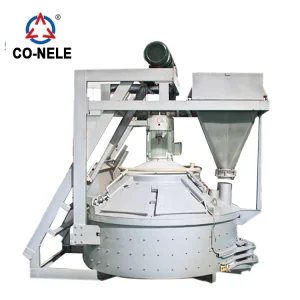
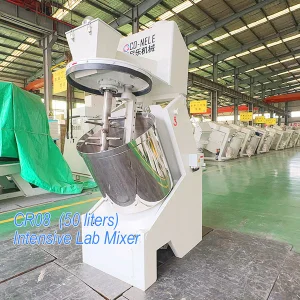
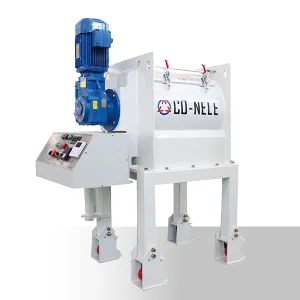
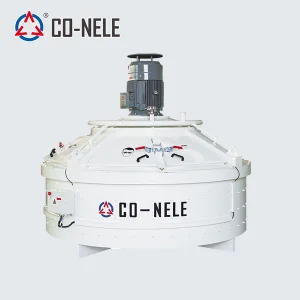
Explore our extended series of planetary mixers, heavy pavement brick batching systems, lab units, and specialty mortar processing plants.
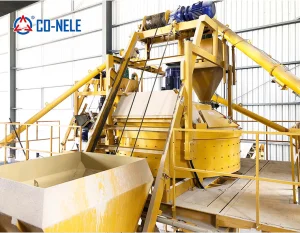
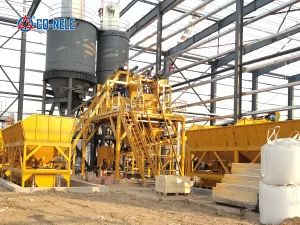
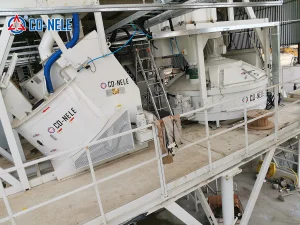
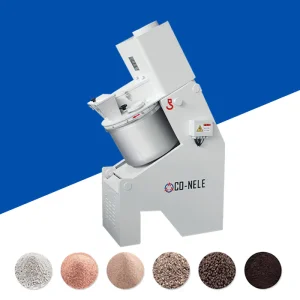
From electrical grid synchronization to seamless dual-port logistics, CO-NELE guarantees hassle-free machinery deployment across Central America.
We deliver direct containerized and flat-rack shipments via major ocean carriers to both Puerto Limón (Caribbean coast) and Puerto Caldera (Pacific coast). All major structural frames receive marine-grade anti-corrosion wax coating and vacuum moisture sealing for ocean transport transit.
Industrial motors and control panels are custom-wired to match Costa Rica’s 3-phase electrical standards (480V/60Hz or 220V/60Hz). Electrical cabinets feature Schneider/Siemens components with IP65-rated sealings and internal dehumidifiers to resist high tropical ambient humidity.
Our senior field service team provides remote commissioning assistance and on-site mechanical erection guidance. Operating documentation, PLC touch interfaces, and maintenance manuals are supplied in both English and Spanish to ensure quick technician onboarding.
Technical guidance from CO-NELE batching plant engineers on aggregate friction, seismic foundation anchoring, and customs import protocols.
Dry-cast concrete for blocks, pavers, and retaining walls uses zero-slump mix designs with low water-cement ratios ($w/c < 0.30$). Twin-shaft mixers rely on horizontal fluid displacement, which leads to aggregate segregation and incomplete cement coating on dry materials. Planetary mixers utilize counter-current vertical blades that force intense shear throughout the entire mixing pan, distributing moisture evenly within 45 to 60 seconds without heat build-up.
Costa Rican aggregates often contain high percentages of crushed basalt and silica sand, which cause rapid wear on standard steel liners. CO-NELE mixer pans are fitted with bolt-on, interchangeable High-Chrome Alloy (Ni-Hard/Hardox grade) wear tiles rated above 60 HRC. Under normal block batching conditions, our liners routinely exceed 120,000 to 150,000 operational batch cycles before requiring replacement.
Yes. CO-NELE block batching plants are engineered as open-architecture mixing stations. Our PLC control system uses standard industrial Profinet/EtherNet IP protocols to interface directly with existing automatic block machines, face-mix hoppers, aggregate belt conveyors, and finger-car curing systems.
In accordance with CSCR-2010 seismic regulations, CO-NELE supplies detailed civil engineering layout drawings specifying reinforced concrete slab pads, anchor bolt shear pins, and heavy structural steel legs. Foundationless and compact modular options with integrated steel base frames are also available for fast installation on leased land.
We provide full export documentation required by Costa Rican customs authority (Ministerio de Hacienda - Servicio Nacional de Aduanas), including Commercial Invoice, Packing List with detailed HS Codes (8474.31), Bill of Lading (B/L), CE Certificate, and Certificate of Origin to facilitate smooth customs clearance under bilateral trade terms.
We maintain an extensive inventory of standardized wear blades, scrapers, pneumatic discharge valves, and load cells in our Qingdao central logistics warehouse. Emergency spare parts ship via express air freight (DHL/FedEx) arriving in Costa Rica within 4 to 6 business days.
Contact our process engineering team to receive a tailored batching plant layout drawing, mixing simulation test, and competitive direct factory quote.
Send Inquiry Now