CO-NELEMixing & Granulation
Precision-engineered forced-action planetary mixers, intensive granulators, and batching plants operating globally.
Why standard free-fall and twin-shaft mixers fail under the intense tribological and rheological demands of modern unshaped refractory castables.
In high-temperature thermal processing industries—including steelmaking, non-ferrous smelting, cement clinker calcination, glass melting, and petrochemical cracking—refractory linings are the ultimate protective envelope. The performance of shaped refractory bricks and unshaped refractory castables (such as ultra-low cement castables ULCC, low-cement castables LCC, self-flowing castables SFC, and gunning mixes) directly dictates furnace campaign life, energy efficiency, and operational safety. However, the operational integrity of refractory castables depends overwhelmingly on initial batching and microscopic mixing homogeneity before installation.
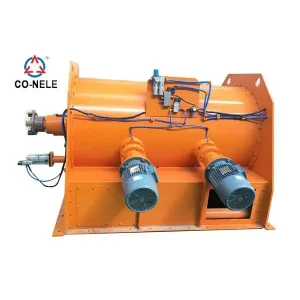
Refractory materials pose severe challenges to industrial mixing machinery. Unlike standard concrete mixes, refractory formulations consist of extreme density gradients (ranging from lightweight insulating aggregates like expanded vermiculite to dense corundum, tabular alumina, silicon carbide SiC, and fused zirconia), coupled with ultra-fine powder fractions (such as micro-silica, reactive alumina, and metallic antioxidant powders) under extremely low water or binder addition thresholds (often 3% to 6% by weight). Standard gravity mixers, continuous ribbon blenders, and traditional horizontal twin-shaft mixers exhibit critical failure modes in these conditions: severe dead zones, particle agglomeration, fiber balling, and premature thermal binder setting caused by localized frictional heat buildup.
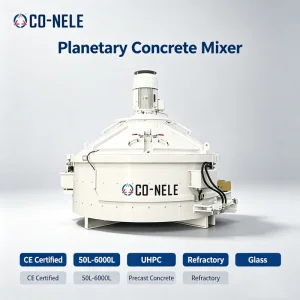
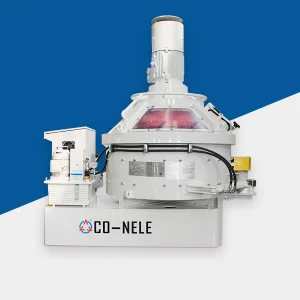
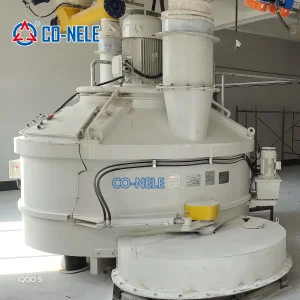
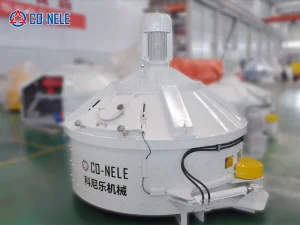
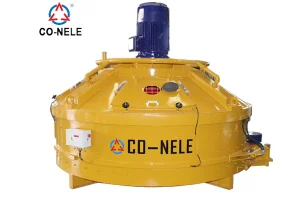
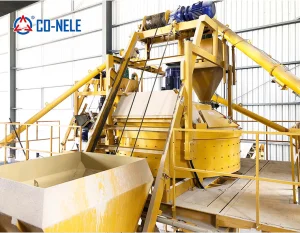
Achieving a Coefficient of Variation (CV) under 3% in unshaped refractory mixes requires overcoming the high yield stress of wet-micro-silica suspensions. Counter-current planetary mixing kinematics impart high-energy mechanical shear while continuously sweeping the entire pan volume, eliminating dead spots and accelerating binder dispersion without inducing thermal degradation.
Dual-rotation mixing stars rotate on their own vertical axis while simultaneously orbiting the central pan shaft. The overlapping trajectory curves ensure 100% pan coverage every revolution without material stagnation.
Equipped with replaceable high-chrome alloy liners (HB600+), tungsten carbide hardfacing, or ceramic tiles designed to withstand continuous sliding wear from abrasive corundum and silicon carbide.
Optional high-speed fly-cutter accessories break down micro-silica agglomerates, rapidly distribute liquid additives, and prevent steel/organic fiber clumping in high-strength refractory castables.
Tailored operational configurations for steel, cement, glass, non-ferrous metallurgy, and petrochemical sectors.
Crucial for preparing blast furnace main trough castables, torpedo car linings, steel ladle working layers, and RH degasser snorkel refractory mixes. Ensures zero void formation and maximum slag corrosion resistance.
Optimized for mixing alkali-resistant castables, high-alumina anti-skinning refractory linings, and silicon carbide composites used in preheater cyclones, calciner ducts, kiln hoods, and clinker cooler side walls.
Delivers iron-free, ultra-clean mixing for high-purity silica, alumina-zirconia-silica (AZS) ramp castables, and regenerator checker brick mortar, preventing optical contamination in finished glass sheet production.
Engineered for high-density, erosion-resistant hex-mesh linings in Fluid Catalytic Cracking Units (FCCU), cyclone separators, and thermal oxidizer combustion chambers requiring precise water ratio dosing.
Formulated to mix non-wetting aluminum castables, preventing molten metal penetration and corundum growth in melting furnace hearths, holding furnaces, and degassing launders.
Powers automatic production lines for furnace roof blocks, burner blocks, well blocks, and purging plugs, guaranteeing structural density, thermal shock resistance, and sharp corner definition.
Pioneering smart mixing automation, zero-carbon green binder processing, and real-time telemetry diagnostics.
The global refractory machinery market is undergoing a structural paradigm shift driven by digital transformation (Industry 4.0) and international decarbonization mandates. Traditional manual or fixed-timer mixing cycles are being rapidly replaced by dynamic closed-loop systems capable of evaluating batch rheology in real-time. As refractory formulations incorporate novel nano-binders, geopolymers, and carbon-bonded matrix composites, mixing equipment must adapt dynamically to changing viscosity profiles.
Real-time tracking of mixer motor current and torque feedback to automatically determine moisture equilibrium and optimized discharge timing.
High-precision micro-dosing systems for colloidal silica, sol-gel binders, and nano-alumina additives with automated pulse-wash spray manifolds.
Ultrasonic liner thickness sensors embedded in high-wear zones communicating directly with factory MES to schedule preventive maintenance.
Fully electric, low-noise, hydrogen-shielded mixing chambers designed for sensitive oxide-carbon refractory synthesis under inert atmospheres.
How localized industrial clusters, in-house component fabrication, and vertical integration deliver unmatched reliability and cost efficiency.
In global heavy machinery procurement, supply chain robustness, spare parts availability, and lead-time predictability are critical risk parameters. Qingdao CO-NELE Machinery Co., Ltd. leverages China’s premier industrial manufacturing ecosystem—specifically the Qingdao engineering hub—to deliver world-class refractory mixing equipment with full vertical integration.
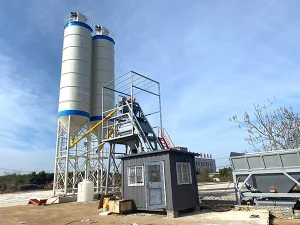
Unlike international OEM assemblers who outsource critical components, CO-NELE maintains complete design and production authority over the central planetary reducer gearboxes, structural mixing pans, automated discharge gates, and PLC control cabinets across three dedicated manufacturing facilities spanning 30,000 square meters.
Gear cutting, heat treatment, casing boring, and 72-hour continuous load testing performed inside our own CNC machining centers, guaranteeing hardened tooth durability and gear alignment.
By streamlining component sourcing and manufacturing logistics within Shandong province, we deliver European-tier mixing performance at a fraction of Western equipment capital expenditure.
Outfitted with globally recognized standard components—including Siemens PLCs, SEW Eurodrive motors, Schneider electricals, and SKF bearings—ensuring easy local replacement worldwide.
Rigorous international engineering standards, certification protocols, and lifetime technical support infrastructure.
Deploying heavy industrial machinery into international markets requires strict alignment with localized electrical codes, mechanical safety directives, and environmental protection standards. Every CO-NELE refractory mixer and batching plant is designed and constructed under ISO 9001:2015 quality management systems, carrying CE mark compliance and optional ATEX certification for explosive dry-powder handling environments.
Our global support engineering team provides comprehensive installation supervision, foundation blueprinting, customized PLC language localization, and full remote diagnostic commissioning. Interchangeable replacement wear parts for every mixer model produced since 2004 are permanently cataloged and maintained in stock for rapid express shipment.
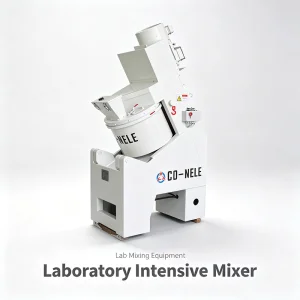
Prior to dispatch, all machines undergo a 24-hour dry-run and load test. Overseas clients are invited to submit their own raw material samples to our Qingdao trial lab for dynamic mixing verification and granular density analytical reports.
Technical insights addressing common operational, mechanical, and procurement queries.
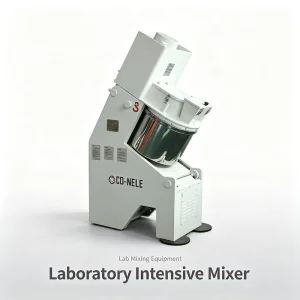
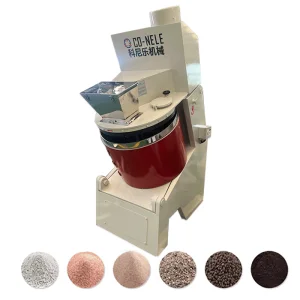
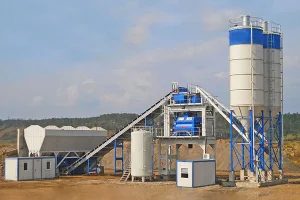
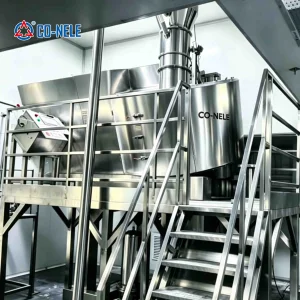
From portable plants to glass batch mixers and intensive granulators, explore our extended engineering solutions.