CO-NELEMixing & Granulation
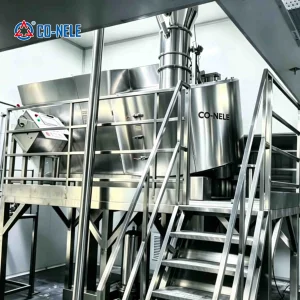
Explore our core industrial heavy-duty powder mixing and granulation machinery manufactured in our Qingdao production bases, serving critical processing nodes across 80+ countries worldwide.
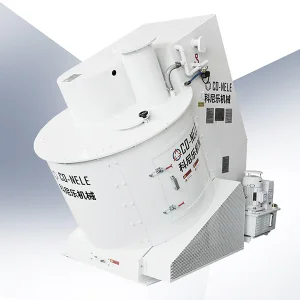
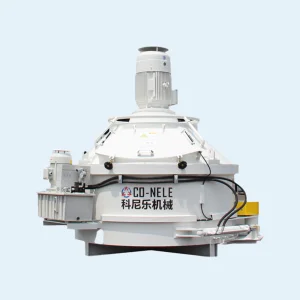
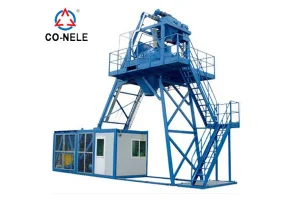
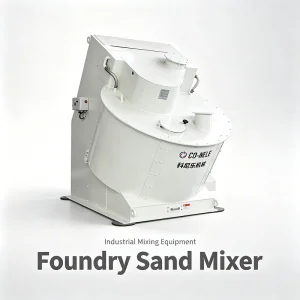
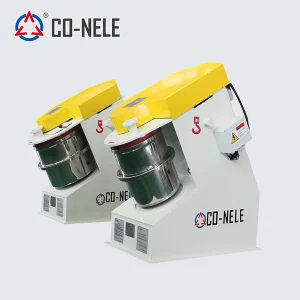
Achieving absolute batch uniformity in fine particulate systems demands precise kinematic control, zero dead-zone agitation, and optimized mechanical energy input across variable rheological thresholds.
In solid-solid and solid-liquid powder engineering, the mechanical challenge has shifted dramatically. Where traditional tumbling or low-shear ribbon blenders sufficed for non-critical agricultural liming or standard mortar mixing, modern manufacturing mandates stringent homogeneity criteria. Advanced ceramics, ultra-high-performance concrete (UHPC), refractory matrixes, battery cathode pre-slurries, and powder metallurgy matrices cannot tolerate dead zones, material segregation during discharge, or localized agglomerate clustering.
When selecting an industrial powder mixer from a China manufacturing partner, process engineers evaluate three fundamental mechanical vectors: Diffusion mixing (relocation of individual particles across newly formed interfaces), Convective mixing (gross movement of particulate beds through rotating blades or inclined pans), and Shear mixing (breaking down microscopic van der Waals forces and capillary agglomerates through high-speed tool interactions). The integration of these three kinematic mechanisms within a single sealed vessel is the core engineering philosophy behind CO-NELE's proprietary planetary and intensive mixer architectures.
Why leading global EPC contractors, mineral processing giants, and material scientists partner with Qingdao CO-NELE for mission-critical solid processing machinery.
Unlike assembly shops that source generic industrial reducers, CO-NELE engineers and manufactures heavy-duty planetary gearboxes in-house. Featuring dual-stage hardened helical gearing, high-viscosity oil immersion, and balanced mechanical distribution, our drives deliver 96% mechanical efficiency under continuous maximum torque loading without thermal runaway.
By operating directly within China's premier heavy industrial cluster in Shandong Province, CO-NELE commands end-to-end metallurgical traceability. From high-chrome alloy wear plates (hardness ≥ 62 HRC) to tungsten carbide blade surfacing and vacuum-degassed forged shafts, our metallurgy withstands highly abrasive materials such as fused corundum, silicon carbide, and quartz sands.
Three specialized manufacturing facilities house 5-axis CNC horizontal boring centers, automated submerged-arc robotic welders, dynamic balancing benches, and dedicated assembly lines. This production infrastructure eliminates manufacturing bottlenecks, enabling 30-to-45-day cycle turnarounds for customized industrial units that Western European equivalents require 6 to 9 months to deliver.
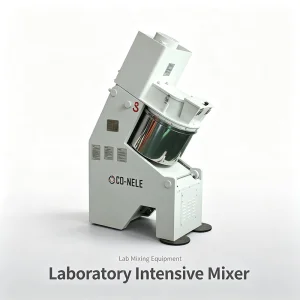
True engineering authority stems from empirical testing. Our Qingdao test center features pilot mixers and granulators from 5L to 75L capacity. Global clients regularly ship sample powders—such as diamond superabrasives, lithium compounds, or glass frit—for comprehensive rheology, granular sphericity, bulk density, and torque analysis prior to commercial procurement commitment.
Total Cost of Ownership (TCO) is where China advanced machinery excels. High-precision CNC machining ensures completely interchangeable bolt-on wear segments, mixing blades, and discharge gate seals. We preserve engineering design archives for every unit manufactured since 2004, guaranteeing rapid spare parts replenishment at a fraction of Western OEM replacement costs.
Modern CO-NELE machines interface seamlessly into smart factory protocols (Industry 4.0 / SCADA). Built around Siemens S7-1500 or Allen-Bradley PLCs, our electrical control cabinets incorporate variable frequency drives (VFD), high-frequency moisture microwave probes, hydraulic pressure diagnostics, and automated lubrication pumps with real-time cloud monitoring.
Selecting the optimal mixing mechanism depends upon particle diameter distribution, shear sensitivity, liquid addition percentages, and batch turnaround targets.
A frequent error in industrial procurement is attempting to use a horizontal double-shaft concrete mixer or a simple ribbon blender for micro-powder formulations requiring intense shear dispersion. In dry refractory castables, ultra-fine silica fume (d50 < 0.5 μm) and steel fibers tend to bundle if convective flow lacks intense cross-shear forces. CO-NELE engineers categorize mixing kinematics into three distinct machine architectures:
| Mixer Topology | Kinematic Action & Tool Path | Optimal Material Systems | Batch Cycle Time | Homogeneity (CV) | Discharge Efficiency |
|---|---|---|---|---|---|
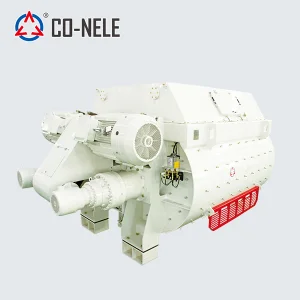
| Planetary Counter-Current Mixer (CMP Series) | Dual vertical star arms revolve around central axis while rotating at high speed; scraping arm sweeps boundary walls. | UHPC, precast concrete, dry-cast pavers, glass batching, foundry core sands, colored mortars. | 45 – 90 seconds | < 3.5% CV | 99.2% via hydraulic radial gate |
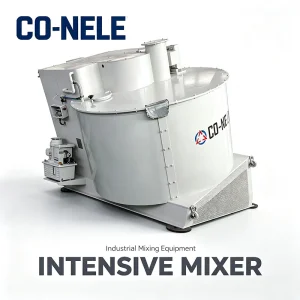
| Inclined Intensive Mixer (CR Series) | Rotating inclined pan transfers material upward to an independently controlled high-speed eccentric rotor tool. | Refractories, technical ceramics, iron ore pelletizing, battery cathodes, diamond abrasive tools. | 60 – 180 seconds | < 1.5% CV | 99.8% via center bottom valve |
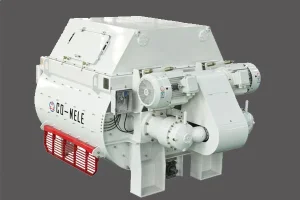
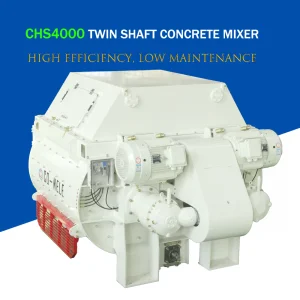
| Twin-Shaft Compulsory Mixer (CHS Series) | Synchronized counter-rotating horizontal shafts with overlapping helical paddles creating a fluidised zone. | Commercial ready-mix concrete, massive infrastructure aggregates, stabilized soil, dam fill. | 30 – 45 seconds | < 5.0% CV | 98.5% dual rotary seals |
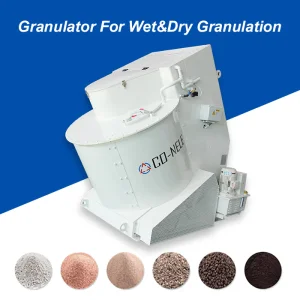
| High-Speed Mixing Granulator (CEL Series) | Combined planetary agitation with mechanical fluidization to wet powders, nucleate granules, and compact spheres. | Catalyst carriers, vitamin premixes, pesticide granules, alumina spheres, metallurgical briquettes. | 120 – 300 seconds | < 2.0% CV | 99.5% clean scrape discharge |
| Double-Spiral Shaft Mixer | Continuous bidirectional spiral flights moving powders axially and radially across an enclosed horizontal trough. | Dry construction plaster, wall putty, tile adhesives, bulk mineral feeds, dry mortar blends. | 90 – 180 seconds | < 6.0% CV | 97.8% full-length pneumatic door |
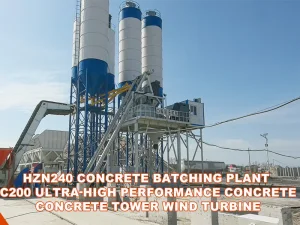
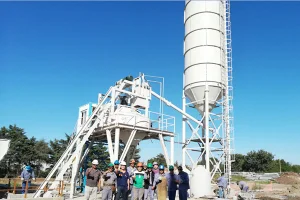
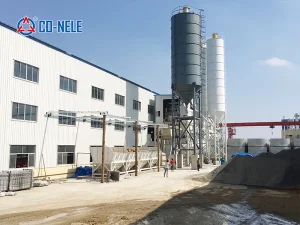
Real-world integration of CO-NELE powder mixing technologies in high-spec production facilities worldwide.
UHPC requires the complete deflocculation of micro-silica, quartz powders (0.1–10 μm), cement, and uniform spatial dispersion of high-tensile steel micro-fibers without fiber balling. CO-NELE reinforced planetary CMP mixers deliver precise hydrodynamic shear, yielding 150–220 MPa compressive strengths for bridge joints, wind turbine precast towers, and architectural facades.
Refractory castables integrate fine tabular alumina, silicon carbide, micro-silica binders, and graphite with minimal liquid moisture addition (often ≤ 4.5%). Our intensive inclined mixers apply high-velocity counter-current shearing that coats coarse grains with binder powder within 90 seconds, dramatically reducing porosity and extending steel-making refractory ladle campaign lifespans.
In electronic ceramic substrates, spark plug insulators, and biocompatible zirconia, spray drying consumes enormous thermal energy. CO-NELE inclined intensive granulators wet and pelletize dry ceramic powders into 90%+ spherical beads with narrow grain-size distribution, optimal bulk density, and zero dusting, delivering ready-to-press granules directly to isostatic mold presses.
Processing lithium iron phosphate (LFP), synthetic graphite, carbonyl iron, or tungsten carbide requires contamination-free mixing vessels. CO-NELE builds customized stainless steel (SUS304/SUS316L) or ceramic-lined intensive blenders. Vacuum degassing, nitrogen purge options, and temperature-controlled jacketed bowls preserve particle surface integrity without metallic cross-contamination.
Clay-bonded green sand and resin-coated sand require gentle, uniform distribution of bentonite and liquid resins over silica grains without fracturing delicate sand morphology. CO-NELE foundry sand mixers incorporate specialized elastic scraper blades and high-speed multi-stage agitators, optimizing compactability, green compression strength, and mold permeability.
From tile adhesives (C2TE standards) to self-leveling underlayments and repair grouts, blending trace chemical additives (< 0.1% cellulose ethers, redispersible polymer powders, accelerators) requires zero dead-space dispersion. Our continuous and batch dry-powder mortar mixers prevent segregation during discharge, ensuring certified bonding strengths.
How automation, real-time sensing, closed-loop rheology tracking, and environmental containment redefine solid-solid processing standards.
The days of manual slump or moisture testing are ending. CO-NELE embeds high-frequency microwave moisture sensors directly into the rotating pan floor. Coupled with real-time drive motor torque curve feedback, the system monitors viscosity buildup as water or binders are introduced, dynamically modifying blade RPM and automatically terminating the cycle upon reaching optimal rheology.
As powder processing encompasses finer combustible materials (aluminum flake, sulfur, carbon black, organic starches), explosion mitigation is paramount. We engineer explosion-proof mixing assemblies adhering to ATEX Zone 20/21 standards, incorporating inert gas purging (N2/Ar), conductive grounding across moving blades, spark-free bronze liner scrapers, and certified burst relief valves.
Environmental regulations across North America, Europe, and Asia mandate stringent particulate emission limits (≤ 10 mg/m³). CO-NELE designs sealed mixer housings with dynamic negative-pressure air balancing ducts connected to integrated pulse-jet cartridge filter units. This eliminates fugitive dusting during high-speed dry powder charging and aggressive discharge operations.
Modern CO-NELE machinery integrates vibration transmitters on high-speed rotor bearings, oil temperature sensors within planetary gearboxes, and liner wear radar gauges. This telemetry feeds into client SCADA systems or CO-NELE Cloud Services, predicting maintenance intervals, avoiding unplanned shutdowns, and notifying maintenance teams before mechanical wear affects batch quality.
An engineering checklist for process engineers, plant managers, and procurement officers evaluating powder mixer manufacturers in China.
Always verify whether the manufacturer produces an in-house heavy-duty planetary reducer or relies on third-party commercial shaft-mounted gearboxes. Planetary drives must possess a minimum mechanical safety factor of 2.2 to 2.5 over nominal motor power to absorb the severe shock loads when powders transition from dry state to wet agglomerate pastes.
Insist upon certified chemical composition and hardness test reports for mixing pan liners and blades. For severe abrasive environments, liners should utilize high-chromium cast iron (Cr ≥ 26%, hardness ≥ 60 HRC) or tungsten carbide diamond surfacing. Segmented bolt-on designs allow operators to rotate high-wear perimeter segments without replacing entire liner beds.
A reputable factory welcomes rigorous FAT protocols. At CO-NELE, global clients or third-party inspection agencies (SGS, TUV, Bureau Veritas) conduct 8-hour uninterrupted no-load mechanical runs, checking gearbox thermal equilibrium (≤ 65°C), vibration amplitudes (≤ 2.8 mm/s RMS), noise levels (≤ 78 dBA), and radial hydraulic door seal pressure hold.
For fine powders (< 45 μm), standard concrete flat gates leak powder uncontrollably. Validate whether the mixer employs high-pressure hydraulic rotary seals or inflatable elastomeric perimeter gaskets with dual limit-switch interlocks. The gate design must feature a zero-cavity profile so unmixed dead-zone pockets cannot collect above the door seal.
Ensure the machine builder satisfies local electrical codes. CO-NELE exports worldwide with full CE Declaration of Conformity, UL-certified enclosures, and dual-voltage/dual-frequency motors (220V/380V/415V/440V/480V at 50Hz or 60Hz). Schematics, terminal labeling, and HMI software interfaces are delivered in fluent, standardized English.
Never commission a 3,000L production plant based on theoretical calculations alone. Partner with a factory that maintains an operational testing laboratory. Validate that granule size distributions, mixing energy per cubic meter, and binder dispersion achieved in a 10L or 50L pilot batch translate linearly to industrial scale via verified Froude number modeling.
In-depth technical answers compiled by CO-NELE process engineers addressing powder mixing dynamics, machine sizing, and international delivery protocols.
Engineered for high-volume continuous output, laboratory precision R&D, asphalt batching, and turnkey UHPC infrastructure manufacturing.