CO-NELEMixing & Granulation
Precision-engineered mixing, batching, and material preparation plants manufactured under strict ISO9001 and CE quality standards in Qingdao, China.
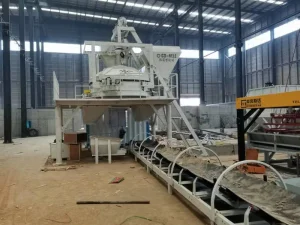
China Precast Concrete Wall Panels | Planetary Concrete Mixer | PC Batching Plant
View Technical SpecsTransitioning from basic mixing mechanisms to complex, counter-current planetary force fields for next-generation civil engineering and surface finishing technologies.
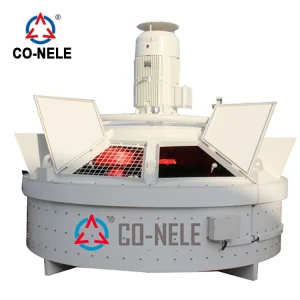
In modern infrastructure, industrial precast production, and concrete surface preparation, the fundamental demand for raw material homogeneity has undergone a paradigm shift. Traditional twin-shaft and horizontal drum mixers—while suitable for mass ready-mix applications—frequently fail when confronted with complex, low-water-binder ratio formulations, high-viscosity slurries, metallic fiber-reinforced matrixes, or dry-cast paving mixtures. This technological bottleneck has driven global engineering firms toward Planetary Counter-Current Mixers and Grinders manufactured by leading Chinese Industry 4.0 production bases.
A planetary concrete mixer or surface processing grinder operates on a non-linear, multi-axis counter-current kinematic principle. Unlike single-axis rotational systems, planetary systems utilize mixing star arms that rotate on their own axis while simultaneously revolving around a central point within the mixing pan. This complex motion path ensures that within a 45 to 60-second processing window, every single square millimeter of the vessel floor and wall is swept, generating high-shear displacement, micro-dispersion of micro-silica and nano-additives, and complete fiber de-clumping without mechanical breakage.
Macroeconomic forces, decarbonization mandates, and high-performance material adoption are driving structural shifts in global processing machinery procurement.
The global transition toward Ultra-High-Performance Concrete (UHPC) and Glass Fiber Reinforced Concrete (GFRC) demands shear energy levels that conventional mixers cannot generate. High-density cementitious matrixes require rapid dispersion of silica fume and micro-fibers, making planetary counter-current agitation mandatory for structural integrity.
Global net-zero mandates force concrete formulators to replace clinker with high volumes of fly ash, ground granulated blast-furnace slag (GGBFS), and calcined clays. These fine powders alter the rheology of the mix, requiring intense mechanical activation and planetary homogenization to maintain early-age strength.
Smart factories manufacturing architectural panels, railway sleepers, wind turbine tower segments, and dry-cast paving blocks require absolute batch-to-batch repeatability. Water-cement ratio variations above 0.5% lead to color shading, efflorescence, and dimensional rejection, propelling the adoption of planetary systems with integrated moisture sensors.
International EPC contractors, precast group executives, and industrial plant managers evaluate Chinese manufacturers against stringent total cost of ownership (TCO) matrices.
When international procurement teams audit a Chinese planetary concrete grinder or mixer factory, their evaluations extend far beyond initial capital expenditure (CAPEX). Modern enterprise purchasing decisions are anchored in mechanical reliability, metallurgic durability, digital control interoperability, and global aftermarket responsiveness.
How Shandong's industrial machinery ecosystem delivers unmatched cost efficiency, precision engineering, and rapid lead-time execution.
Over the past decade, China’s industrial machinery manufacturing sector has evolved from simple assembly operations into a globally dominant industrial power, heavily anchored by smart factories, autonomous robotic welding cells, and comprehensive metallurgical supply chains. Centered in major industrial hubs like Qingdao, Shandong Province, manufacturers like CO-NELE represent the pinnacle of China’s Industry 4.0 transformation.
From initial raw steel forging and heavy CNC machining of planetary gear housings to high-precision gear grinding and electrical cabinet assembly, over 85% of critical components are manufactured within centralized production bases. This vertical integration eliminates third-party component bottlenecks and ensures rigorous quality control.
Unlike regional assemblers who purchase off-the-shelf industrial gearboxes, dedicated Chinese planetary mixer factories operate in-house load test benches. Every gear reducer undergoes multi-hour oil temperature, vibration spectral analysis, and torque testing prior to final machine integration.
Thanks to dense local component clusters, modular engineering designs, and extensive inventory of interchangeable spare parts, custom planetary batch plants and high-intensity mixers can be delivered in a fraction of the lead time quoted by traditional European OEMs.
Analyzing the physical mechanics of counter-current rotation and its superiority over single-axis mixing systems.
The core distinction between a planetary mixer/grinder and traditional equipment lies in its kinematic trajectory equation. In a planetary system, the mixing arms revolve around the central shaft at a fixed speed $\Omega$, while simultaneously spinning on their own planetary axes at speed $\omega$ in the opposite or synchronized direction.
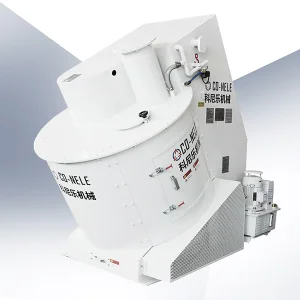
This dual rotational motion generates a complex mathematical curve known as a hypotrochoid trajectory. As the mixing blades pass through the material bed, they generate high-shear zones and cross-current material streams that instantly split, fold, and recombine dry powders, aggregates, liquids, and admixtures.
| Performance Indicator | Planetary Counter-Current Mixer | Twin-Shaft Compulsory Mixer | High-Intensity Tilt Mixer |
|---|---|---|---|
| Mixing Homogeneity (CV) | < 3% (Micro-Homogeneous) | < 5% (Standard Homogeneous) | < 2% (Ultra-High) |
| Target Material Focus | UHPC, Precast, Dry-Cast, Refractories | Mass Ready-Mix, Infrastructure Wet Concrete | Powder Metallurgy, Fine Ceramics, Granulation |
| Cycle Time (4000L Batch) | 45 - 75 Seconds | 30 - 45 Seconds | 60 - 120 Seconds |
| Discharge Cleanliness | 99.5% (Scraper arm swept) | 95.0% (Residual build-up) | 98.5% (Tilt vessel dump) |
| Power Consumption / m³ | Optimized Torque Efficiency | Medium - High Load Peak | High Shear Power Input |
Field-proven performance across demanding mega-projects, specialized material manufacturing, and architectural applications worldwide.
In offshore wind turbine foundations and long-span cable-stayed bridge joints, high-strength anti-scour grouting requires pore-free, 150+ MPa concrete. CO-NELE planetary mixers are utilized on marine barge batching plants, delivering air-entrainment-free slurries under rigorous marine climate conditions.
For high-end architectural façades, subway tunnel segments, and colored interlocking pavers, consistent surface coloration is critical. Planetary mixers ensure 100% pigment dispersion and uniform aggregate exposure, eliminating color variance and surface pitting.
Steel mill ladles, glass furnaces, and cement kilns demand unshaped refractory castables blended with corundum, silicon carbide, and dense binder micro-powders. Planetary refractory mixers handle high density and abrasive friction without torque stalling.
Expert engineering insights addressing common purchasing, technical, and operational questions from international buyers.
Twin-shaft mixers excel at moving high volumes of coarse, wet ready-mix concrete quickly. However, for precast elements requiring low water-binder ratios, micro-silica, colored pigments, or dry-cast mixes, twin-shaft units leave unmixed micro-zones and cause pigment streakiness. A planetary counter-current mixer sweeps 100% of the pan floor every few revolutions, guaranteeing a coefficient of variation (CV) under 3%, preventing batch rejection and improving finished element surface texture.
When running standard structural concrete aggregates, our high-chrome Cr26 alloy liners and blades typically last between 100,000 to 150,000 batch cycles. For highly abrasive applications such as quartz-rich UHPC, glass batching, or corundum refractories, wear life ranges between 40,000 and 60,000 cycles. All wear plates are modular, bolt-on, and fully reversible to maximize material utilization.
Chinese manufacturers benefit from a fully localized, high-density industrial supply chain in Shandong Province. Vertically integrated planetary gearbox casting, CNC machining, automated welding, and standardized component sourcing lower initial CAPEX by 30% to 50% compared to European equivalents. Furthermore, readily available, lower-cost wear parts and standardized motor drive assemblies drastically reduce lifetime OPEX.
Yes. All machines exported to Europe, North America, the Middle East, and Latin America are customized to meet local grid requirements (220V, 380V, 415V, 440V, 480V at 50Hz or 60Hz). Electrical cabinets feature premium components (Siemens, Schneider, ABB) and are built to CE, UL, or CSA compliance specifications with safety interlocks and emergency stop protocols.
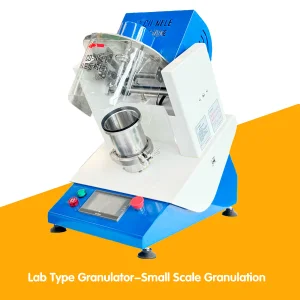
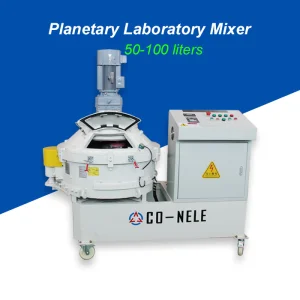
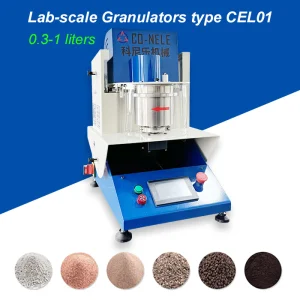
Our Qingdao testing center operates lab-scale planetary and intensive mixers ranging from 5 liters to 100 liters. Clients can ship 20kg to 50kg samples of their raw aggregate powders, binders, and pigments. Our material engineers conduct trial runs, analyzing bulk density, moisture curve, mixing time, shear energy demand, and granule sphericity, providing a complete technical feasibility report prior to plant sizing.
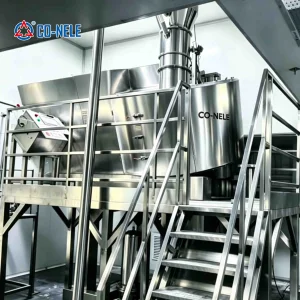
Explore our full range of mobile, stationary, compact, and specialized industrial granulating and batching solutions exported worldwide.