
CO-NELEMixing & Granulation
Explore our premium factory-manufactured mixing systems integrated with specialized high-intensity wear blades and optimized batching plants.
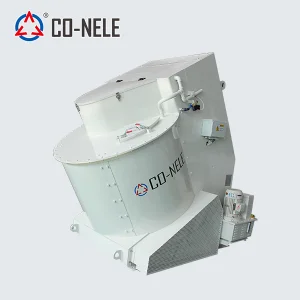
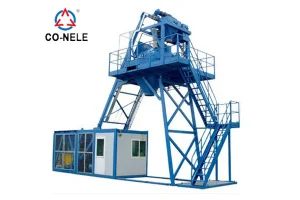
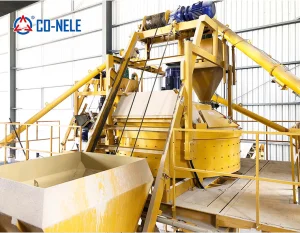
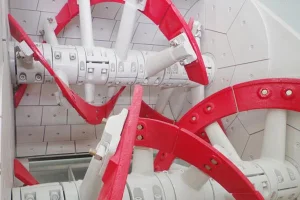
In modern industrial process engineering, high-intensity mixers serve as the central processing unit for challenging materials ranging from Ultra-High Performance Concrete (UHPC), refractory castables, and glass batching to lithium-ion battery precursors, advanced ceramics, and metallurgical powders. At the heart of these intensive mixing systems lies the most critical wear component: high-intensity mixer blades and scraping arms.
The operational environment within a high-speed intensive mixer or counter-current planetary mixer is exceptionally severe. Mixer blades are simultaneously subjected to complex multi-axial forces, high-velocity particulate impact, three-body abrasive sliding wear, micro-gouging, and in many chemical or refractory applications, aggressive thermal shock and chemical corrosion. As global industries push toward finer powder micronization, higher solid concentrations, and faster batch cycle times (often under 60 seconds per batch), standard alloy cast iron blades experience premature deterioration, leading to catastrophic batch contamination, loss of mixing homogeneity, unexpected downtime, and inflated total cost of ownership (TCO).
As a leading China High Intensity Mixer Blades Manufacturer & Factory, our metallurgical laboratories and precision machining facilities have engineered an advanced spectrum of wear-resistant solutions. By combining state-of-the-art high-chromium white cast iron casting, tungsten carbide cladding via Plasma Transferred Arc (PTA) welding, and Ceramic Matrix Composite (CMC) inserts, Chinese manufacturing centers now supply world-class replacement and OEM mixing blades that match or exceed original equipment manufacturer (OEM) specifications from top European and American brands at a fraction of the procurement cost.
Utilizing high-chromium martensitic matrix alloys enriched with primary M7C3 carbides, delivering exceptional resistance against high-stress crushing and abrasive micro-plowing.
Dynamic fluid simulation-driven blade geometry ensures zero dead-zone mixing, low energy consumption per batch, and effortless retrofitting for global mixer models.
Plasma Transferred Arc (PTA) deposition of spherical tungsten carbide (WC-Co/Ni) granules achieving localized surface hardness exceeding HV1800 for extreme wear zones.
Selecting the optimal material chemistry is vital for maximizing blade longevity under distinct industrial abrasion regimes.
| Material Classification | Hardness Range (HRC) | Impact Toughness (J/cm²) | Primary Wear Mechanism Resistance | Target Industrial Application | Cost-to-Life Efficiency Index |
|---|---|---|---|---|---|
| Standard Ni-Hard Cast Iron | 55 - 59 HRC | > 5.0 | Moderate sliding abrasion | Standard Ready-Mix Concrete, Aggregates | 1.0 (Baseline) |
| High-Chromium Alloy (Cr26-Cr30) | 62 - 66 HRC | > 8.0 | Severe abrasive wear & mild impact | Precast Concrete, Asphalt, Dry Mortar | 2.4x Baseline |
| PTA Tungsten Carbide Cladding | 65 - 70 HRC (HV1800 Matrix) | > 12.0 | Extreme gouging, high-speed impact erosion | UHPC, Refractory Castables, Quartz Aggregates | 3.8x Baseline |
| Zirconia-Toughened Alumina (ZTA) Hybrid | 72 - 76 HRC equivalent | > 15.0 | Ultra-high friction wear & non-metallic purity | Battery Slurry (LFP/NMC), Fine Ceramics, Glass | 5.2x Baseline |
In high-intensity mixers operating at rotor peripheral speeds exceeding 15 m/s, standard alloy blades fail because the softer iron matrix is scoured away, causing the carbide grains to drop out prematurely (a phenomenon known as matrix washing). China OEM manufacturers overcome this by applying cryogenic sub-zero heat treatments post-quenching, converting retained austenite into ultra-hard martensite while inducing secondary nano-precipitates. This locks carbide particles tightly within the metal matrix, extending blade operational cycles by up to 350% compared to conventional casting methods.
China's industrial manufacturing ecosystem has evolved into a global powerhouse for precision-engineered foundry and wear parts. Sourcing high-intensity mixer blades directly from specialized Chinese manufacturers provides international buyers with unparalleled operational and financial advantages:
From electric arc furnace melting, vacuum spectroscopy raw material testing, and automated lost-foam investment casting to multi-axis CNC machining, heat treatment, and surface grinding—everything is executed within single-site production bases in hubs like Qingdao. This eliminates intermediary markups and guarantees stringent quality control from ingot to finished blade.
Chinese factories maintain comprehensive CAD/CAM libraries for global mixer brands, including Eirich, BHS, Sicoma, Teka, Liebherr, and CO-NELE. Whether you require standard replacement paddles, scraping arms, outer wall scrapers, or custom-designed turbulent high-shear impellers, blades can be reverse-engineered or manufactured to exact dimensional tolerances within 7 to 14 business days.
By leveraging economies of scale, optimized energy usage, and localized raw material procurement, China manufacturers offer premium high-chromium and tungsten carbide-faced mixer blades at a 30% to 50% cost saving compared to Western OEM supply chains—without compromising metallurgical integrity or service lifespan.
Modern Chinese manufacturing facilities operate under ISO 9001:2015, ISO 14001, and CE certifications. Every production batch undergoes non-destructive testing (NDT), ultrasonic flaw detection, CMM dimensional verification, and Rockwell hardness testing before export packing in anti-corrosion VCI packaging.
Specific industries demand tailored blade geometries, tilt angles, and metallurgy to achieve optimal mixing homogeneity and throughput.
Requires high-torque, tungsten carbide-plated blades to homogenize dense silica fume, micro-steels, and quartz powders without blade edge degradation.
Extreme abrasive environments with corundum, bauxite, and silicon carbide grains require thick high-chrome (Cr30) blades with hardened scraping edges.
Zero-iron contamination is essential. Uses Zirconia-Toughened Alumina (ZTA) ceramic-coated or polyurethane-encapsulated intensive mixing blades.
Demands thermal-shock resistant blades capable of operating continuously in elevated temperature vessels up to 350°C during binder addition.
To maximize operational efficiency and prevent unscheduled plant shutdowns, procurement managers and plant engineers should implement a structured evaluation and maintenance roadmap when sourcing high-intensity mixing blades:
Even the highest-grade tungsten carbide blades experience steady material loss over millions of revolutions. Maintaining an optimal gap between the mixer blade edge and the bottom/side wear liners (typically 2.0mm to 4.0mm depending on maximum aggregate size) is critical:
Technological innovations are reshaping the design, smart monitoring, and circular sustainability of mixing wear components.
Integration of thin-film ultrasonic sensors and passive RFID chips inside blade bodies, transmitting real-time thickness wear data directly to plant SCADA systems for predictive maintenance.
Direct Metal Laser Sintering (DMLS) allowing internal cooling channels within mixer blades, reducing thermal stress during continuous high-temperature dry powder mixing.
Buy-back programs established by China factories where worn tungsten carbide scrap is reclaimed and re-synthesized into fresh hardfacing powder, lowering carbon footprints.
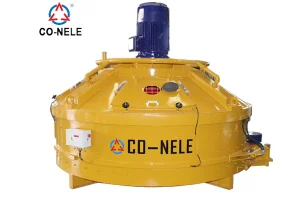
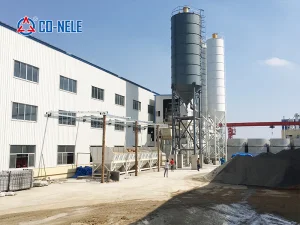
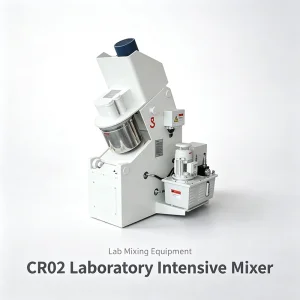
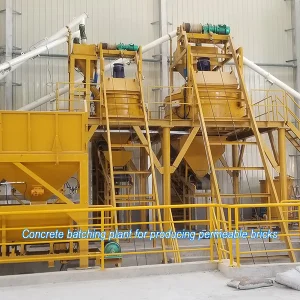
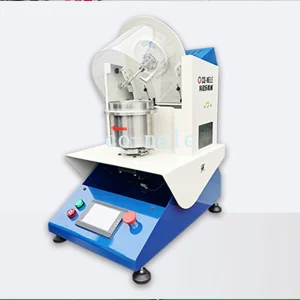
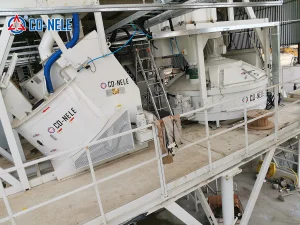
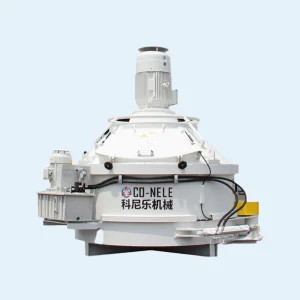
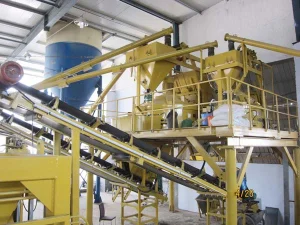
Complete your production lines with our high-torque planetary concrete mixers, intensive lab units, and customized tile brick batching facilities.
Detailed engineering answers covering wear lifespan, custom fitment, tungsten carbide cladding, and global dispatch.
On standard precast concrete batching, high-chromium (Cr26-Cr30) blades typically run between 80,000 to 120,000 batches before requiring clearance adjustment or replacement. In contrast, Plasma Transferred Arc (PTA) tungsten carbide cladded blades operating under severe abrasive conditions (such as UHPC with silica flour or refractory castables with corundum) maintain operational profile for 250,000 to 400,000 batches—extending total service life by 3 to 4 times.
Yes. Our engineers can reverse-engineer any mixer blade or scraping arm using 3D laser scanning from worn sample parts or technical drawings provided by the customer. We routinely supply custom OEM replacements for legacy planetary mixers, counter-current intensive mixers, twin-shaft, and single-shaft compulsory mixers, maintaining tight mounting hole tolerances of ±0.05mm.
Brittleness is mitigated through double-tempering heat treatment processes combined with precise control over the Chromium-to-Carbon ratio (Cr/C = 5.5 - 6.2) and trace alloying additions of Molybdenum, Vanadium, and Nickel. This creates a refined martensitic microstructure where hard primary carbide particles are evenly dispersed inside a tough, impact-absorbing matrix, preventing catastrophic blade fracture when large aggregate stones hit the rotor.
For lithium battery cathode/anode preparation where micro-gram iron contamination ruins battery performance, we engineer solid Zirconia-Toughened Alumina (ZTA) ceramic blades or high-density Polyurethane (PU) molded blades over a high-tensile stainless steel inner core. This ensures complete electrical insulation, non-reactive chemical stability, and zero metallic iron pick-up during high-shear mixing.
Standard OEM replacement blades for common mixer models (CMP1000, CMP1500, CHS4000, etc.) are kept in stock and ready to ship within 48 hours. For customized castings or specialized tungsten carbide cladded models, manufacturing lead time is 10 to 15 days. Minimum order quantities start at just 1 set (full set for one mixer pan), supported by sea, air, or express courier door-to-door delivery globally.