CO-NELEMixing & Granulation
Modern mega-scale coastal and offshore projects—ranging from long-span sea-crossing bridges and artificial island reclamation to offshore wind turbine foundations and deep-water ports—demand uninterrupted, high-spec concrete production right on the water. Traditional land-based concrete logistics fail under offshore constraints due to transit delay, premature setting of Ultra-High-Performance Concrete (UHPC), and massive supply vessel freight costs.
Transporting wet concrete by supply boats across turbulent waters causes aggregate segregation, unpredictable hydration, and slump degradation. A barge-mounted concrete batching plant turns the vessel into a self-contained concrete factory, mixing raw materials dynamically at the exact point of placement.
Offshore construction operates in extreme marine splash zones, high salt-fog conditions, and unpredictable wave swells. Standard terrestrial batching plants deteriorate rapidly; specialized marine barge batching units feature reinforced structural steel, marine-graded C5-M protective coatings, and fully enclosed dust containment systems.
Building permanent concrete plants on remote islands or leased coastal land incurs heavy civil foundation costs and environmental footprint permits. Floating concrete batching barges offer 100% mobility—relocating seamlessly between coastal marine engineering sites across oceans.
Offshore concrete production requires tailored engineering based on sea states, water depths, and structural specifications. CO-NELE designs floating batching plants engineered for five primary localized marine applications.
For deep-water pier foundations and underwater cap pourings, barge plants supply continuous massive concrete volumes (up to 180 m³/h per unit). Synchronized twin-shaft or planetary mixers ensure continuous pumping into underwater tremie pipes without cold joints.
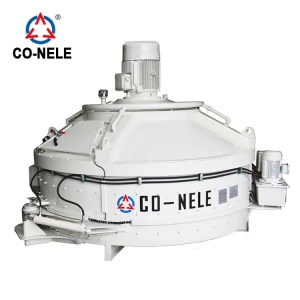
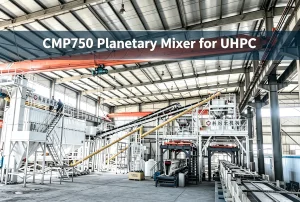
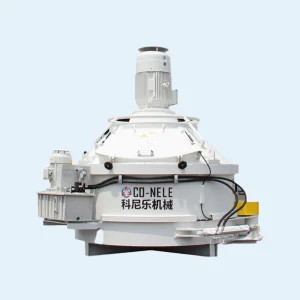
Offshore wind turbine jackets require specialized high-strength Ultra-High-Performance Concrete (UHPC) and non-shrink grouts (>150 MPa). Floating batching plants equipped with CO-NELE counter-current planetary mixers deliver exact shear energy to disperse silica fume and steel fibers evenly.
Casting massive Accropode™ blocks, quay walls, and submerged caissons right on floating pontoon decks or directly discharging into placement barges drastically cuts transportation logistics in harbor expansions.
Isolated reefs and islands lack natural freshwater, aggregate yards, and power grids. Barge batching plants integrate onboard desalination interfaces, generator sets, and bulk cement storage silos, functioning as autonomous floating construction hubs.
When storm surges break coastal levees or marine infrastructure fails, barge-mounted plants can be towed instantly to disaster sites, casting high-early-strength concrete underwater to seal breeches rapidly.
Immersed tube tunnel joints require ultra-low permeability concrete. CO-NELE barge batch plants maintain continuous, tightly temperature-controlled batching to minimize thermal cracking during underwater curing.
Operating a concrete batching plant on a floating vessel presents unique physics challenges: dynamic wave motion, deck tilt, structural weight distribution, and aggressive atmospheric corrosion. CO-NELE addresses these through specialized marine engineering solutions.
Standard gravity-based load cells register severe errors under wave-induced pitch and roll. CO-NELE integrates multi-sensor inclination compensation algorithms into Siemens PLC controllers, recalibrating aggregate, cement, and water mass measurement in real-time up to a ±5° deck angle.
All structural steel frames undergo sandblasting to Sa 2.5 grade, followed by epoxy zinc-rich primer, intermediate epoxy micaceous iron oxide, and a fluorocarbon topcoat (>300 µm total DFT). Pneumatic valves and electrical cabinets feature IP67/IP68 316L stainless steel enclosures.
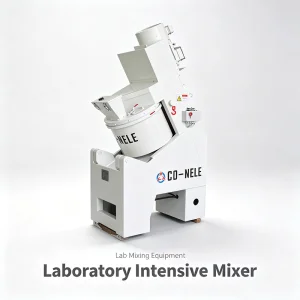
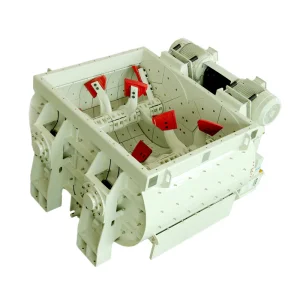
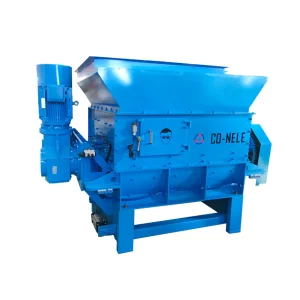
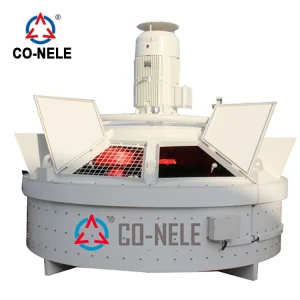
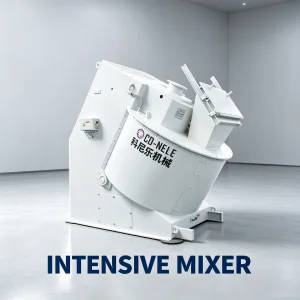
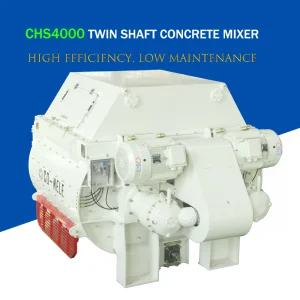
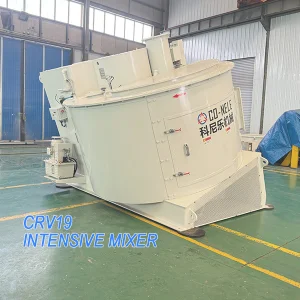
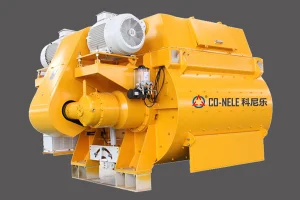
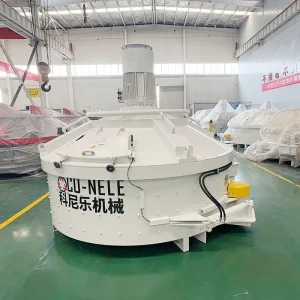
Engineered for versatile mix designs: CO-NELE vertical-shaft counter-current planetary mixers deliver 99.5% mixing homogeneity for high-spec dry-cast and UHPC, while high-throughput CHS twin-shaft compulsory mixers supply ready-mix pourings up to 180 m³/h.
Barge loading requires low center-of-gravity (CoG) design. CO-NELE engineers flatten the aggregate batching bin footprint, utilizing low-profile horizontal screw conveyors, enclosed belt systems, and automated ballast-water telemetry integration to maintain vessel equilibrium during 500-ton bulk powder discharge cycles.
As a premier Chinese marine mixing equipment manufacturer headquartered in Qingdao, CO-NELE combines over two decades of planetary gearbox R&D with China's unmatched heavy industrial manufacturing infrastructure.
3 specialized manufacturing bases in Qingdao equipped with CNC heavy machining centers, automated robotic welding lines, and in-house planetary gearbox test benches.
Proprietary counter-current mixing arm kinematics, shaft-end seal isolation systems, and marine scale dynamic vibration dampers designed in-house.
All batching modules are pre-assembled and pin-connected, allowing rapid bolting onto pontoon decks at local shipyards without structural hot-work delays.
Delivering European-tier mixing performance and marine compliance at a highly competitive capital cost, backed by 100% interchangeable spare parts stock.
Deploying floating machinery into international waters requires strict adherence to maritime classification society standards, environmental safety codes, and local electrical grids.
CO-NELE marine batching plants can be custom-engineered to comply with major marine classification societies including DNV, ABS, Bureau Veritas (BV), and China Classification Society (CCS) structural and electrical marine guidelines.
Onboard diesel generators or shore power supplies vary globally. Drives and control panels are customized for 220V, 380V, 415V, 440V, or 480V at 50 Hz or 60 Hz, complete with CE and UL compliant switchgear.
Integrated 5G/Satellite cloud telematics allow CO-NELE engineers in Qingdao to monitor batching accuracy, hydraulic temperatures, motor vibration, and wear plate status remotely on vessels operating anywhere on Earth.
Detailed technical guidance answered by CO-NELE Senior Marine Mixing Engineering Consultants.
Wave pitching and rolling induce dynamic acceleration forces on load cells, causing standard terrestrial scales to over-weigh or under-weigh materials by up to 8-15%. CO-NELE barge batching plants utilize dynamic dual-sensor inclination compensation paired with high-speed Siemens PLC sampling. By calculating real-time vessel pitch/roll vectors, the controller filters out inertia spikes, maintaining aggregate batching accuracy within ±2% and cement/water/admixture dosing within ±1% even in Sea State 3 conditions.
It depends on the concrete specification. For massive pourings such as bridge foundations and breakwater blocks where high output (90–180 m³/h) is critical, twin-shaft compulsory mixers (CHS Series) provide the fastest cycle times (30–45 seconds). However, for offshore wind grouting, underwater repair mortars, GFRC, and UHPC require high shear and micro-homogeneity without dead zones. Vertical-shaft counter-current planetary mixers (CMP Series) are superior, achieving complete micro-dispersion with a variance coefficient (CV) below 5%.
CO-NELE marine floating plants follow ISO 12944 C5-M high-durability marine environment coating standards. Steel structures are blast-cleaned to Sa 2.5, coated with an epoxy zinc-rich primer, an epoxy micaceous iron oxide intermediate coat, and finished with a polyurethane/fluorocarbon topcoat exceeding 300 microns total dry film thickness. All pneumatic fittings, solenoid valves, and control panels use SS316 stainless steel or IP67/IP68 sealed enclosures.
Aggregates are stored in low-profile deck hoppers loaded via marine clamshell cranes or barge conveyor belts. Bulk cement and slag are stored in horizontal low-height powder silos or vertical silos equipped with heavy-duty pneumatic deck mounts. Fresh mixing water is either supplied via dedicated water supply barges or produced continuously by onboard reverse-osmosis (RO) desalinators connected directly to the plant's water dosing unit.
CO-NELE provides comprehensive turnkey engineering support: 3D barge layout modeling, structural load calculation analysis, marine shipyard installation supervision, English-speaking resident commissioning engineers, and remote 5G IoT telemetry diagnostic support. Spare parts ship within 24–48 hours from our central Qingdao logistics warehouse.