CO-NELEMixing & Granulation
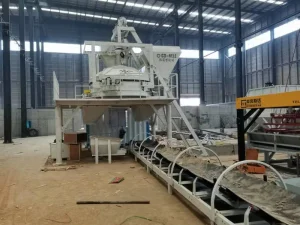
The global industrial construction sector is undergoing a structural transition toward rapid-cycle, high-homogeneity batching operations. Central to this evolution is the automatic twin shaft concrete mixer—a compulsory mixing system engineered to handle large volume ready-mix concrete, heavy civil infrastructure pours, and high-spec precast components.
Across major markets in North America, Europe, the Middle East, and Southeast Asia, engineering procurement teams face a critical dual challenge: managing initial capital expenditure (CAPEX) while securing structural integrity, minimal energy consumption, and high operational reliability. Equipment sourcing strategies have shifted dramatically over the past decade. Historically dominated by European original equipment manufacturers (OEMs) with steep premium price tags, the global market now heavily relies on advanced manufacturing hubs in China.
Direct factory sourcing from top-tier Chinese manufacturers yields a 35% to 50% cost advantage on equivalent dual-shaft compulsory mixer configurations compared to Western counterparts, without compromising on component metallurgy (e.g., Ni-Hard / High-Chrome liners), PLC automation, or CE/ISO compliance standards.
The title term "China Automatic Twin Shaft Concrete Mixer Price Factory & Machine" reflects the primary intent of procurement officers, civil project managers, and batching plant operators worldwide. Buyers seek transparent pricing parameters, direct-from-factory manufacturing insights, and robust technical machinery designed to withstand continuous heavy-duty cycles.
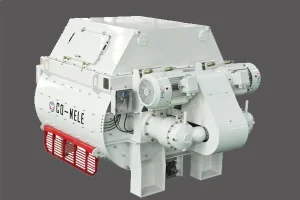
Unlike gravity-fed tilt mixers or simple single-shaft pan mixers, an automatic twin shaft concrete mixer utilizes counter-rotating horizontal shafts equipped with synchronized mixing arms and paddles.
The overlap of counter-rotating mixing arms generates intense 3D shear zones. Aggregates, cement, water, and chemical admixtures are forced into a chaotic fluid movement, achieving microscopic dispersion within seconds.
Paddles are positioned at a 45-degree angle along double spiral trajectories. This continuously transports batch materials axially and radially, preventing material segregation and eliminating dead mixing zones.
Equipped with oversized rotary hydraulic discharge gates, twin shaft mixers can discharge 3 to 6 cubic meters of mixed concrete in under 8 seconds without leaving residual heel build-up inside the pan.
| Model Series | Discharging Vol (L) | Charging Vol (L) | Main Motor (kW) | Mixing Blade Qty | Max Aggregate Size (mm) |
|---|---|---|---|---|---|
| JS500 / CHS500 | 500 L | 800 L | 2 x 11 kW | 2 x 7 | 40 / 50 mm |
| JS1000 / CHS1000 | 1000 L | 1600 L | 2 x 18.5 kW | 2 x 8 | 60 / 80 mm |
| JS2000 / CHS2000 | 2000 L | 3200 L | 2 x 37 kW | 2 x 8 | 80 / 100 mm |
| JS3000 / CHS3000 | 3000 L | 4800 L | 2 x 55 kW | 2 x 10 | 80 / 100 mm |
| JS4500 / CHS4500 | 4500 L | 7200 L | 2 x 90 kW | 2 x 12 | 100 / 120 mm |
China’s dominant position in industrial mixing machinery manufacturing is built on integrated supply chains, advanced robotic welding, and massive economies of scale centered around industrial hubs like Qingdao, Shandong.
The service life of a twin shaft mixer is fundamentally governed by its wear components—specifically the inner wall liners, mixing blades, and arm castings. Chinese manufacturing centers in Shandong leverage local high-chromium alloy foundries, enabling factories to equip standard mixers with Ni-Hard iron and Chromium alloy liners (hardness ≥ 62 HRC) at a fraction of Western production costs.
Furthermore, synchronized dual planetary gearboxes and heavy-duty shaft seals (employing automated grease injection manifolds) are produced within localized industrial clusters, drastically reducing component logistics markups.
Modern Chinese factories have shifted from manual fabrication to fully automated robotic laser cutting, CNC boring, and submerged arc welding. Mixer frames undergo stress-relieving heat treatments to prevent structural fatigue under continuous torque.
Leading manufacturers execute multi-stage quality control checks including:
When requesting quotes for a "China Automatic Twin Shaft Concrete Mixer", enterprise buyers should evaluate the pricing structure based on four core technical vectors:
Automatic twin shaft concrete mixers serve diverse roles across distinct global operational environments. Below are the key localized engineering use cases:
Primary Model: JS1500 to JS3000 (1.5 m³ – 3 m³ per batch)
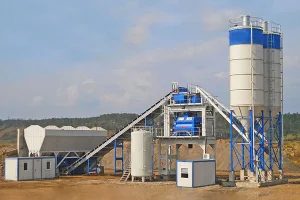
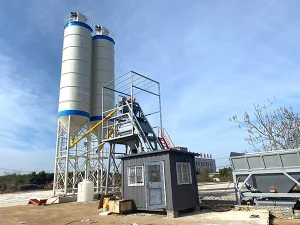
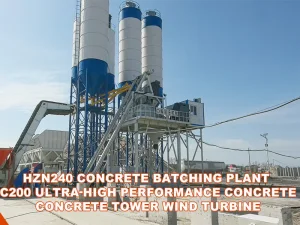
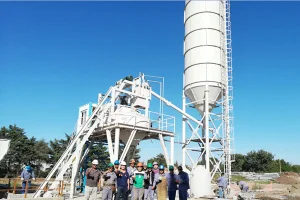
Designed for continuous, high-volume production of standard slump concrete (C20 to C50). Twin shaft machines seamlessly integrate into stationary batching plants (e.g., HZS90, HZS120) to maintain rapid dispatch schedules for transit mixers.
Primary Model: Double Spiral Shaft JS3000 to JS6000
Used in high-speed rail sleepers, bridge piers, dam structures, and airport runways where high-density concrete with aggregate sizes up to 120 mm must be processed with zero segregation.
Primary Model: JS750 to JS1500 with Hydro-Gates
Precast concrete factories require strict moisture control and fast batch changeovers for hollow-core slabs, precast wall panels, and utility culverts. Dual discharge doors allow feeding two separate delivery skips.
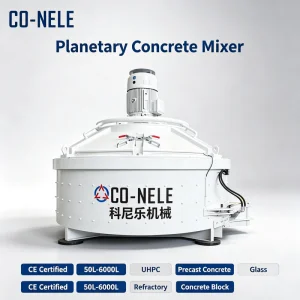
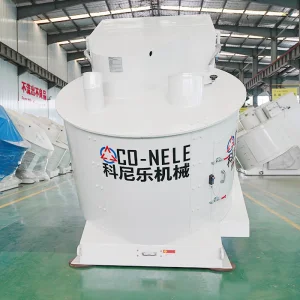
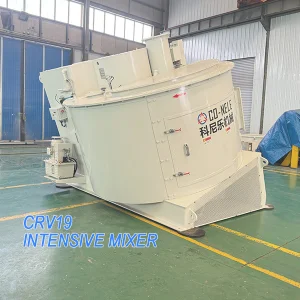
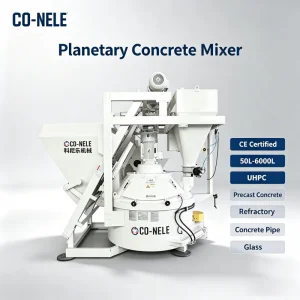
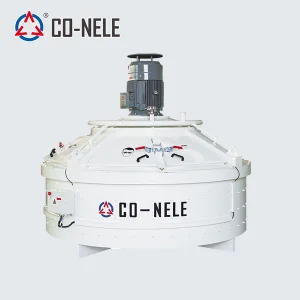
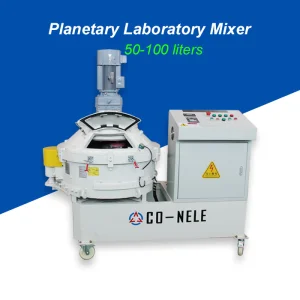
When formulas involve Ultra-High Performance Concrete (UHPC), steel fiber dispersion, or abrasive refractory castables, twin shaft mixers can be modified with double spiral continuous flighting or augmented by vertical-shaft planetary mixers to handle micro-silica shear demands.
The concrete machinery industry is rapidly moving toward smart digital integration and green environmental standards. Today’s automatic twin shaft mixers are no longer isolated mechanical units—they are intelligent nodes in connected batching systems.
Modern automatic mixers incorporate vibration sensors, thermal probes on main shaft bearings, and load-monitoring VFD drives. Smart PLCs analyze motor torque profiles to detect inner wall material build-up or mechanical binding, alerting maintenance engineers prior to gear failure.
As the construction industry adopts low-carbon cement blends (utilizing high ratios of fly ash, ground granulated blast-furnace slag [GGBS], and calcined clays), compulsory twin shaft mixers provide the intense mechanical activation required to hydrate alternative cementitious materials efficiently.
When evaluating supplier quotes for a China Automatic Twin Shaft Concrete Mixer, calculating the initial purchasing price alone is insufficient. Procurement officers should use this 5-point TCO framework:
Check if motors carry IE3/IE4 premium efficiency ratings. A 2x55kW mixer running 16 hours daily can incur energy cost variances exceeding $8,000 annually based on motor efficiency differences.
Verify the specific alloy grade of liners. High-chrome liners (Cr26) last 3x longer than standard manganese plates, drastically reducing down-time during scheduled liner replacements.
Shaft seal failure allows slurry into bearings, leading to catastrophic gearbox failure. Demand quadruple floating seal rings paired with automated electrical grease lubrication pumps.
Ensure the Chinese factory keeps standard interchangeable wear components, arms, and seals in stock with direct international DHL/FedEx dispatch guarantees within 48 hours.
Verify that control panels are configured for your local power grid (e.g., 380V/50Hz, 440V/60Hz, or 220V 3-phase) with Schneider or Siemens breakers and CE documentation.
Leading OEMs provide video-assisted commissioning, resident technical setup, and localized training for batching plant staff worldwide.
Expert answers from industrial mixing engineers to help guide your procurement process.
Factory pricing generally ranges from $8,000 to $18,000 USD for compact models (JS500 to JS1000), and $22,000 to $65,000+ USD for heavy industrial models (JS2000 to JS4500). Total price depends on chosen options such as automated grease pumps, microwave moisture sensors, motor brands (e.g., Siemens IE3), and wear liner material grade (High-Chrome vs standard alloy).
Twin Shaft Mixers excel in high-throughput applications (wet concrete, ready-mix, heavy civil) with rapid discharge cycles of 30 to 45 seconds for batches above 1.5 m³. Planetary Counter-Current Mixers are preferred for dry-cast products, color blocks, refractories, and UHPC where extreme micro-homogeneity (< 5% variation) and zero pigment clumping are required.
With high-chromium cast iron liners (Cr26), users typically achieve 70,000 to 120,000+ batch cycles under standard aggregate conditions. In highly abrasive environments (e.g., quartzite aggregate or refractory mixing), lifespan ranges between 40,000 and 60,000 batches. All liners feature bolt-on designs for rapid field replacement.
Yes. Direct export factories routinely customize electric drive motors and control cabinets for global power standards, including 220V, 380V, 415V, 440V, 460V, and 480V at 50Hz or 60Hz. Electrical systems can be certified to CE or UL standards upon customer request.
Standard export packages include foundation layout blueprints, electrical wiring diagrams, comprehensive English user manuals, and a 12-month drive-train warranty. Overseas commissioning can be conducted via live remote engineering video assistance or by dispatching resident field engineers to the customer's site.
Connect directly with our industrial equipment engineering team in Qingdao. Receive personalized batching plant drawings, mixer selection guides, and delivered price quotes within 24 hours.