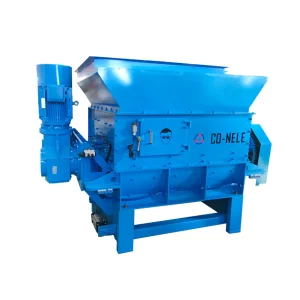

CO-NELEMixing & Granulation
Designed specifically to withstand rigorous aggregate friction, precise bitumen coating, and continuous batching operations under Korean Ministry of Land, Infrastructure and Transport (MOLIT) guidelines.
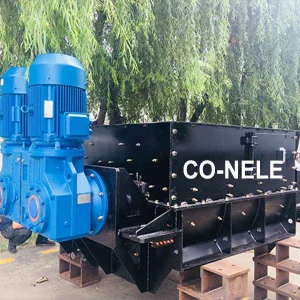
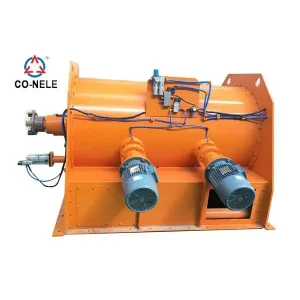

South Korea boasts one of the most sophisticated, densely integrated transport networks in East Asia. Overseen by the Ministry of Land, Infrastructure and Transport (MOLIT) and operated under strict national standards such as KS F 2349 (Standard Test Method for Hot Mix Asphalt), road paving projects in Korea demand non-negotiable mixing uniformity, high thermal conservation, and extreme mechanical durability.
From the high-speed arteries of the Gyeongbu Expressway to the heavy-axle container corridors surrounding Busan Port and Incheon International Airport, asphalt pavements in Korea undergo dramatic seasonal temperature variations—ranging from freezing sub-zero winters (-15°C) to intense summer heat waves (+35°C) accompanied by heavy monsoon rains. Consequently, Korean civil contractors and asphalt batching plant operators require twin shaft asphalt mixers capable of homogenizing difficult recipes: Stone Matrix Asphalt (SMA), Porous Friction Courses (PFC), and modified binders incorporating Styrene-Butadiene-Styrene (SBS) polymers.
To address the Korean government's stringent Carbon Neutrality 2050 framework, asphalt producers are rapidly scaling up the incorporation of Reclaimed Asphalt Pavement (RAP)—targeting RAP dosing ratios of 30% to 50%. Standard single-shaft or continuous drum mixers often suffer from severe bitumen aging, aggregate stripping, and thermal loss during high-RAP mixing. Twin shaft compulsory asphalt mixers engineered by CO-NELE provide the ideal solution, utilizing three-dimensional forced counter-current mixing kinematics to deliver rapid, uniform thermal transfer without burning the bitumen emulsion.
At the heart of CO-NELE's Twin Shaft Asphalt Mixers lies a synchronized dual-shaft compulsory mixing system designed to maximize energy dissipation while minimizing mechanical wear. Unlike standard concrete twin shaft mixers, asphalt mixing requires thermal containment, zero bitumen accumulation on arms, and immediate complete discharge to prevent temperature drop before paving.
Heavy-duty helical gearbox with synchronized timing gears ensures the counter-rotating mixing arms intermesh with millimeter precision. This generates a turbulent three-dimensional fluid bed, forcing coarse aggregates, mineral fillers, and liquid bitumen into instantaneous micro-homogeneity.
Equipped with Ni-Hard alloy liners and high-chromium cast iron mixing paddles (hardness ≥ 58-62 HRC). Engineered to withstand highly abrasive quartz sands and crushed granite aggregates commonly quarried across Gangwon and Gyeongsang provinces.
Dual-wall insulated mixing trough paired with high-pressure pressurized bitumen injection bars. Ensures bitumen spray covers 100% of aggregate surface area within 6 seconds of injection, eliminating dry spots and asphalt clumping.
Full-length hydraulic or pneumatic discharge gate fitted with thermal heating jackets. Offers rapid discharge in less than 4 seconds with zero material residue, preventing bitumen build-up and gate jamming during continuous operational shifts.
| Performance Specification | CO-NELE Heavy Twin Shaft Asphalt Mixer | Conventional Single Shaft / Drum Mixer | Impact on Korean Paving Standards |
|---|---|---|---|
| Mixing Homogeneity (CV) | < 3.0% (Micro-Homogeneous) | > 7.5% (Variable) | Meets strict MOLIT standard for high-speed highway SMA paving |
| SMA / PMB Fiber Dispersion | Instantaneous 3D shearing (Zero balling) | Requires pre-blending / extended cycles | Eliminates rutting and fatigue cracks under heavy Korean truck traffic |
| High-Ratio RAP Processing | Up to 50% RAP addition capability | Limited to 15–20% without clogging | Dramatically reduces raw material costs for Korean plant owners |
| Thermal Conservation Efficiency | Fully insulated double-shell casing | Uninsulated single wall | Saves 12–15% fuel oil / natural gas per batch |
| Discharge Door Maintenance | Self-cleaning thermal jacket seal | Frequent asphalt leakage & jamming | Prevents costly plant downtime during peak road building season |
Geographic proximity and industrial synergy give Chinese machinery manufacturing a commanding lead in supplying South Korea's industrial sector. Located directly across the Yellow Sea in Qingdao, Shandong Province, CO-NELE (Qingdao CO-NELE Machinery Co., Ltd.) leverages unmatched maritime logistics networks to service Korean clients.
Daily container and Ro-Ro vessel sailings connect Qingdao Port directly to Incheon, Pyeongtaek, and Busan Ports. Critical wear components or complete batch replacement mixers arrive on site within days, completely eliminating long European lead times.
Procuring directly from our Qingdao production bases offers a 40% to 50% capital cost advantage over German or Japanese OEMs, without compromising on premium electrical components like Siemens PLCs, Schneider electronics, or SKF bearings.
All control panels and electrical drives are tailored precisely to South Korea’s industrial power grid (380V/440V, 60Hz). Systems are engineered to meet KOSHA (Korea Occupational Safety and Health Agency) and K-Marks standards.
Every civil engineering domain in South Korea demands specific material behaviors from asphalt concrete. CO-NELE Twin Shaft Mixers adapt dynamically via programmable PLC parameters to meet localized batch recipes:
Highways carrying heavy truck freight between Seoul, Daejeon, and Busan require Stone Matrix Asphalt (SMA) with high cellulose fiber content. Our mixers deliver intense mechanical shear to disperse fibers without clumping, preventing rutting under summer heat.
Metropolitan municipal mandates require porous asphalt (draining asphalt) to mitigate flash flooding and reduce tire noise. CO-NELE twin shaft units gently coat coarse single-size aggregates with modified bitumen without crushing aggregate corners.
Airport aprons and runways undergo extreme static and dynamic loads. Our AMS series mixers process polymer-modified asphalt (PMA) at elevated temperatures (+180°C) with precise weight tolerance controls (+/- 0.5%).
Gyeonggi province asphalt recycling centers utilize our dedicated RAP twin shaft mixers featuring gentle indirect heating, preventing old bitumen oxidation while achieving total blending with virgin aggregates within 35 seconds.
As South Korea accelerates toward decarbonization, green asphalt manufacturing technologies like Warm Mix Asphalt (WMA) and chemical foaming are replacing traditional hot mix processes. WMA allows asphalt mixing at temperatures 20°C to 40°C lower, significantly reducing carbon emissions, fuel consumption, and plant fumes.
CO-NELE twin shaft mixers integrate seamless water-foaming injection nozzles and precise chemical additive dosing ports. Coupled with Siemens S7-1500 PLC architecture with Korean language UI options, plant operators can monitor batch temperature, motor torque, moisture variations, and cycle times in real time. Historical batch data can be exported to cloud platforms for Smart Plant Certification required by major Korean construction conglomerates (Samsung C&T, Hyundai E&C, GS E&C, DL E&C).
With over 20 years of dedicated research in forced-action industrial mixing, 80+ patents, and over 10,000 active installations globally, CO-NELE stands as an authoritative partner for Korean civil engineering firms seeking uncompromised quality, reliable spare part availability, and factory-direct pricing.
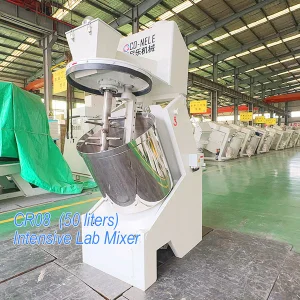
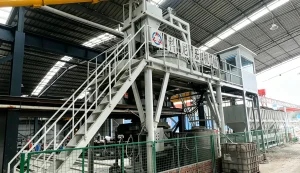
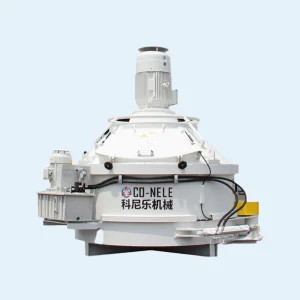
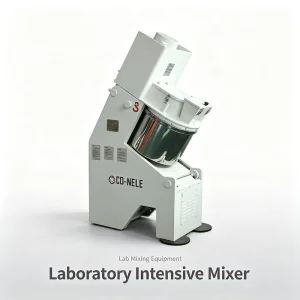
Explore our broader product matrix engineered in our 3 production bases, serving concrete batching, precast infrastructure, lab research, and asphalt manufacturing in South Korea.
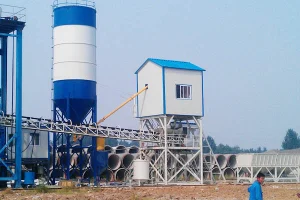

Get direct access to factory pricing, custom engineering CAD drawings, KOSHA-compliant electrical engineering, and rapid 24-hour maritime shipping to Incheon & Busan.
Send Inquiry Now