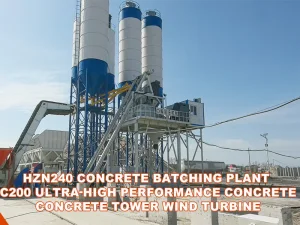
Canada Wind Infrastructure & Precast UHPC Batching Plant
Integrated batching solution with high-precision micro-powder scale, liquid admixture dosing, and planetary counter-current mixing pan.
Explore Machine Details →
Direct-factory Chinese high-shear planetary mixers optimized for Canadian precast plants, bridge deck overlays, and extreme freeze-thaw civil projects.
Integrated batching solution with high-precision micro-powder scale, liquid admixture dosing, and planetary counter-current mixing pan.
Explore Machine Details →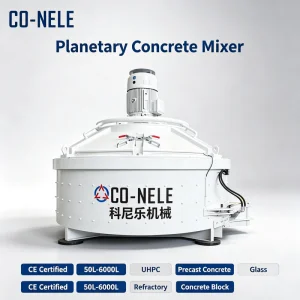
Heavy-duty vertical shaft mixer designed specifically to homogenize steel fibers (up to 3.5% vol) and silica fume without clump formation.
Explore Machine Details →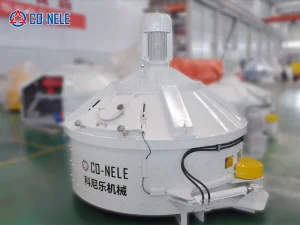
Equipped with steam-injection ports and thermal insulated pan covers for seamless winter concrete batching in Ontario & Quebec.
Explore Machine Details →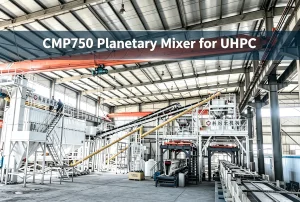
0.75m³ batch volume mixer with patented star-kinematics pan rotation, delivering micro-homogeneity with CV < 3% under 90 seconds.
Explore Machine Details →Evaluating structural longevity, freeze-thaw resistance under CSA A23.1, and the transition from conventional cast-in-place concrete to Ultra-High Performance Concrete (UHPC).
Canada’s civil engineering and building infrastructure are currently undergoing a structural transformation. With harsh climatic realities—ranging from sub-zero winter freeze-thaw cycles (-40°C in Alberta and the Prairies) to heavy exposure to de-icing salt chemicals (sodium chloride and calcium chloride)—traditional ready-mix concrete structures suffer from accelerated micro-cracking, spalling, and internal rebar corrosion. As a consequence, provincial transport authorities such as Ministry of Transportation Ontario (MTO), Transports Québec, and British Columbia Ministry of Transportation and Infrastructure (MoTI) have rapidly mandated the use of Ultra-High Performance Concrete (UHPC) for bridge deck expansion joints, precast girder connections, seismic retrofitting, and marine pier caps.
UHPC is defined by its ultra-dense particulate packing matrix, water-to-binder ratio (w/b) strictly below 0.20, compressive strength exceeding 150 MPa (21,750 psi), and sustained tensile ductility provided by micro-steel fiber reinforcement. However, processing UHPC presents an extraordinary rheological challenge: traditional drum mixers or standard twin-shaft ready-mix mixers lack the shear velocity and torque necessary to fluidize extremely dry silica powders and evenly disperse fine steel micro-fibers (typically 13mm length, 0.2mm diameter). Standard machinery results in "fiber balling," unhydrated cement agglomerates, excessive air entrapment, and severe gearbox burnout.
For Canadian precast producers and general contractors, sourcing UHPC mixing equipment from local North American or European equipment vendors often involves exorbitant capital expenditure (CAPEX) and lead times exceeding 9 to 12 months. Chinese specialized equipment manufacturers—most notably Qingdao CO-NELE Machinery Co., Ltd.—have bridged this market gap by manufacturing heavy-industrial planetary and intensive counter-current mixers specifically rated for ultra-dense UHPC mix designs.
By purchasing directly from a premier Chinese factory, Canadian buyers achieve up to 45% to 60% CAPEX savings without compromising on critical mechanical reliability, CSA/UL electrical safety certifications, or wear-liner longevity. This technical guide outlines the precise mechanical engineering, micro-kinematics, and operational considerations required when integrating Chinese UHPC machinery into Canadian ready-mix and precast operations.
Analyzing forced-action mechanical shear, star-arm revolution-rotation ratios, and fiber dispersion mechanisms.
The mixing star rotates around its own axis while simultaneously revolving around the center of the pan. This eliminates 100% of physical dead zones and enforces continuous high-shear kinetic energy throughout the batch.
Equipped with specialized high-speed dispersion blades, the planetary arms unravel clustered micro-steel fibers, distributing them uniformly across the cementitious matrix without shearing or bending the fibers.
Custom co-axial gear reducers designed in-house with hardened alloy steel gears withstand the extreme starting torque of low-water cementitious slurries (over 2.0 kW per 100 liters of batch capacity).
| Mixer Kinematics | UHPC Homogeneity (CV) | Steel Fiber Dispersion | Energy Efficiency | Canadian Winter Suitability |
|---|---|---|---|---|
| CO-NELE Counter-Current Planetary | < 2.5% (Excellent) | 100% Homogeneous / Zero Balling | High Torque / Reduced kWh/m³ | Seamless Steam Injection Integration |
| Inclined Intensive High-Shear Mixer | < 1.8% (Ultra Precision) | Instantaneous Micro-Dispersion | Optimal for High Speed Batches | Thermal Insulated Vessel Ready |
| Horizontal Twin-Shaft Mixer | 4.5% – 7.0% (Moderate) | Risk of Fiber Entanglement around Arms | Medium Energy Efficiency | Difficult to Heat Pan Walls |
| Standard Tilting Drum Mixer | > 12.0% (Unacceptable for UHPC) | Severe Fiber Balling & Segregation | Low Effective Shear Rate | Unsuitable for Low-Water Mixes |
Addressing field safety approvals, CSA C22.1 Electrical Codes, SPE-1000 field evaluation, and sub-zero operational readiness.
Exporting industrial heavy machinery to Canada requires strict compliance with local electrical safety regulations governed by the Canadian Electrical Code (CEC - CSA C22.1) and regional bodies such as the Electrical Safety Authority (ESA in Ontario) or BC Safety Authority (Technical Safety BC). Machinery entering Canada must possess accredited safety certification marks (such as cULus, CSA, or Intertek ETL) or undergo a SPE-1000 Field Evaluation prior to commissioning.
In regions such as Alberta, Saskatchewan, and Northern Quebec, winter temperatures drop well below freezing for over 5 months a year. Mixing UHPC at sub-zero ambient temperatures risks hydration termination and water freezing inside the batching pan. Direct-factory Chinese UHPC batching solutions engineered for Canada feature specialized winterization add-ons:
Evaluating initial capital outlay, sea-freight logistics to Canadian ports, wear-part durability, and long-term lifecycle savings.
When Canadian engineering firms evaluate mixing plant investments, purchase price is only one component of the lifecycle equation. The total cost of ownership (TCO) over a 10-year period is dictated by wear-plate replacement frequency, energy consumption per cubic meter, gearbox maintenance, and rapid availability of replacement parts.
Direct OEM factory purchasing eliminates intermediary dealer markups in North America, allowing precast plants to reallocate capital into advanced laboratory testing and mold tooling.
Pan floor and side wall liners constructed from 65 HRC High-Chrome Alloy (Ni-Hard IV / Chromium Carbide overlay) withstand over 120,000 batches of quartz sand and steel fiber abrasion.
Modular plant designs fit into standard 40ft Open-Top or High-Cube containers. Direct shipping routes from Qingdao Port to Vancouver, Montreal, and Halifax in 18 to 25 days.
Complete machinery lineup supplying precast concrete, refractory castables, asphalt batching, ceramic powder granulation, and R&D laboratories across North America.
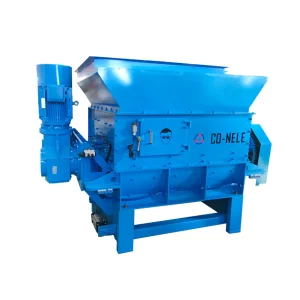
Compulsory asphalt mixer designed for continuous hot-mix and warm-mix road paving applications across Canadian highways.
Explore Machine Details →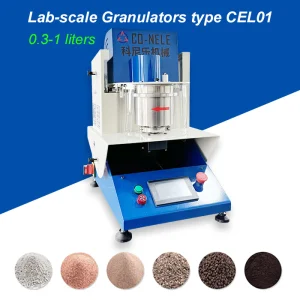
Compact lab-scale intensive mixer (5-15L) ideal for university research labs and UHPC mix design formulation development.
Explore Machine Details →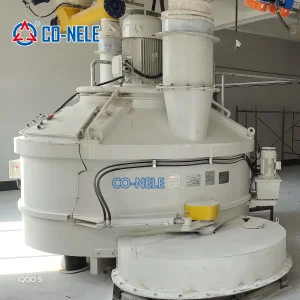
Dust-tight counter-current batch mixer engineered to homogenize silica sand, soda ash, and cullet without segregation.
Explore Machine Details →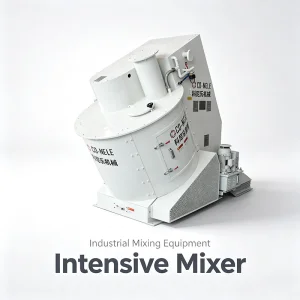
Inclined mixing pan with independent high-speed rotor for extreme shear blending of refractory mortars and dense castables.
Explore Machine Details →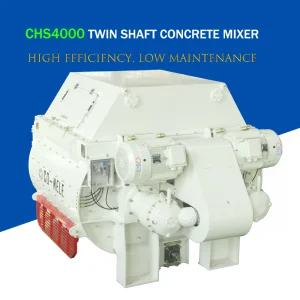
High-output 4.0m³ batch capacity twin shaft mixer for commercial ready-mix concrete plants and dam construction.
Explore Machine Details →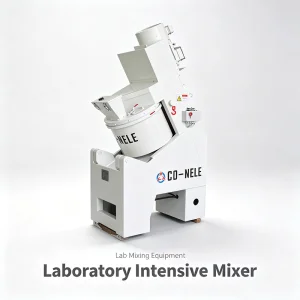
Designed for battery materials, metallurgy powders, and ultra-fine chemical blending requiring zero static dead zones.
Explore Machine Details →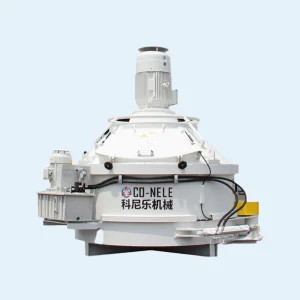
Compact 330L vertical planetary mixer ideal for specialized precast architectural panels, pavers, and GFRC production.
Explore Machine Details →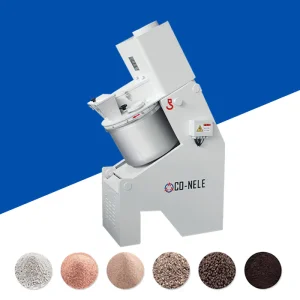
High-speed pelletizing pan combining wetting, mixing, and spherical granule formation in a single continuous operational cycle.
Explore Machine Details →Integration of AI moisture monitoring, real-time slump rheology control, and low-carbon geopolymer binder processing.
High-frequency optical and microwave sensors mounted beneath the mixing pan measure moisture content 25 times per second, automatically adjusting water micro-dosing to maintain strict 0.18 w/b ratio accuracy.
By monitoring motor current draw and planetary gearbox hydraulic resistance, the SCADA control system calculates exact mix viscosity, discharging the batch precisely when peak shear homogenization is attained.
Optimized rotor blade geometry designed to handle sticky, high-surface-area supplementary cementitious materials (SCMs) including calcined clays, blast furnace slag, and silica micro-powders.
Direct technical answers from our industrial machinery process engineering team regarding imports, installation, and UHPC formulation.
UHPC mixes have extremely low water content (w/b < 0.20) and high powder density. A twin-shaft mixer relies primarily on gravity movement between parallel shafts, which causes low-water cementitious slurries to stick to the shafts and ball up fine steel fibers. A vertical-shaft planetary mixer uses forced-action counter-current star arms that sweep 100% of the pan floor every 4 rotations, imparting high kinetic shear energy that breaks down agglomerates and disperses steel fibers homogeneously within 60 to 90 seconds.
We build our control panels using CSA, UL, or CE certified electrical components (Siemens PLCs, Schneider contactors, ABB VFDs). Prior to export shipment, machines destined for Canada can undergo factory inspection, or we coordinate with accredited inspection agencies (such as CSA, Intertek, or QAI) to perform an SPE-1000 Field Evaluation upon delivery to your Canadian facility.
Our standard UHPC mixer pans are lined with high-chrome alloy wear plates (Ni-Hard IV / Hardox 500 equivalent) featuring a hardness rating above 62-65 HRC. Under continuous production of quartz aggregate and micro-steel fiber UHPC, floor liners typically achieve 50,000 to 80,000 batches, while mixing blades last approximately 30,000 to 45,000 batches. All liners are segmented and bolt-on for rapid field replacement within 4 to 6 hours.
Yes. We offer localized winterization packages including thermal insulated pan covers, high-pressure steam injection ports built into the mixing vessel base, and automated hot water batching integration. This enables rapid heating of dry materials from -20°C up to optimal hydration temperatures (+20°C to +25°C) inside the mixing chamber.
Ocean transit times from Qingdao Port to Vancouver (Port of Vancouver) average 14 to 18 days. Transit times to Eastern Canadian ports such as Montreal or Halifax average 24 to 30 days via the Panama Canal. Complete modular batching plants are packed in 40ft Open Top (OT) or High Cube (HC) shipping containers with sea-worthy anti-corrosion VCI barrier wrapping.
Contact our senior process engineers today to receive detailed CAD foundation layouts, batching cycle calculations, wear component specifications, and direct factory pricing.
Send Inquiry Now