
CO-NELEMixing & Granulation
Engineered for absolute homogeneity, zero particle degradation, and ultra-fast discharge cycle times under continuous industrial operation.
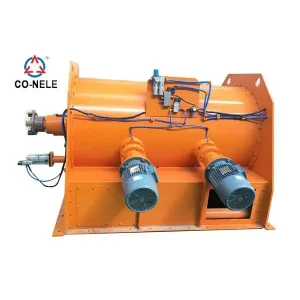
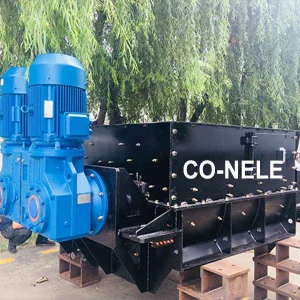
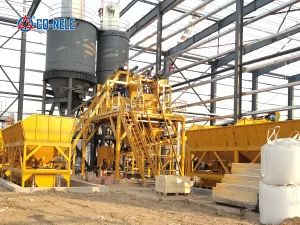
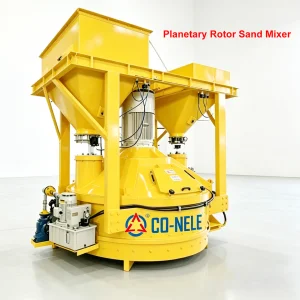
Japan’s modern construction and civil engineering sectors represent one of the world's most rigorous operational environments for cementitious materials, dry premixed mortars, and special architectural formulations. Driven by stringent seismic protection mandates under the Ministry of Land, Infrastructure, Transport and Tourism (MLIT), the Japanese building industry demands dry powder mortar with unprecedented batch-to-batch consistency, high bond strength, and micro-dispersed chemical additives.
The structural shift in the Japanese construction market is governed by three primary macroeconomic and technological trends:
With an aging skilled labor force in Tokyo, Osaka, and regional prefectures, jobsite batching is rapidly disappearing. Japanese general contractors (Zeon-kon such as Taisei, Obayashi, and Kajima) rely almost exclusively on factory-premixed, bag-packed, or silo-delivered dry mortar requiring only site-added water.
Earthquake mitigation requires specialized polymer-modified mortar formulations (PMM) with low elastic modulus and superior crack resistance. Dispersing high-viscosity cellulose ethers (HPMC), Redispersible Polymer Powders (RDP), and micro-fibers requires extreme mechanical shear without heating the mix.
Japan's 2050 Carbon Neutrality goal enforces the incorporation of industrial by-products—such as blast-furnace slag (GGBS), silica fume, and fly ash—into green mortar recipes. Homogenizing powders with ultra-fine particle sizes requires next-generation fluidizing plowshare mixing kinematics.
Information Gain Benchmark: Standard twin-ribbon blenders fail to disperse micro-additives below 0.1% concentration in dry mortar mixes. CO-NELE high-shear dry powder mortar mixers achieve a Coefficient of Variation (CV) < 3% within 60 to 90 seconds of mixing cycle.
Selling machinery to Japanese manufacturers requires adhering to strict technical protocols, electrical safety codes, and operational noise thresholds. Our customized dry powder mortar mixers and batching plants exported to Japan undergo precise engineering adjustments at our Qingdao manufacturing facility prior to shipment.
| Engineering Parameter | Standard Import Specification | CO-NELE Customized Solution for Japan Market |
|---|---|---|
| Electrical Voltage & Frequency | 380V 50Hz / 440V 60Hz standard export | 200V / 220V Dual Frequency (50Hz Tokyo / 60Hz Osaka) with Japanese standard industrial connectors and CE/UL certified cabling. |
| Control Systems & PLC | Standard multi-language touch screen | Mitsubishi Electric MELSEC PLC & GOT Series HMI with native Japanese UI, custom batching recipes, and IoT remote diagnostic options. |
| Wear Resistance Technology | Standard AR400 or manganese plates | High-Chrome Alloy Liners (HRC ≥ 62) & Ni-Hard Blades designed for quartz sand and abrasive basalt aggregate formulations. |
| Environmental Dust Control | Standard bag filtration (< 50mg/m³) | Cleanroom-Grade Pulse-Jet Cartridge Filter System (< 10mg/m³) satisfying Japanese Air Pollution Control Law. |
| Noise & Vibration Limits | < 85 dB(A) at 1 meter | Vibration-Damped Frame Structure (< 75 dB(A)) compliant with Japan Vibration Regulation Law for urban factories. |
Mortar produced in our systems consistently satisfies JIS A 6916 (Thick coat plastering mortar for building construction) and JIS A 1171 (Test methods for polymer-modified mortar). The high-speed cutter arrangement breaks down fibers and agglomerated pigments, preventing fish-eye formation during field water mixing on site.
From high-rise seismic retrofitting in Shibuya to bullet train slab grouting in Tohoku, our dry powder mixers power critical building materials.
High-strength non-shrink grouts require intense shear dispersion of expansion agents and silica fume. Our twin-shaft and plowshare mixers deliver void-free, self-leveling performance essential for Tokyo elevated bridge pier jackets and building column reinforcements.
Japan's exterior tile facade installations demand C2TE S2 flexible tile adhesives to prevent tile drop during earthquakes. CO-NELE mixers homogenize high percentages of RDP polymer powder without build-up on the mixing shaft.
Engineered for Hokkaido and Tohoku regions, thermal insulation mortar blends lightweight aggregates (polystyrene beads, expanded perlite) with cement matrix. Our gentle yet rapid fluidizing action guarantees zero bead crushing during mixing.
Restoration of historic timber structures requires custom hydrated lime, fine silica, and natural fiber mixes. CO-NELE lab scale and production mixers deliver precise, reproducible batches for high-value architectural heritage projects.
Headquartered in Qingdao, Shandong Province—China’s premier industrial equipment manufacturing hub—QINGDAO CO-NELE MACHINERY CO., LTD. combines advanced mixing mechanics with total control over the manufacturing supply chain. Our direct proximity to Qingdao Port allows unmatched shipping speed, low logistics cost, and reliable delivery to all major Japanese ports including Tokyo, Yokohama, Nagoya, Osaka, and Kobe.
Direct container lines from Qingdao Port reach Osaka/Kobe in just 48 hours and Tokyo/Yokohama within 72 hours. Urgent wear parts ship via air express arriving at your plant within 24-48 hours.
Unlike trading suppliers who assemble outsourced components, CO-NELE manufactures its own planetary gearboxes, heavy-duty shafts, and precision-machined mixing pans inside our 30,000 m² Qingdao facilities.
Achieve European mixing accuracy and durability at 40-50% lower capital outlay (CAPEX), delivering Japanese producers a faster return on investment and lower total cost of ownership (TCO).
Multinational building materials companies operating plants in Japan (such as Sika, Saint-Gobain Weber, Mapei, and local Japanese cement producers) adhere to strict vendor qualification frameworks. CO-NELE equipment meets and exceeds these corporate procurement benchmarks through verified quality management systems:
Every batching machine and mortar mixer is assembled under ISO 9001 certified protocols, featuring full material traceability for steel plates, alloy castings, and electric drives.
Before dispatch from Qingdao, each unit undergoes a 4-hour dry and wet continuous test run with vibration spectrum monitoring, temperature logging, and seal integrity checks.
As the industrial mixing landscape advances toward Industry 4.0, CO-NELE continuously integrates intelligent automation and high-efficiency fluid kinematics into our product line:
Real-time microwave moisture sensors track aggregate humidity variations, automatically communicating with the PLC to adjust additive micro-dosing within ±0.1% accuracy.
Zero-clinker geopolymer mortars require specialized shear mixing to activate fly ash and slag powders. Our high-shear intensive granulators ensure complete binder wetting.
Embedded acoustic and vibration sensors alert operators when wear plates or shaft seals require routine service, eliminating unexpected downtime in automated plant lines.
Explore our full line of specialized mixing machines, mobile batching stations, granulators, and planetary mixers engineered for industrial plants.
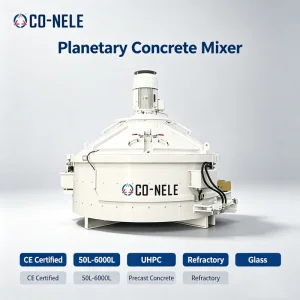
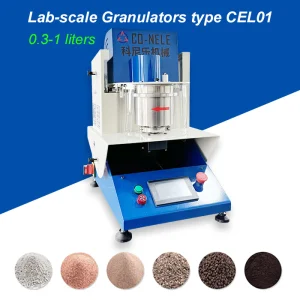
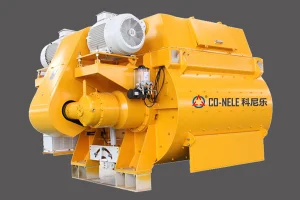
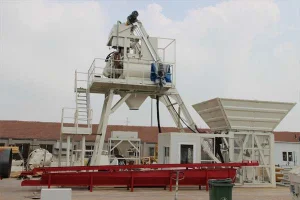
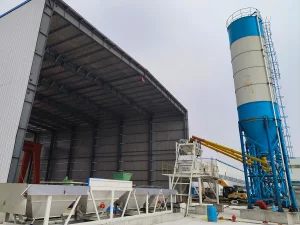
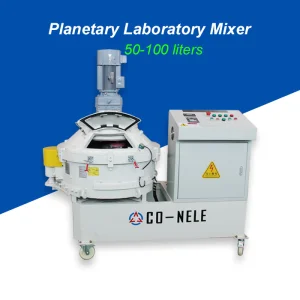
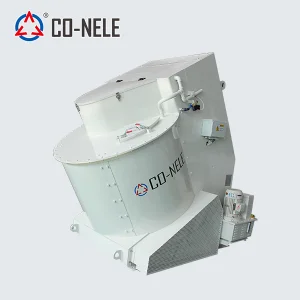
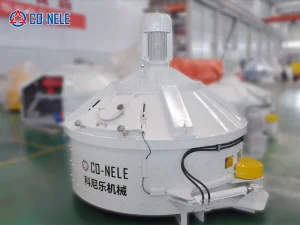
Direct technical answers from CO-NELE mixing process engineers on JIS standards, lead times, electrical compatibility, and spare parts support.
Every dry powder mortar mixer built for the Japanese market is custom-wired to match Japanese Industrial Voltage standards: 200V 50Hz (Eastern Japan/Tokyo area) or 200V/220V 60Hz (Western Japan/Osaka area). We supply high-grade Japanese components including Mitsubishi Electric PLCs, Omron sensors, and Fuji Electric breakers, complete with full Japanese/English documentation and electrical schematics.
Yes. Our single-shaft plowshare and twin-shaft dry mortar mixers are equipped with high-speed side chopper blades (1,440 to 2,880 RPM). These choppers create intense localized shear force that instantly disperses trace additives (down to 0.05% concentration) such as HPMC, RDP, and micro-synthetic fibers without agglomeration or heat degradation.
Because Qingdao Port is located directly across the Yellow Sea from Japan, direct shipping container lines take only 2 days to reach Kobe/Osaka and 3 days to reach Tokyo/Yokohama. Total lead time from order confirmation (including custom factory assembly and testing) to arrival at a Japanese port is usually within 25 to 35 calendar days.
CO-NELE utilizes high-chrome alloy wear liners (HRC ≥ 62) and hardened plowshare blades. When mixing standard quartz sand dry mortar, our liners consistently last between 120,000 to 180,000 batches before requiring bolt-on replacement. Emergency spare parts ship from Qingdao stock via DHL/FedEx arriving at Japanese plant sites within 24 to 48 hours.
Absolutely. We invite Japanese clients to ship 20 to 50 kg of raw sand, cement, and chemical additives to our Qingdao Material Test Laboratory. Our process engineers will conduct trial runs on our lab-scale mixers, providing you with a full laboratory report detailing particle dispersion, mixing time, power consumption, and scale-up parameters.
We provide full operational manuals in English (and Japanese upon request), ISO 9001 factory test certificates, CE compliance declarations, 3D CAD foundation drawings, dynamic foundation load values, and complete PLC I/O wiring diagrams required by Japanese municipal building authorities.
Partner with QINGDAO CO-NELE MACHINERY CO., LTD. for high-precision, JIS-compliant dry powder mortar mixers, intensive granulators, and turnkey batching plants engineered for long-term performance.