Industry 4.0 Engineering Whitepaper

Compact Concrete Batching Plants Factory & Machine serving Paris

Next-Generation Modular Concrete Mixing Technology Engineered for High-Density Urban Infrastructure, Grand Paris Express Expansion & Low-Carbon Eco-Concrete Specifications

Flagship Urban Mixing Equipment

High-Efficiency Compact Mixing Systems for Paris Sites

Engineered for tight footprints, high batch homogeneity, and swift relocation across Île-de-France construction projects.

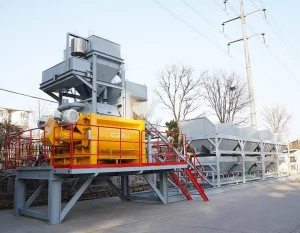
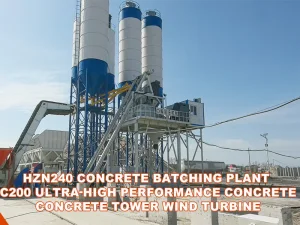
Paris Urban Mobile Concrete Batching Plant

Paris Urban Mobile Concrete Batching Plant (25-50 m³/h Capacity)

View Technical Details
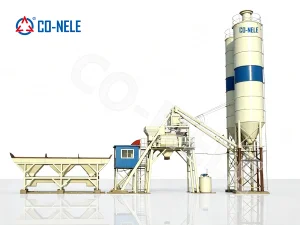
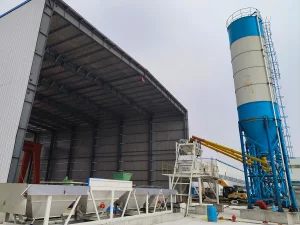
Paris 50m³/h Compact Modular Concrete Batching Plant

Paris 50m³/h Compact Modular Concrete Batching Plant

View Technical Details
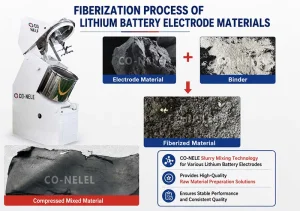
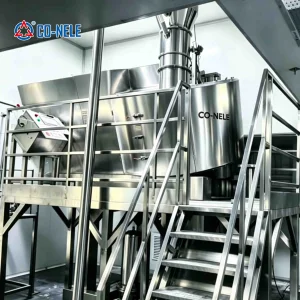
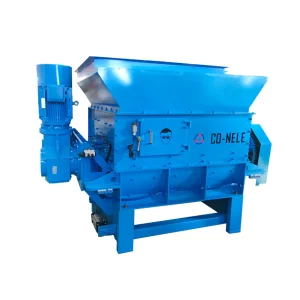
Industrial Dry Electrode & Fibrosis Mixing Station for Paris Tech Projects

Industrial Dry Electrode & Fibrosis Mixing Station for Paris Tech Projects

View Technical Details
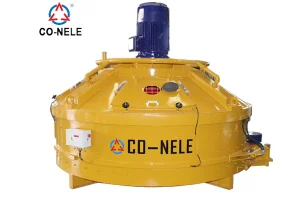
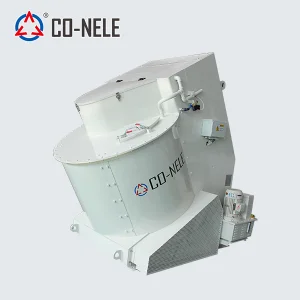
Paris CMP1500 Planetary Concrete Mixer for Precast & UHPC

Paris CMP1500 Planetary Concrete Mixer for Precast & UHPC

View Technical Details
Strategic Industry Insight: The Métropole du Grand Paris is currently executing Europe’s largest urban transformation project, requiring over 40 million tonnes of concrete through 2030. Compact, low-emission, and zero-foundation concrete batching plants represent the critical technological shift needed to navigate strict urban access limits and NF EN 206-1 quality compliance.

1. Urban Infrastructure & Industrial Reality in the Greater Paris Region (Île-de-France)

The construction landscape within the Paris metropolitan area is undergoing a historic structural shift. Driven by mega-scale transit initiatives such as the Grand Paris Express (encompassing Lines 14, 15, 16, 17, and 18) and extensive urban retrofitting across the 20 arrondissements and inner-ring departments (Hauts-de-Seine, Seine-Saint-Denis, Val-de-Marne), civil contractors face unprecedented operational parameters. Standard, large-footprint stationary concrete batching plants are increasingly unviable across central Paris due to spatial congestion, strict zoning laws, and aggressive environmental mandates.

Contractors operating in Paris must comply with the stringent requirements of the ZFE (Zone à Faibles Émissions / Low Emission Zone), which limits heavy vehicular logistics along the Boulevard Périphérique and historical arterial corridors. Consequently, ready-mix suppliers can no longer rely solely on massive suburban batching hubs located 30 kilometers away. The thermal kinetics and slump-loss window of specialized concrete formulations—such as Ultra-High-Performance Concrete (UHPC) and low-carbon alkali-activated mixes—demand localized, on-site or near-site production.

Restricted Spatial Footprints

Paris job sites often constrain machinery to less than 250 m² total surface area. Modular compact plants eliminate concrete foundation pits, fitting effortlessly into urban infill pockets.

Acoustic & Dust Mitigation

Strict Parisian municipal decibel thresholds (<70 dB at 10 meters) require fully enclosed mixing platforms and high-efficiency pulse-jet dust collectors (<10mg/Nm³ particulate output).

Rapid Permit Approvals

Because foundationless compact plants fall under temporary operational equipment classifications, contractors reduce local municipal planning clearance windows from 12 months down to 3 weeks.

To meet modern European standards (Eurocode 2 and NF EN 206-1 / NF EN 206/CN), concrete produced within the Paris perimeter must achieve remarkable homogeneity within ultra-short mixing cycles. CO-NELE’s compact batching plant architectures directly resolve this tension between cramped municipal footprints and rigorous structural performance criteria.

2. Technical Anatomy: Planetary Counter-Current Kinematics vs. Twin-Shaft Systems

At the heart of modern compact concrete batching machines serving Paris is the core mixing technology. While traditional ready-mix applications frequently utilize twin-shaft horizontal compulsory mixers, high-density precast applications, architectural facades, and fiber-reinforced concrete require the precise shear distribution of Vertical-Shaft Planetary Counter-Current Mixers.

2.1 Planetary Kinematics & Shear Velocity Gradients

In a CO-NELE planetary concrete mixer (such as the CMP series), mixing arms rotate around a central axis while simultaneously orbiting around their own axes at high angular velocity. This complex planetary trajectory ensures complete spatial coverage of the mixing pan within seconds, eliminating "dead spots" or stagnant zones near the pan lining.

Micro-Homogeneity Benchmark (CV < 3%)

Testing according to European standard EN 197 demonstrates that planetary counter-current mixing achieves a Coefficient of Variation (CV) below 3% within 45 to 60 seconds of batching. This is vital when incorporating micro-silica, nano-titanium dioxide (self-cleaning architectural surfaces), or polypropylene/steel fibers into dense urban concrete formulations.

2.2 Intelligent Dosing, Load Cell Accuracy & Automation

Compact concrete batching plants deployed in Paris feature fully integrated Siemens S7-1200 or S7-1500 PLC control systems with real-time dynamic weighing. The aggregate batching hopper utilizes multi-point load cells providing accuracy margins within ±1.0% for aggregates and ±0.5% for cement, fly ash, silica fume, and water. Liquid chemical admixture dosing systems employ precision magnetic flowmeters to handle fine retarders and superplasticizers needed for extended transit under Paris traffic congestion.

±0.5%
Cement Weighing Accuracy
< 60s
Homogeneous Mix Cycle
400V
50Hz EU Standard Power
100%
ISO & CE Compliant

3. Localized Application Scenarios Across the Île-de-France Region

The versatility of compact batching plants allows main contractors (e.g., VINCI Construction, Bouygues Construction, Eiffage) and specialized precast producers to deploy high-output plants directly inside restricted urban work zones.

Scenario A: Underground Tunnel Segment & Shaft Lining (Grand Paris Express Line 15)

Challenge: Delivering continuous, high-early-strength shotcrete and tunnel lining segments inside deep shaft construction yards in Saint-Denis and Champigny-sur-Marne without creating surface traffic gridlock.
Solution: Installation of a foundationless HZS50 compact concrete plant with an enclosed CMP1000 planetary mixer. The plant was assembled on a temporary steel pad directly adjacent to the shaft entrance, eliminating concrete transit truck delay and supplying continuous C50/60 mix directly down the vertical chute.

Scenario B: Architectural UHPC Facade Panels (La Défense Business District)

Challenge: Producing ultra-thin, high-durability UHPC facade elements requiring zero surface voiding and extreme color uniformity under strict EN 206 exposure classes.
Solution: A localized mobile mixing plant incorporating CO-NELE’s CMP1500 planetary system equipped with moisture sensors and automated micro-powder dosing. The planetary motion perfectly dispersed 2% steel micro-fibers, yielding compressive strengths exceeding 150 MPa without clumping.

Scenario C: River Seine Logistics & Circular Aggregates Processing (Gennevilliers Port)

Challenge: Utilizing river barges for aggregate transport to minimize road emissions, combined with washed recycled concrete aggregates (RCA) from Paris demolition sites.
Solution: A compact modular batching facility installed directly at the river terminal dock, utilizing high-torque planetary mixing arms to compensate for variable absorption rates of recycled aggregates, outputting low-carbon eco-concrete for local road sub-bases.

4. Global Macro Trends & China Industry 4.0 Supply Chain Resilience

4.1 Global Transition Toward Decarbonized Binders

The European construction sector is rapidly moving away from traditional CEM I Portland cement toward low-carbon composite cements (CEM II/C-M, CEM III slag cements, and LC3 calcined clay mixes). These alternative binders possess significantly different rheological properties, requiring longer wet mixing times and higher shear input to break up agglomerates. CO-NELE’s intensive mixing technology delivers up to 35% higher mechanical shear energy per unit time than standard gravity or twin-shaft mixers, ensuring rapid hydration activation of slag and pozzolanic additives.

4.2 China Industry 4.0: Manufacturing Excellence at CO-NELE Qingdao

As global procurement managers evaluate machinery suppliers, purchasing decisions are dictated by long-term durability, structural integrity, and supply chain reliability. CO-NELE’s 30,000 m² Industry 4.0 smart manufacturing campus in Qingdao, China, operates under strict ISO 9001 and CE quality management frameworks:

  • Precision CNC Laser & Boring Machinery: All planetary mixing pans and frame structures are machined on giant 5-axis CNC centers, guaranteeing alignment tolerances within ±0.05 mm.
  • In-House Planetary Gearbox Manufacturing: Unlike OEMs that buy off-the-shelf commercial gearboxes, CO-NELE designs and manufactures its proprietary heavy-duty planetary reducers, engineered specifically to handle sudden shock loads during dry-cast or stiff concrete batches.
  • High-Chrome Wear Protection: Mixing blades and pan liners utilize specialized wear-resistant alloys (Hardox and high-chromium cast iron exceeding 60 HRC hardness), delivering service lives upwards of 120,000 batching cycles under normal aggregate abrasion.
  • Fast-Track Global Shipping: Direct maritime shipping channels from Qingdao Port to Le Havre, Marseille, or Antwerp ensure equipment delivery within 30 to 35 days, supported by fully standardized, containerized modular packaging.
Technical Clarifications

Frequently Asked Questions (FAQ) for Paris Projects

Expert engineering answers regarding compliance, installation, footprint, and maintenance in France.

1. Do CO-NELE compact batching plants comply with French and European Standards (CE & NF EN 206-1)?
Yes. All CO-NELE compact batching plants destined for Paris and the EU market are built to meet European Machinery Directive 2006/42/EC, CE electrical safety compliance, and pressure vessel regulations. The weighing precision and moisture control sensors comply fully with NF EN 206-1 quality requirements for structural ready-mix and precast concrete production.
2. What foundation work is required before installing a compact plant on a Paris site?
CO-NELE compact concrete batching plants feature a zero-foundation, integrated heavy-duty steel base frame design. They require only a leveled concrete slab or compacted crushed stone surface capable of supporting ground bearing pressure (typically 20-25 t/m²). No deep foundation pits or complex civil engineering works are needed, enabling rapid site clearance.
3. How are noise and dust controlled to meet Île-de-France urban environmental laws?
Our urban compact plants include fully sealed mixing towers, insulated sandwich-panel cladding, silent pneumatic vibrators, and top-tier pulse-jet fabric bag filter systems on top of cement silos. Dust emissions are guaranteed under 10 mg/Nm³, and operational noise levels remain under 70 dB(A) at a 10-meter distance.
4. Can the plant produce Ultra-High-Performance Concrete (UHPC) and fiber concrete?
Absolutely. When equipped with our CMP series Planetary Counter-Current Mixer, the plant easily handles dense micro-powders, silica fume, and high percentages of steel or synthetic fibers. The intensive counter-current motion breaks up fiber balls and ensures homogenous dispersion in 60 to 90 seconds.
5. What is the typical installation and commissioning timeline in France?
Because the plant is pre-assembled, pre-wired, and tested in our factory prior to shipment, on-site mechanical erection in Paris takes approximately 3 to 5 days. Electrical connection, water/air piping, and automated batching calibration require an additional 3 days, making the plant operational in under a week.
6. What voltage and electrical standard is supplied?
All electrical panels, motors, gearboxes, and PLC systems are customized to the local French power grid standard: 400V, 3-Phase, 50Hz. Key electrical components utilize globally recognizable brands (Schneider Electric, Siemens, ABB) to ensure easy local replacement.
Complete Machinery Portfolio

Industrial Mixers, Granulators & Special Plant Series serving Paris

Explore our comprehensive lineup of advanced mixing, pelletizing, and laboratory scale machinery.

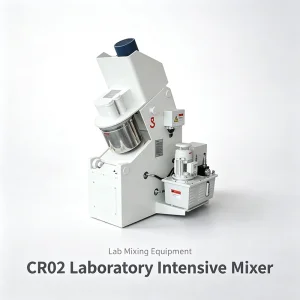
Paris R&D CR04 Intensive Laboratory Concrete Mixer

Paris R&D CR04 Intensive Laboratory Concrete Mixer

View Product
High-Strength UHPC Batching Plant for Heavy Precast Infrastructure

High-Strength UHPC Batching Plant for Heavy Precast Infrastructure

View Product
Advanced Granulating & Aggregates Pelletizing Unit for Paris Recyclers

Advanced Granulating & Aggregates Pelletizing Unit for Paris Recyclers

View Product
Precision Industrial Powder Granulating Machine for Specialized Mixes

Precision Industrial Powder Granulating Machine for Specialized Mixes

View Product
Stainless Steel Additive & Chemical Dosing Granulator

Stainless Steel Additive & Chemical Dosing Granulator

View Product
Paris AMS1200 Asphalt & Road Material Mixing Station

Paris AMS1200 Asphalt & Road Material Mixing Station

View Product
Paris 60m³/h Concrete Batching Plant for Structural Pipe & Utility Concrete

Paris 60m³/h Concrete Batching Plant for Structural Pipe & Utility Concrete

View Product
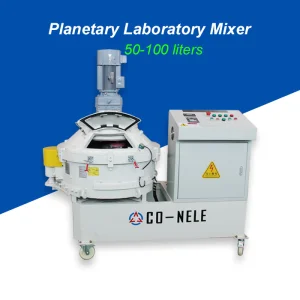
CMP50/CMP100 Laboratory Planetary Mixer for Paris Concrete Testing Labs

CMP50/CMP100 Laboratory Planetary Mixer for Paris Concrete Testing Labs

View Product

Accelerate Your Paris Infrastructure Project Today

Consult with our process application engineers to receive a customized plant layout drawing, production simulation report, and formal quotation tailored to Île-de-France job site specifications.

Send Inquiry Now