
Why Choose a Vertical Shaft Cement Mixer?

Time:2026-10-07 Author:Sophia
0%

Choosing the right mixer can shape concrete quality, production speed, and daily operating costs. A Vertical Shaft Cement Mixer deserves attention because its design supports intensive, controlled mixing in a compact working area.

The vertical shaft forces materials through a rotating mixing zone. Cement, sand, water, and aggregates repeatedly change direction. This action can create a more uniform blend, especially when the batch contains stiff mortar or several aggregate sizes. The result may include fewer dry pockets, smoother discharge, and more predictable workability. Small details matter. Blade condition matters. Water timing matters. Operator judgment matters even more.

Concrete technology specialist Dr. Karen L. Scrivener has emphasized, “Concrete performance begins with controlling the materials and the mixing process.” Her statement reflects a practical truth. A mixer cannot correct poor proportions or careless loading. It can only improve the process around them. Vertical shaft equipment may also reduce floor-space demands and simplify access for inspection. Some models support easier cleaning between batches. That can help contractors serving varied projects.

Still, this mixer is not automatically the best choice. Heavy-duty applications require careful checks for motor capacity, shaft strength, liner durability, and spare-parts availability. Cleaning may feel slow when production pressure rises. That weakness is easy to underestimate. Buyers should compare batch size, aggregate limits, local service support, and energy use before deciding.

For many contractors, the strongest reason to choose a Vertical Shaft Cement Mixer is balanced performance. It offers practical mixing control without requiring an oversized installation. The decision should follow site conditions, not marketing language.
Why Choose a Vertical Shaft Cement Mixer?

Vertical Shaft Cement Mixer: Definition and Working Principle

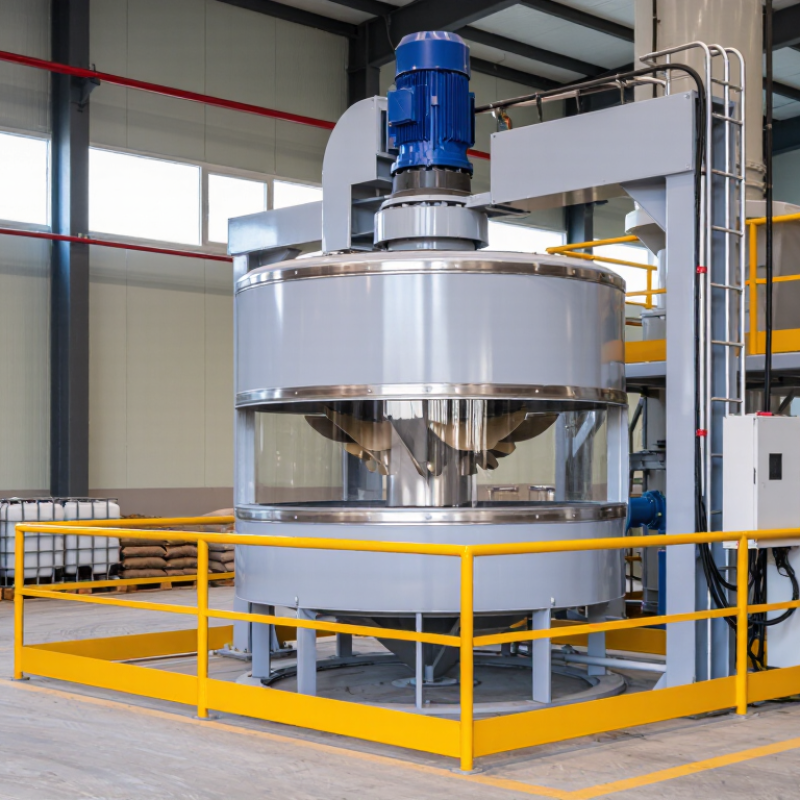
A vertical shaft cement mixer uses a fixed mixing pan and a vertical rotating shaft. Paddles or blades move cement, aggregate, water, and additives through the pan. Unlike a horizontal drum, its action combines lifting, folding, and radial circulation. Gravity supports this movement.

The working principle is simple, but not effortless. Dry materials enter the pan, and the shaft starts rotating before water is added. The blades lift heavier aggregate from the bottom, then push the mixture outward and downward. This repeated circulation reduces stagnant zones. Mixing quality depends on blade shape, rotation speed, moisture, and fill level. A crowded pan can produce uneven concrete. It happens more often than many operators admit.

Industry scale explains the need for control. The Global Cement and Concrete Association reports roughly 14 billion cubic metres of concrete are produced yearly. The International Energy Agency estimates cement production causes about 7% of global carbon dioxide emissions. Better mixing may reduce rejected batches, wasted materials, and unnecessary rework, but the mixer alone cannot guarantee efficiency.

Tips: Keep the pan below its rated capacity. Check blade wear before each shift. Add water gradually, not in one heavy pour. Follow ASTM C94/C94M and project-specific testing procedures. Record mixing time and slump results. A short trial batch is wise. Sometimes, the “ideal” setting fails on site.

Key Advantages of Vertical Shaft Mixing Technology

Why Choose a Vertical Shaft Cement Mixer?

Key Advantages of Vertical Shaft Mixing Technology

Vertical shaft mixing technology creates a strong upward and downward material flow. Cement, sand, water, and additives move through the mixing chamber instead of remaining in flat layers. This action helps produce a more uniform mixture, especially when materials have different moisture levels. In field use, operators often notice fewer dry pockets near the chamber walls. The result is more consistent concrete for blocks, panels, and small construction projects.

The compact vertical structure can reduce floor space requirements. This matters in workshops where every square meter affects workflow. A vertical shaft mixer also supports efficient discharge from a lower outlet. Workers can place containers directly beneath it, reducing unnecessary handling. Many models use replaceable mixing blades, which can simplify routine maintenance. Still, blade wear depends on aggregate hardness and operating frequency.

Mixing performance can remain stable with smaller batches. That makes the equipment practical for repair work and changing production schedules. The enclosed chamber may also help control material loss during operation. However, it is not flawless. Overloading can slow circulation and increase motor strain. Poor water measurement can still create weak concrete, regardless of mixer design. Operators should inspect blades, bearings, and discharge gates regularly. A short inspection often prevents a costly interruption.

Mixing Quality, Efficiency, and Material Compatibility

Why Choose a Vertical Shaft Cement Mixer?

Mixing quality begins with controlled movement, not simply a faster motor. A vertical shaft mixer circulates material through the vessel, helping cement, sand, water, and admixtures meet repeatedly. This action can reduce dry pockets and visible streaks in small-batch production.

ASTM C94/C94M emphasizes consistent batching, sampling, and uniformity checks for ready-mixed concrete. The mixer cannot replace those controls. It supports them.

Efficiency is equally practical.

The U.S. Department of Energy reports that motor-driven systems consume about 70% of industrial electricity. A properly sized mixer can limit wasted torque, idle running, and repeated corrective batches. Operators should measure cycle time, power draw, and discharge consistency. Numbers reveal more than a confident impression. An efficient cycle still fails if cleaning takes too long.

Material compatibility needs closer attention.

A vertical shaft design can handle concrete, mortar, grout, and some dry blends, but moisture and aggregate size change the result. Coarse stone may demand stronger paddles and slower loading. Sticky formulations may cling to the wall.

A 2023 International Energy Agency cement analysis identifies cement production as responsible for roughly 7% of global CO2 emissions, making avoided rework materially important.

Yet this figure does not prove every mixer saves energy. Poor loading can erase the advantage. A short trial with the actual recipe remains the more reliable decision.

Operational, Maintenance, and Installation Considerations

Why Choose a Vertical Shaft Cement Mixer?

Operational, Maintenance, and Installation Considerations

A vertical shaft cement mixer can suit demanding sites where floor space is limited. Its upright design supports a compact layout and direct material flow. During operation, operators should load measured batches, not guess by shovel size. Consistent water addition helps control workability and reduces uneven mixing. Watch the discharge gate, motor sound, and material movement every cycle. A sudden vibration deserves attention. It may indicate buildup, imbalance, or a worn component.

Maintenance is practical, not optional. Before cleaning, isolate power and confirm that moving parts have stopped. Remove hardened cement from the shaft, paddles, and outlet after each shift. A small scraper often prevents a large repair. Inspect bearings, seals, fasteners, and guards on a documented schedule. Lubricate only with the lubricant specified for the equipment. Too much grease can attract abrasive dust. I have seen teams over-tighten fasteners, believing tighter always means safer. It can distort covers and complicate later servicing. Record unusual noise, heat, and batch time, even when production continues.

Installation determines later reliability. Set the mixer on a level, load-bearing foundation with enough clearance for inspection. Check shaft alignment and anchor security before connecting power. A qualified electrician should verify voltage, grounding, and emergency-stop function. Keep water lines away from control panels and walking paths. Leave room above the mixer for safe loading and below it for discharge access. A rushed installation may operate on day one, yet create cleaning problems for months. That trade-off is easy to underestimate.

How to Choose the Right Vertical Shaft Cement Mixer

Why Choose a Vertical Shaft Cement Mixer?

How to Choose the Right Vertical Shaft Cement Mixer

Choosing a vertical shaft cement mixer starts with the mixture, not the advertised capacity. Check cement content, aggregate size, moisture, and required output per hour. A 500-liter drum may not deliver 500 liters of usable concrete. Leave working space for movement and discharge.

A vertical shaft design suits compact sites and mixes requiring strong downward circulation. Review the pan diameter, shaft speed, blade shape, and motor torque together. Excessive speed can increase wear and create uneven moisture distribution. Ask for uniformity test results based on ASTM C94/C94M practices, where applicable. Inspect the actual discharge opening, because a narrow outlet can slow production.

Energy use also deserves attention. The International Energy Agency reported that cement production creates about 7% of global carbon dioxide emissions in its 2023 cement analysis. Mixer electricity is only one part of this footprint, but efficient loading and shorter mixing cycles still matter. Compare output per kilowatt-hour, not motor power alone. The Global Cement and Concrete Association also emphasizes resource efficiency across concrete production.

Look closely at wear liners, bearings, cleaning access, and replacement costs. Stainless components may help with corrosive mixtures, but they are not always necessary. Ask about local service response times. I would test a sample batch before purchase. Specifications can look excellent on paper. Real aggregate can behave differently.

FAQS

What materials can a vertical shaft cement mixer combine?

It can mix cement, sand, water, and suitable additives. Strong upward and downward movement reduces flat layering. This helps limit dry pockets near the chamber walls.

Why is this mixer useful in small workshops?

Its upright structure needs less floor space than many horizontal layouts. Containers can sit directly beneath the lower discharge outlet. Every square meter matters.

Can it handle small batches effectively?

Yes, mixing performance can remain stable with smaller batches. This suits repair work and changing production schedules. Results still depend on accurate measurements and loading.

Does the mixer always produce perfect concrete?

No. Overloading can slow material circulation and strain the motor. Poor water measurement may create weak concrete. Mixer design cannot fix every mistake.

What should operators monitor during each mixing cycle?

Watch material movement, motor sound, vibration, and the discharge gate. Sudden vibration may signal buildup, imbalance, or component wear. Stop and inspect.

How should operators clean the equipment?

Isolate power before cleaning and confirm that moving parts have stopped. Remove hardened cement from the shaft, paddles, and outlet after each shift. A small scraper helps.

Which components require regular inspection?

Check mixing blades, bearings, seals, fasteners, guards, and discharge gates. Record unusual noise, heat, and batch time. Short inspections prevent some costly interruptions.

What installation details affect long-term reliability?

Use a level, load-bearing foundation with inspection clearance. Check shaft alignment and anchor security before connecting power. A qualified electrician should verify voltage, grounding, and emergency-stop operation. Rushed installation causes hidden trouble.

Conclusion

A Vertical Shaft Cement Mixer is a mixing machine in which a vertically positioned shaft drives paddles or blades to combine cement, aggregates, water, and other additives into a consistent mixture. Its upward and downward mixing action promotes thorough circulation, helping reduce dead zones and improve material uniformity. This technology can provide efficient blending, reliable performance, and good adaptability for concrete, mortar, dry materials, and other formulations with different moisture levels or particle sizes.

When selecting a Vertical Shaft Cement Mixer, users should consider required capacity, mixing speed, material compatibility, power consumption, installation space, and discharge method. Proper operation includes accurate batching, suitable loading sequences, and regular inspection of blades, bearings, seals, and drive components. Routine maintenance can reduce downtime and extend service life, while a stable foundation and correct installation support safe, efficient operation. The ideal mixer should match the production scale, mixture characteristics, automation needs, and long-term maintenance requirements of the application.

Sophia

Sophia

Sophia is a dedicated marketing professional with an exceptional depth of knowledge about her company's products and services. With a keen understanding of market trends and customer needs, she crafts insightful blog posts that not only inform but also engage readers, enriching the company’s online......