
What Are the Top High Intensive Pellet Mixers?

Time:2026-11-26 Author:Sienna
0%

Choosing among High Intensive Pellet Mixers means looking beyond motor power and advertised capacity. The right machine must disperse liquid binders, distribute fines, and form pellets with repeatable size and strength. In a real production room, the difference can show up in a damp mixer wall, uneven granules, or a batch that takes longer to discharge. Small details matter.

W. Edwards Deming, a quality-management expert, offered a useful reminder: “If you can’t describe what you are doing as a process, you don’t know what you’re doing.” His principle applies to mixer selection: compare equipment under clearly defined feed, moisture, speed, and batch conditions. This guide examines leading mixer types and models through practical criteria, including mixing action, usable capacity, cleanability, controls, and support. No universal winner exists. A compact unit may suit trials, while a larger system may better serve steady production. Still, published specifications rarely reveal every operating issue. Buyers should request material-specific trials and inspect how discharge and cleaning work in practice. The comparisons ahead aim to clarify trade-offs, not promise perfect results. Even a careful shortlist can miss something; actual process data should have the final say.
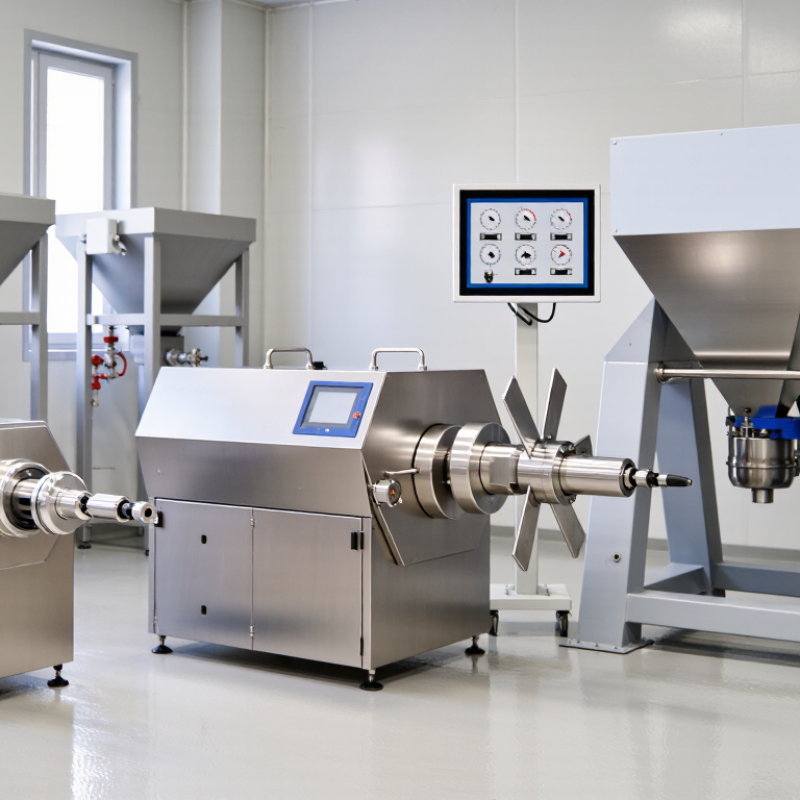
What Are the Top High Intensive Pellet Mixers?

What Defines a High-Intensity Pellet Mixer?

A high-intensity pellet mixer is defined less by its nameplate speed than by how effectively it moves and conditions particles. A fast rotor, paddle, or impeller creates vigorous circulation. Particle contact helps distribute minor ingredients throughout the batch. Some designs include a chopper to break soft clumps. The goal is a consistent blend in a controlled cycle, not simply maximum force. That distinction matters. More is not better.

For pellets, mixing intensity must be balanced with gentleness. Excessive shear or prolonged mixing can chip edges, create fines, or cause ingredients to separate. Operators can assess blend uniformity, pellet condition, temperature rise, and discharge behavior. Samples from several locations offer more useful evidence than a single scoop. Small trials may reveal dead zones or uneven coating before full-scale production. Not every blend needs high speed. Particle size, moisture, binder use, fill level, and batch scale all affect performance, so operating settings need validation with the actual formulation. A powerful-looking mixer may still be a poor fit if its geometry or operating range does not suit the pellets.

How High-Intensity Pellet Mixing Works

High-intensity pellet mixing uses fast-moving blades or rotors to lift, circulate, and redistribute material through a mixing vessel. Repeated particle movement reduces concentration differences, while friction can help break soft clumps. The result depends on pellet size, shape, moisture, fill level, and ingredient density. A rotor speed that works for small, dry pellets may damage fragile ones or separate a heavier blend.

Control the process by measuring the blend, not by relying on mixing time alone. The United States Pharmacopeia’s General Chapter <1174> describes four powder-flow assessment methods: angle of repose, compressibility index, Hausner ratio, and flow through an orifice. These tests can help identify handling risks, but they do not prove that a blend is uniform. Take samples from several vessel locations and compare ingredient concentrations; a coefficient of variation near 5% can serve as a trial target, subject to product requirements.

Tips: Start at a moderate rotor speed and inspect pellets for chips or fines. Record fill level, speed, and mixing time for each trial. Small details matter. One limitation: sampling can miss uneven pockets, so check the method before trusting the result.

How High-Intensity Pellet Mixing Works

Rotor tip speed is calculated from rotor diameter and rotational speed: tip speed = π × diameter × RPM ÷ 60. This example uses a 0.30 m rotor to show how increasing rotor speed increases tip speed, an important factor in mixing intensity. Values are calculations, not specifications for a particular mixer.

Which Mixer Designs Are Used for Pellet Production?

Pellet production can use several mixer designs, and each handles ingredients differently. A horizontal paddle mixer turns material gently through the chamber. Its broad paddles help distribute powders and measured liquid binder without relying on one intense mixing zone. This design can suit recipes containing fragile particles. Check for dead spots, though. Poorly positioned paddles may leave dry pockets near the vessel ends.

Ploughshare mixers use angled tools to lift and circulate material rapidly. Optional choppers can break soft lumps and spread small amounts of liquid through the batch. They are useful when a recipe needs fast, thorough conditioning before pelletizing, but the extra shear may damage delicate ingredients.

Ribbon mixers offer a simpler, generally gentler action: inner and outer helical blades move material in opposing directions. They can blend dry components reliably, yet may struggle to distribute sticky binder evenly.

The mixer is only one part of the process. Moisture, fill level, mixing time, and the pelletizer’s feed requirements all affect the result. A practical trial should inspect samples from several points in the batch, not just the surface.

That check is easy to overlook. It can reveal uneven wetting before a full production run.

What Features Distinguish Top Pellet Mixers?

A top high-intensity pellet mixer is defined by consistent blending, not simply a large motor. Its mixing action should distribute fine powders and larger particles evenly without creating dead zones. Adjustable mixing time, suitable batch capacity, and controlled discharge help maintain repeatable results. Small details matter.

The 2024 Global Feed Survey estimated global feed production at 1.29 billion metric tons. At that scale, uneven batches can affect product quality and create costly rework. Kansas State University extension guidance identifies a coefficient of variation below 10% as a practical target for feed-mix uniformity. Buyers should ask for test results from representative batches, not rely on claims alone. A good result depends on ingredients and operating conditions, too.

Look for accessible cleanout points, durable contact surfaces, and controls that make batch settings easy to repeat. Check how the mixer performs at both its usual load and its minimum load. Energy use per tonne and compatibility with downstream pelletizing equipment deserve attention. I would also inspect the discharge in person; residue in corners can undermine an otherwise strong uniformity test. A short trial may reveal more than a polished specification sheet.

How to Select a Mixer for Different Pellet Applications?

Choosing a high-intensity pellet mixer starts with the material, not the machine’s advertised speed. For dense mineral blends, compare paddle or ploughshare designs that can disperse small additions quickly. For fragile particles, check whether the mixing action causes excess breakage. Fine powders may cling to walls, so inspect cleanout access and dead zones. Small details matter.

Alltech’s 2024 Agri-Food Outlook estimated global feed production at 1.29 billion metric tonnes in 2023, across 142 countries. FEFAC’s 2023 Statistical Yearbook reported 144.3 million tonnes of EU compound feed production in 2022. These figures show the scale of feed manufacturing, but they do not prescribe one mixer size. Match working capacity to actual batch weights, bulk density, and production rhythm. Ask suppliers for uniformity tests using your own ingredients, including low-dose additives. Also check mixing time, discharge residue, and cleanout between recipes. A low coefficient of variation is useful, but it cannot replace a practical trial. And the best result may be less dramatic than expected.

What Are the Top High Intensive Pellet Mixers? - How to Select a Mixer for Different Pellet Applications?

The best choice depends on the material, whether the process is dry blending, wet agglomeration, pellet rounding, or coating, and the required product characteristics. The options below are common equipment configurations, not a universal performance ranking.

Mixer or Process Equipment Mixing or Processing Action Suitable Pellet Applications Relative Action Key Selection Factors Important Limitation
High-shear batch mixer
Impeller with a separate chopper
The impeller circulates and densifies the material; the chopper breaks down wet lumps and helps distribute liquid binder. Wet massing, agglomeration, and preparation of a consistent feed for pellet formation. High; strong mechanical action and rapid wetting are possible. Binder-addition method, impeller and chopper settings, fill level, temperature rise, and a repeatable endpoint measurement. Excessive energy or liquid can produce dense lumps or an overly wet mass. It does not, by itself, guarantee the desired final pellet shape.
Ploughshare mixer with high-speed choppers Plough-shaped tools create intensive circulation and particle movement; optional choppers disperse lumps during liquid addition. Dry premixing followed by binder addition, agglomeration, and preparation of mixed materials for downstream pelletizing. High and adjustable; choppers add localized, more intense action. Powder flowability, liquid-feed location, tool configuration, batch fill, and whether the process needs choppers. Tool speed and liquid addition need to be matched to the formulation; the mixer is not a substitute for a dedicated pellet-rounding step.
Intensive paddle mixer Angled paddles lift, toss, and exchange material throughout the mixing chamber; liquid can be introduced during mixing if the design permits. Rapid blending of pellet ingredients and selected wet-mixing or agglomeration processes. Moderate to high, depending on paddle design, rotational speed, fill, and formulation. Required blend uniformity, particle fragility, liquid-feed arrangement, cleaning needs, and scale-up data. Performance varies substantially by design. Confirm that the specific machine can handle the required liquid level and material behavior.
Rotor–stator high-shear mixer A fast rotor working against a stator produces strong local shear and disperses liquid droplets or agglomerates. Preparing or dispersing binder liquids and slurries; selected liquid-phase steps associated with pellet production. Very high locally in the rotor–stator zone. Liquid viscosity, solids content, allowable particle breakage, temperature control, and whether an inline or batch arrangement is needed. Generally not a stand-alone dry-powder pellet mixer. Strong shear may damage formed pellets or be unsuitable for fragile particles.
Extruder and spheronizer An extruder forms wet material into strands; a rotating spheronizer rounds the strands into pellets. Producing relatively uniform, rounded pellets from a suitable wet mass, particularly in pharmaceutical and specialty-material processes. High forming and rounding action; this is a pellet-forming system rather than a conventional mixer. Wet-mass plasticity, extrusion screen, strand dimensions, spheronizer settings, target pellet size, and acceptable fines. Requires a processable wet mass and does not replace the initial ingredient-blending or binder-distribution step.
Fluid-bed processor Air suspends and circulates particles while sprayed liquid can bind, coat, or layer material; heated air can also dry the product. Pellet coating, layering, drying, and selected agglomeration processes where air-based particle movement is appropriate. High process activity, but generally less mechanical impact than intensive mechanical mixers. Particle size and density, airflow, spray rate, inlet-air conditions, product temperature, and coating or drying endpoint. Not a conventional high-shear mixer. Very fine, sticky, or fragile materials may require careful process development to avoid poor fluidization or agglomeration.

Selection note: “High intensity” is relative to the equipment design and operating conditions. Compare trials using the actual formulation, target pellet size, moisture level, and quality requirements; verify scale-up, cleanability, and endpoint controls before choosing production equipment.

FAQS

What defines a high-intensity pellet mixer?

Its mixing action matters more than its nameplate speed. It should circulate particles and distribute minor ingredients evenly. More is not better.

How can mixing damage pellets?

Excessive shear or long mixing times can chip pellet edges and create fines. Check pellet condition, temperature rise, and blend uniformity.

Which mixer designs are used for pellet production?

Paddle, ploughshare, and ribbon mixers are common options. They move ingredients differently, so the best choice depends on the recipe.

When might a paddle mixer be suitable?

Broad paddles can move powders and measured liquid binder with a gentler action. Inspect the vessel ends for dry pockets. Easy to miss.

What should operators consider with a ploughshare mixer?

Angled tools circulate material quickly, and optional choppers can break soft lumps. The added shear may harm delicate particles.

Can a ribbon mixer distribute sticky binder evenly?

It can blend dry ingredients reliably, but sticky binder may be harder to spread. Check several batch samples, not just the surface.

How should mixer capacity be selected?

Match working capacity to batch weight, bulk density, and production rhythm. A large machine is not automatically a better fit.

What should a practical mixer trial measure?

Test actual ingredients, including low-dose additives. Review mixing time, discharge residue, cleanout, and samples from several locations. Results may still raise questions.

Conclusion

High Intensive Pellet Mixers are designed to blend pellet ingredients rapidly and evenly through vigorous mechanical action. Their performance depends on factors such as mixing speed, rotor and chamber design, batch size, and control of heat and moisture. Understanding how materials move and interact inside the mixer helps explain how intense mixing can improve consistency while avoiding damage to delicate pellets.

Pellet production may use different mixer designs, each suited to particular materials and processing goals. When comparing options, consider mixing uniformity, capacity, cleanability, durability, energy use, and ease of operation. The best choice depends on the application: ingredient properties, desired pellet characteristics, production volume, and any downstream processing requirements. Matching these needs to the mixer’s capabilities can support reliable, efficient production.

Sienna

Sienna

Sienna is a skilled marketing professional with a deep expertise in our company’s core products and services. With a passion for innovation and detail, she plays a pivotal role in crafting insightful blog posts that not only highlight the unique features of our offerings but also provide valuable......