China’s fiberglass insulation equipment sector has grown from basic blending lines into a more specialized manufacturing field. Today, a Fiberglass Insulation Mixer must handle chopped glass fibers, binders, additives, and recycled content with steady accuracy. That work is less visible than the final insulation blanket. It still determines product consistency.
This guide examines China’s top 10 Fiberglass Insulation Mixer manufacturers through practical performance factors. These include mixing uniformity, batch capacity, fiber protection, dust control, cleaning access, automation, and after-sales support. A reliable machine should not leave dry pockets near the mixer wall. It should also prevent excessive fiber breakage during high-speed operation. Small details matter.
Process engineer Dr. Kai Zhang offers a useful reminder: “A mixer is only reliable when its material flow remains predictable under real production pressure.” That principle guides this comparison. It connects laboratory specifications with factory conditions. A polished brochure is not enough. Buyers should request test data, maintenance records, component brands, and references from comparable plants.
The manufacturers discussed here may differ in design philosophy. Some focus on compact batch mixers. Others provide integrated feeding, blending, conveying, and control systems. Their quoted capacities may also depend on fiber density, moisture, and formulation. This is where comparisons can become imperfect.
No ranking should replace a factory trial. A promising machine may perform poorly with a different binder system. Conversely, a less famous supplier might offer stronger customization and faster technical support. The following overview therefore considers capability, credibility, documented experience, and practical risk. It aims to help insulation producers make a clearer, more defensible purchasing decision.
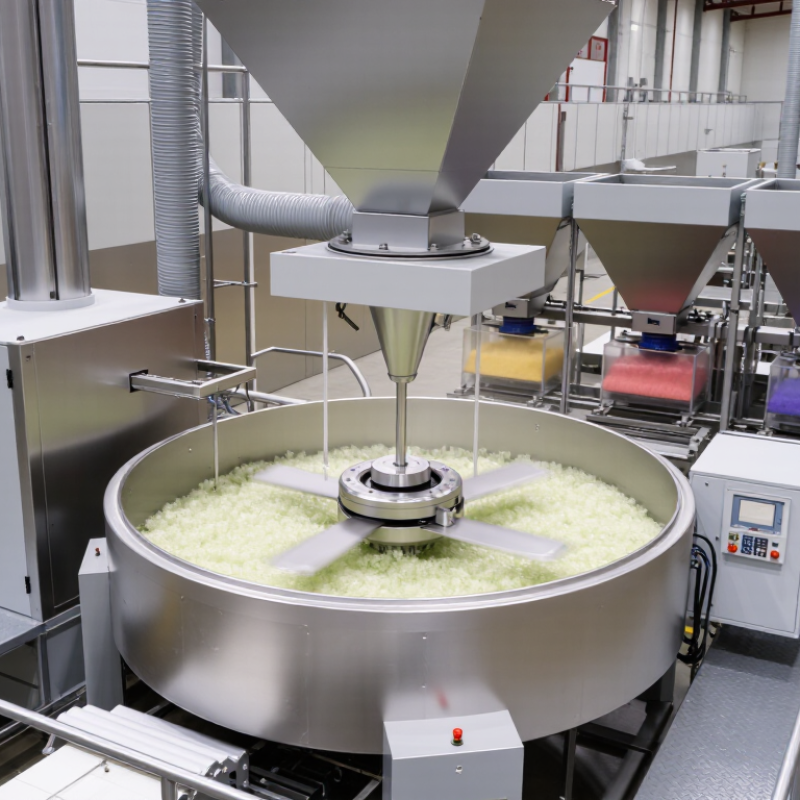
What Is a Fiberglass Insulation Mixer?
A fiberglass insulation mixer is industrial equipment that combines glass fibers with selected binders, additives, or recycled material.
It creates a more uniform mixture before forming, curing, or packaging. Depending on the insulation design, the machine may use paddles, ribbons, or twin shafts inside an enclosed chamber. These parts move materials without crushing the fibers excessively.
It must stay gentle.
In practical production, operators control
mixing speed, feeding rate, moisture, and discharge time.
Excessive speed can damage fibers or create uneven clumps. Insufficient mixing may leave dry pockets and weak areas in the finished insulation. Reliable mixers often include load sensors, variable-frequency drives, inspection ports, and dust-control connections. These details help workers adjust the process safely and record repeatable results.
When comparing China’s top fiberglass insulation mixer manufacturers, buyers should examine more than machine appearance. They should request test data, material-contact specifications, maintenance schedules, and evidence of factory quality checks. A useful supplier should explain how the mixer handles different fiber lengths and binder levels.
In my experience, small changes in moisture can alter the final blend noticeably.
No mixer performs perfectly under every condition.
This point is easy to overlook. A careful trial with the buyer’s actual materials can reveal problems before installation, although trial results still require experienced interpretation.
How Fiberglass Insulation Mixers Work
Fiberglass insulation mixers help convert measured ingredients into a stable, workable mixture. In many plants, the mixer prepares a binder system for glass fibers. The system may contain resin, water, curing agents, and small performance additives. Operators load these materials according to a controlled formulation. Accuracy matters.
Inside the mixing chamber, paddles or ribbons move the ingredients through repeated folding and circulation. The movement reduces dry pockets and distributes the binder across the batch. Some machines use moderate shear to prevent lumps without damaging fiber-related additives. Temperature and mixing time are monitored by sensors. A typical batch may leave through a bottom gate, then pass toward spraying or forming equipment. The mixture should flow smoothly, but it must not become excessively thin.
China’s leading fiberglass insulation mixer manufacturers usually focus on stainless-steel contact surfaces, sealed drives, adjustable speeds, and easier cleaning. These details matter during continuous production. A practical operator checks viscosity, moisture, and discharge consistency instead of trusting one instrument. Even a modern mixer can produce uneven material when loading order changes. That is an easy problem to underestimate. Regular sampling exposes these variations early. Engineers also inspect seals, paddles, and dead zones inside the chamber. The design may look efficient, yet cleaning access can still be inconvenient. Better results come from combining machine data with experienced observation, not from automation alone.
China Top 10 Fiberglass Insulation Mixer Manufacturers — How Fiberglass Insulation Mixers Work
Fiberglass insulation mixers are mainly used to prepare, meter, and uniformly distribute binder systems before fiber forming and curing. The chart shows representative temperature windows across the surrounding production stages; it does not compare manufacturers or brands.
Temperature ranges are representative industrial operating windows: binder preparation typically remains near ambient temperature, glass melting occurs around 1,400–1,600°C, fiberizing uses a lower-viscosity glass range, and curing commonly occurs around 180–250°C. Actual values vary with glass formulation, binder chemistry, line speed, and equipment design.
Key Features of Leading Mixer Manufacturers in China
Leading fiberglass insulation mixer manufacturers in China focus on stable blending, material protection, and measurable production results. Their equipment often uses stainless steel contact surfaces, reinforced paddles, and variable-speed drives. These choices help manage glass fibers, binders, and additives without excessive breakage. Gentle mixing matters.
Reliable manufacturers provide load sensors and programmable controls for repeatable batch weights. Operators can adjust speed, mixing time, and discharge timing from a clear control panel.
Dust-sealed covers and efficient extraction ports improve workshop conditions. However, automation alone does not guarantee good insulation quality. Poor calibration can still create uneven batches.
Experienced suppliers usually support trials before final equipment selection. They may test fiber length, moisture levels, bulk density, and binder distribution with customer materials. Detailed drawings, electrical documentation, and spare-parts lists also improve maintenance reliability. Contact parts should withstand abrasion and cleaning chemicals. Weld quality deserves close inspection.
Strong manufacturers understand that every factory has different floor space and output targets. They can adapt feeding systems, mixer volume, discharge height, and control logic accordingly. Their engineers should explain limitations instead of promising perfect performance. This honesty is useful.
Some suppliers still emphasize appearance more than long-term service access. Buyers should request test records, inspection procedures, and response times before signing a purchase agreement. On-site training, remote support, and clear warranty terms can reduce avoidable production delays.
China’s Top 10 Fiberglass Insulation Mixer Manufacturers
China’s Top 10 Fiberglass Insulation Mixer Manufacturers are increasingly judged by engineering performance, not advertising claims. Reliable suppliers understand fiber length, binder viscosity, moisture control, and production speed. Their mixers must create uniform blends without crushing delicate glass fibers. In practical factory checks, operators often inspect discharge consistency every few hours. Small variations can affect board density and thermal resistance.
Strong manufacturers usually provide customized mixing chambers, variable-speed controls, and abrasion-resistant contact parts. They may also support trial production before equipment approval. A useful evaluation includes motor load, cleaning time, noise levels, and spare-part access.
Stainless steel surfaces help reduce residue around corners. Easy inspection windows can save valuable maintenance hours. Documentation matters too. Clear manuals and process data show professional responsibility.
No factory is perfect. Some suppliers offer impressive specifications but provide limited after-sales guidance. Others understand machinery well but respond slowly to changing material formulas. This is where buyer experience becomes important.
A technical team should review sample materials, test moisture levels, and record mixing results. Factory visits can reveal workshop organization and quality-control habits. Even a strong ranking can change when delivery accuracy, operator training, and long-term service are examined. Performance should be verified, not assumed.
How to Select the Right Chinese Mixer Manufacturer
Selecting a Chinese mixer manufacturer for fiberglass insulation requires more than comparing online prices. The mixer must match your fiber type, binder system, batch size, and production speed. Ask for a trial using your actual raw materials. Check whether the fibers remain evenly distributed after mixing, without excessive breakage or clumping. Inspect the mixing chamber, paddles, seals, discharge gate, and dust-control connection. Small details matter. A suitable motor should provide stable torque during heavy loading, while the control system should record speed, temperature, and mixing time. Request drawings with dimensions, power requirements, and maintenance access before placing an order.
Factory verification adds practical confidence. Review material certificates, welding quality, surface treatment, and inspection records for critical parts. A reliable manufacturer should explain its testing process and provide a clear factory acceptance test. Ask how it handles commissioning, operator training, spare parts, and remote troubleshooting. Response time matters when a production line stops. Export experience is useful, but it does not replace technical evidence. Compare two or three sample batches, not only brochures. A cheap quotation may exclude installation tools or replacement seals. I once underestimated the value of easy cleaning; production downtime made that mistake expensive. Leave room for improvement. Require written tolerances, delivery milestones, warranty terms, and responsibilities for performance problems. Clear documents often reveal more than confident sales language.
Conclusion
A Fiberglass Insulation Mixer is specialized equipment designed to blend fiberglass fibers with binders, additives, or other components to create consistent insulation materials. This article explains the mixer’s basic structure, operating principles, and production workflow, including how controlled feeding, agitation, temperature management, and discharge systems help achieve uniform quality. It also highlights important performance factors such as mixing capacity, energy efficiency, durability, automation, maintenance convenience, and compatibility with different insulation formulations.
The guide introduces China’s top 10 fiberglass insulation mixer manufacturers through general industry criteria rather than brand promotion, focusing on engineering capability, manufacturing standards, customization services, quality control, delivery reliability, and after-sales support. It also provides practical advice for selecting the right Chinese supplier, including evaluating technical specifications, production requirements, certifications, testing procedures, spare-parts availability, and total operating cost. By comparing these factors carefully, buyers can choose a dependable Fiberglass Insulation Mixer that supports stable production and long-term efficiency.