
7 Tips for Choosing a Customized UHPC Mortar Mixer

Time:2026-11-21 Author:Mason
0%

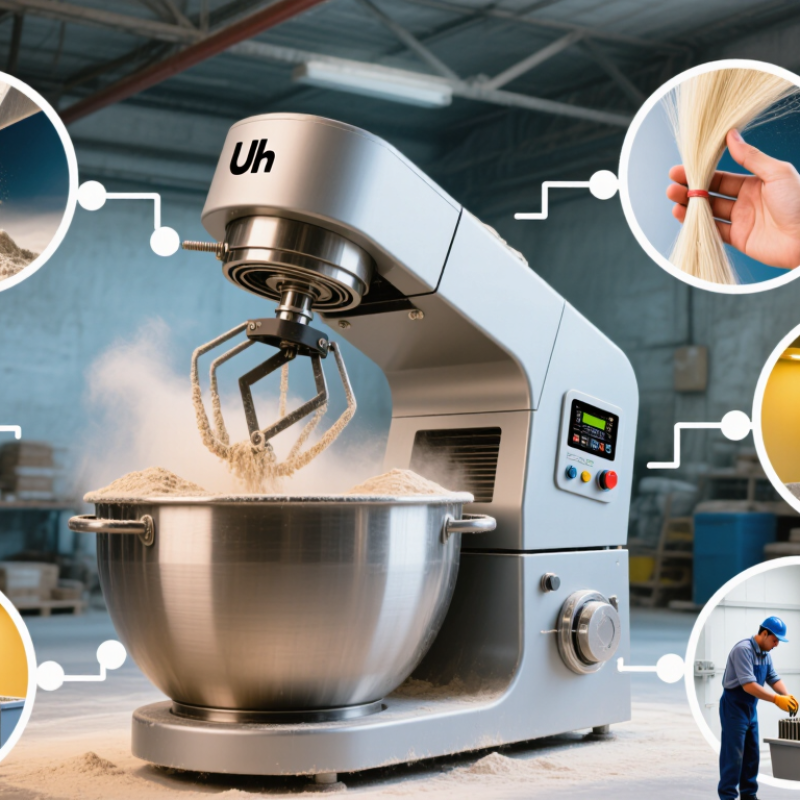
A Customized Uhpc Mortar Mixer is not just a larger machine with a stronger motor. It must handle dense powders, fine fibers, and low water content without leaving dry pockets or uneven batches. Small mixing faults matter. A pale streak of unmixed powder near the bowl wall can signal a bigger consistency problem.

UHPC researcher Pierre-Claude Aïtcin’s work offers a useful perspective on material performance. A concise paraphrase of that perspective is: “Control the process; consistency follows.” This is not a verbatim quotation, but it captures why mixer selection deserves careful attention. Buyers should assess mixing action, batch capacity, discharge design, cleaning access, and control options against their actual production needs.

The following seven tips explore those decisions in practical terms. They consider whether the mixer can disperse materials evenly, accommodate fibers, and repeat a batch reliably. They also look at maintenance, supplier testing, and the value of a trial using your own mix. A brochure may promise high output. Your crew still needs to inspect the mixer, observe the discharge, and check the finished mortar. That step can be overlooked. A machine that performs well in a demonstration may not fit every plant, workflow, or mix design. Choose with evidence, and leave room to question the specification.
7 Tips for Choosing a Customized UHPC Mortar Mixer

Define UHPC Targets: Compressive Strength Above 120 MPa and Low Water–Binder Ratio

7 Tips for Choosing a Customized UHPC Mortar Mixer

Define UHPC Targets: Compressive Strength Above 120 MPa and Low Water–Binder Ratio

Set performance targets before choosing mixer capacity or drive power. A compressive strength above 120 MPa is a project requirement, not a universal UHPC definition. FHWA’s 2013 report, FHWA-HRT-13-060, describes UHPC as typically exceeding 150 MPa, with a water-to-cementitious-materials ratio below 0.25. This distinction matters: a 120 MPa mix may meet a project brief but fall below the report’s typical benchmark. Record every trial batch.

Tips: Test the mixer with your actual cement, silica fume, fine aggregates, fibers, and admixtures. Check uniformity and discharge behavior, not just rated volume. Look for dry pockets. Small changes in water dosing can affect flow and strength. Motor power alone is not enough.

Use a controlled water meter and document the addition sequence. ASTM C1856/C1856M provides practices for fabricating and testing UHPC specimens. Use consistent procedures when comparing trial strengths. Log mixing time, speed, batch temperature, and fiber addition. Recheck performance after scaling up; laboratory results do not transfer perfectly to production. Material moisture and temperature can shift flow, even with careful control.

7 Tips for Choosing a Customized UHPC Mortar Mixer

Define UHPC targets: compressive strength above 120 MPa and a low water–binder ratio.

The highlighted 0.18–0.25 band represents a commonly used low water–binder ratio range for UHPC mixtures; the exact value depends on the materials and mix design. Treat compressive strength above 120 MPa as a project target and verify performance with trial batches. A mixer should disperse fine powders uniformly and handle the mix’s low water content.

Match Mixer Action to UHPC’s Dense Paste and Typical 2% Fiber Volume

UHPC mortar is dense, sticky, and rich in fine powders. A mixer must fold and shear the paste, not merely tumble it. At roughly 2% fiber volume, the mix also needs enough motion to separate fibers evenly. Two percent is a common reference, not a universal target; fiber type and mix design change the demand. That balance is easy to underestimate. A gentle drum mixer may leave dry pockets, while overly aggressive action can heat the batch or damage fibers. Confirm fiber limits and mixing requirements through trial batches.

For dense UHPC, forced-action or planetary mixing often provides more useful circulation than simple rotation. Look for a pan and blades that move material from the walls and floor toward the center. Watch a trial batch through the charging sequence: powder should wet out before fibers enter. Add fibers gradually instead of dumping the full dose in one spot. If rope-like clumps form, inspect the feed rate, blade clearance, and paste consistency. Small details count.

Mixer choice should also reflect batch size and discharge behavior. A partly filled vessel can mix poorly, while an overloaded one may hide dry zones. Track mixing time, motor load, and fresh-mix temperature across repeat batches. These readings can help distinguish a mixing problem from changes in materials or moisture. A setting that worked yesterday may fail today; treat that as useful evidence, not an inconvenience.

7 Tips for Choosing a Customized UHPC Mortar Mixer — Match Mixer Action to UHPC’s Dense Paste and Typical 2% Fiber Volume

Tip What to Evaluate Practical Selection Guidance How to Verify
1. Match the mixing action to dense paste UHPC contains a high proportion of fine powders and forms a dense, low-water paste. Consider an intensive, planetary, or otherwise high-shear mixer designed for stiff, cohesive materials. A conventional mixer may be suitable only if its geometry and drive can fully turn over the actual UHPC mix. Run a representative trial batch and check for dry pockets, unmixed material, and paste buildup on the vessel or blades.
2. Check torque under real load Dense paste can impose substantial resistance, particularly during initial wetting and early mixing. Ask for the mixer’s allowable working load and performance with a mix of similar consistency. Assess drive and gearbox suitability at the intended batch size rather than relying on motor power alone. Record current draw, batch behavior, and any stalling or speed loss during a full-scale trial.
3. Size for the working batch, not just the vessel Nominal vessel volume is not the same as usable batch capacity; adequate movement space is needed for turnover and fiber dispersion. Confirm the supplier’s recommended fill range for dense mortar and calculate capacity from the required production batch. Avoid assuming the vessel can be filled to its full geometric volume. Check that the batch circulates through the mixing zone without dead areas, overflow, or excessive material left on the walls.
4. Plan for approximately 2% fiber by volume About 2% by volume is a common UHPC steel-fiber dosage, but the specified mix design governs the actual amount and fiber type. Choose a mixer that can distribute the specified fibers through the paste without persistent clumping. Confirm that the mixer’s action and feed arrangement suit the fiber geometry and batch size. Inspect samples taken from different parts of the batch for even fiber distribution and visible fiber balls.
5. Provide controlled fiber feeding Adding fibers too quickly can promote entanglement and localized clumping, especially in a cohesive paste. Look for a safe, steady feeding method that introduces fibers gradually into moving material. Establish the feeding rate through trials rather than assuming one rate works for every fiber and mix. Use a timed trial and inspect the mix during addition; adjust the feed sequence if clumps form or fibers remain concentrated.
6. Make mixing sequence and timing adjustable UHPC proportions, admixtures, fiber dimensions, and material temperatures affect mixing behavior and workability. Choose controls that allow the production team to follow a validated sequence, such as dispersing dry constituents, adding liquids and admixtures as specified, then incorporating fibers in a controlled manner. Develop the final sequence and duration with trial batches. Check fresh-mix flow and fiber distribution; do not use a fixed time as a substitute for mix verification.
7. Consider discharge, cleaning, and repeatability Stiff mortar and fibers can leave material around blades, scrapers, seals, and discharge openings. Assess access for inspection and cleaning, reliable discharge of the full batch, and repeatable speed and sequence controls. Include washout and maintenance needs in the operating plan. After a trial, check for retained mortar or fibers and compare fresh-mix results across consecutive batches.

Choose Batch Capacity and Fiber-Feeding Accuracy for Consistent Dispersion

A customized UHPC mortar mixer should match the actual batch size, not just its advertised maximum. ACI 239R-18 describes UHPC as concrete with compressive strength above 150 MPa and enhanced durability. FHWA’s UHPC state-of-the-art report notes that steel fibers are commonly used at about 2% by volume. That dosage makes feeding accuracy critical: a small error can leave visible fiber clumps or uneven reinforcement. Small batches expose errors.

Tips: Size the mixer around your routine production volume, with enough working space for powder circulation. Ask suppliers to document usable capacity, not only drum volume. For fiber feeding, check that the feeder can deliver a steady rate into the moving mortar. Run a weighed catch test, then compare the delivered mass with the batch recipe. Measure, then verify.

I would also request a trial using your actual binder, sand grading, and fiber length. Watch the discharge for dry pockets, fiber balls, and changes between the first and last portions. Record mixing time and fiber mass for each trial; these details help diagnose inconsistent dispersion later. A feeder’s stated precision is useful, but it does not replace testing under your own production conditions. One limitation: small-scale trials may not reveal every issue that appears at full batch capacity.

Specify Speed Control, Mixing Time, and Discharge for Low Water–Binder Ratios

For low water–binder ratios, a mixer needs controlled energy, not simply a high top speed. Specify variable speed control that can wet out the powder gently, then increase agitation to disperse fine particles.

Ask whether the drive can hold speed as the batch thickens; a falling speed or rising motor load may signal strain. Small details matter. A timer alone can mislead, because dry powder, fiber additions, and batch size all affect the useful mixing window.

Set mixing time through trials with the actual mortar, recording batch size, speed, and elapsed time.

Stop to inspect samples for dry pockets, uneven color, or clumps, while avoiding unnecessary mixing that can warm the material or entrain air.

A published cycle is only a starting point; the first trial may expose a blind spot. Specify discharge that clears stiff mortar reliably, with a gate or outlet sized to limit bridging and hold-up.

Check how much material remains after emptying, and whether operators can clean the vessel without awkward scraping.

For a low-water mix, adding water to fix poor discharge can change performance; investigate the mixer settings and outlet design instead.

Validate Trial Batches Using ASTM C1856/C1856M Specimen Procedures

For a customized UHPC mortar mixer, a trial batch is useful only when its specimens are made consistently. Use ASTM C1856/C1856M as the reference for fabricating and testing UHPC specimens, and follow the applicable edition and project requirements. Keep the batch record beside the mixer: ingredient masses, addition order, mixing time, speed, material temperature, and discharge time. Then prepare, cure, and test specimens using the standard’s applicable procedures. Small differences matter.

Check the mixer’s repeatability across several batches, not just one successful pour. Note whether fibers disperse evenly, whether dry material clings to the bowl, and whether the mix changes noticeably from the first discharge to the last. Record any adjustment rather than quietly changing the procedure. A clean-looking specimen can still hide inconsistent mixing. ASTM specimen procedures help make comparisons more reliable; they do not, by themselves, prove that a mixer is suitable for every production condition. That distinction is easy to overlook. Review the results alongside the mixer’s capacity, mixing action, and ability to reproduce the required batch sequence before finalizing its configuration.

FAQS

Why does a low water–binder mix need variable speed control?

Gentle speed helps wet the powder. Higher agitation can then disperse fine particles. The mix thickens.

How can operators tell if the mixer is under strain?

Watch whether the drive holds speed as the batch thickens. Falling speed or rising motor load may signal strain. Check both.

How should mixing time be set for a new mortar?

Run trials using the actual mortar. Record batch size, speed, and elapsed time. Inspect for dry pockets, uneven color, or clumps. A timer alone can mislead.

Why should mixing not continue longer than needed?

Extra mixing can warm the material or entrain air. Stop when samples look consistent. That may still need judgment.

What should be checked when specifying the discharge outlet?

Check that stiff mortar exits reliably. The gate or outlet should limit bridging and leftover material. Look inside after emptying.

What batch details should be recorded during trials?

Record ingredient masses, addition order, mixing time, speed, material temperature, and discharge time. Keep the record beside the mixer.

How can teams check whether mixing is repeatable?

Compare several batches, not just one successful pour. Check fiber distribution and material clinging to the bowl. Note every adjustment.

What role do ASTM C1856/C1856M specimen procedures play?

Use the applicable edition and project requirements when preparing and testing specimens. The procedures help comparisons, but do not prove mixer suitability for every production condition. We can overlook that distinction.

Conclusion

Choosing a Customized Uhpc Mortar Mixer starts with defining the performance targets: UHPC commonly requires compressive strength above 120 MPa and a low water–binder ratio. The mixer must create a uniform, dense paste while accommodating the material’s typical fiber volume of about 2%. Consider the mixing action, batch capacity, and how accurately fibers can be fed, since consistent dispersion helps reduce clumping and uneven performance.

Also evaluate variable speed control, mixing time, and discharge design. These features can support thorough blending without adding unnecessary water or leaving material behind. Before settling on a configuration, prepare trial batches and assess them using specimen procedures in ASTM C1856/C1856M. Matching the mixer to the intended materials, batch size, and production routine can help achieve repeatable results and a reliable path from laboratory trials to regular use.

Mason

Mason

Mason is a seasoned marketing professional with a deep expertise in the company's offerings and a passion for driving brand awareness. With a strong background in digital marketing strategies, he has an innate ability to connect with diverse audiences and effectively communicate product benefits.......