
How to Choose a Battery Manufacturing Mixer?

Time:2026-10-17 Author:Ethan
0%

Choosing a Battery Manufacturing Mixer is not a simple equipment purchase. It directly affects slurry uniformity, coating stability, energy use, and electrode performance. A mixer that looks powerful on paper may still produce weak dispersion or excessive heat.

Jeff Dahn, a respected lithium-ion battery researcher, has emphasized, “The battery is the single most important component in an electric vehicle.” His statement also reflects the importance of upstream processing. Battery quality begins before coating, drying, and cell assembly. It begins inside the mixing vessel. The selected machine must handle active materials, binders, solvents, and conductive additives without damaging their properties.

This guide examines practical selection factors, including mixing technology, shear control, vacuum operation, vessel design, batch size, cleaning access, and scale-up behavior. Operators should inspect real slurry results, not only catalog specifications. A small laboratory mixer may deliver excellent dispersion but fail during production. The reverse can also happen. Bigger is not automatically better.

Watch the temperature closely.

Viscosity can change quickly during mixing. Dead zones may hide beneath the impeller. Cleaning requirements can also be underestimated, especially when carbon additives stain surfaces and increase maintenance time. Some recommendations may need adjustment for different chemistries, such as lithium iron phosphate or high-nickel materials. That limitation matters.

Reliable selection combines supplier data, pilot trials, operator experience, and independent testing. The best Battery Manufacturing Mixer is not necessarily the fastest or most expensive model. It is the one that repeatedly delivers stable slurry quality under realistic production conditions. Even then, every decision deserves verification.
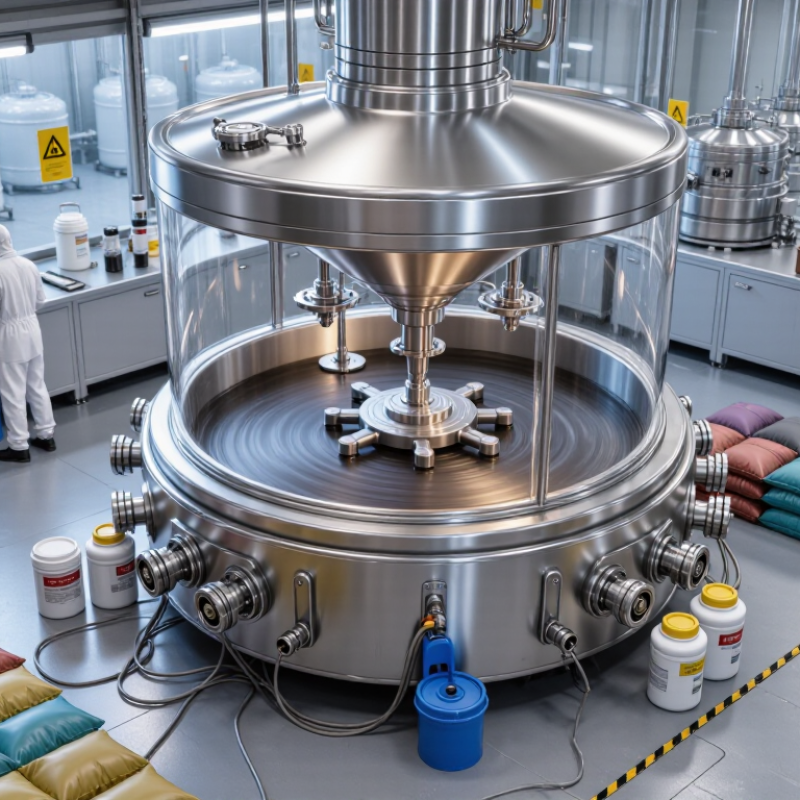
How to Choose a Battery Manufacturing Mixer?

Define Battery Slurry Requirements: 70–90% Solids and 1,000–30,000 mPa·s

How to Choose a Battery Manufacturing Mixer?

Battery slurry design starts with measurable requirements, not mixer brochures. Solids content commonly ranges from 70% to 90% by weight. At this level, powder loading leaves little free liquid for particle wetting. Binder distribution and conductive additive dispersion become critical. A small liquid shortage can create dry pockets, while excess solvent may reduce coating consistency. Record solids using the actual recipe and temperature.

Viscosity may range from 1,000 to 30,000 mPa·s, depending on shear rate. It is not a single fixed value. Request flow curves, not one laboratory reading. Test the slurry at mixing temperature and near production speed. A mixer needs enough torque for high-viscosity startup, plus controlled shear for agglomerate breakup. Excessive shear can raise temperature or damage sensitive structures. That risk deserves direct testing.

Look for vacuum capability when trapped air threatens coating quality. Scrapers help remove wall buildup in dense, sticky formulations. Jacketed vessels support temperature control during long mixing cycles. Ask for samples from the vessel bottom, middle, and surface. Uniformity should be measured, not assumed. A perfect number rarely exists. In practice, I would compare mixing time, torque, temperature rise, and particle dispersion across several batches. Scale-up can still surprise you, especially when vessel geometry changes. Leave room for adjustment.

Match Mixer Type to Chemistry: NMC, LFP, LCO, Silicon, and Solid-State Cells

Choosing a battery manufacturing mixer starts with chemistry, not catalog capacity. NMC cathode slurries need uniform conductive additive dispersion without damaging fragile agglomerates. A planetary mixer with controlled shear can support repeatable blending at moderate solids loading. LFP often demands stronger dispersion because carbon networks can resist wetting. A high-shear stage may help, but excessive energy can heat the batch. Monitor temperature, torque, vacuum pressure, and mixing time during every trial. Small changes matter.

LCO powders are sensitive to contamination and uneven binder distribution. Use sealed contact surfaces and verify cleaning between production campaigns. Silicon anodes create another challenge. Their volume changes can stress the binder network, so gentle wetting and controlled mixing may protect slurry stability. A twin-shaft system can improve bulk movement, although it may not disperse fine additives alone. Extra dispersion may be necessary. Solid-state cells require even stricter moisture control. Depending on the formulation, dry powder mixing or vacuum planetary mixing may be suitable. Keep exposure short and measure water content before processing. The first trial is rarely perfect. Not always. Compare torque curves, particle size, viscosity, and coating quality instead of relying on mixer speed alone. In practice, the best choice often comes from a small pilot batch, where operators can inspect wall buildup, dead zones, and powder feeding behavior.

Compare Mixing Mechanisms: Planetary, High-Shear, and Vacuum Mixing Performance

How to Choose a Battery Manufacturing Mixer?

Battery electrode slurry is not an ordinary paint. It combines active powder, conductive additives, binder, and solvent. The mixture must remain uniform during transfer and coating.

The International Energy Agency reported that global battery demand for electric vehicles reached about 750 GWh in 2023, rising approximately 40% year on year. This scale makes process stability more important than impressive laboratory speed.

Planetary and High-Shear Mixing

Planetary mixers suit high-viscosity slurries and provide strong bulk movement. They are useful when solids loading is high or binder distribution is difficult. High-shear mixers create intense local forces, helping break agglomerates and improve conductive additive dispersion. However, excessive shear can raise temperature and damage sensitive structures.

I would not trust a catalog viscosity limit alone. Measure torque, temperature, and dispersion at your real solids loading.

Vacuum Mixing and Process Control

Vacuum mixing removes entrained air during processing. That matters because visible bubbles can create coating gaps, pinholes, and unstable density.

The U.S. Department of Energy’s Battery Manufacturing R&D Roadmap highlights uniformity, contamination control, and moisture management as critical manufacturing priorities.

Vacuum does not replace proper drying or sealing. It also cannot correct poor powder wetting. In practice, a planetary mixer with controlled vacuum may offer better consistency, while high-shear equipment may reduce dispersion time. Yet the best choice depends on formulation, batch size, and cleaning needs. Small trials can mislead. Scale-up deserves repeated testing.

Specify Critical Controls: Temperature Below 40°C and Vacuum Near 50 mbar

How to Choose a Battery Manufacturing Mixer?

Specify Critical Controls: Temperature Below 40°C and Vacuum Near 50 mbar

A battery mixer should control heat as carefully as mixing speed. During production trials, I monitor the product temperature, jacket temperature, and room conditions separately. The target should remain below 40°C when the formulation requires low thermal exposure. A fast impeller can create local hot spots, even when the vessel sensor appears normal. Place the temperature probe near the active mixing zone. Verify it with a calibrated reference before testing.

Vacuum performance also deserves close attention. A working level near 50 mbar can help remove trapped air and reduce foaming. However, the mixer must reach this pressure steadily, not only display it briefly. Check the vacuum gauge, seals, filter, and pump response under a real material load. Powder may block the filter quickly. That detail is easy to miss.

The vessel should maintain stable pressure while the blades continue mixing. Sudden pressure changes may disturb the material surface or pull fine powder into the exhaust line. Use a controlled ramp rather than applying full vacuum immediately. I have seen operators focus on the final pressure and ignore the path taken to reach it. That was a costly oversight. Ask suppliers for recorded temperature and vacuum curves from comparable tests. Test results matter more than attractive specifications.

How to Choose a Battery Manufacturing Mixer? - Specify Critical Controls: Temperature Below 40°C and Vacuum Near 50 mbar

Selection Dimension Recommended Specification Why It Matters for Battery Slurry Verification Method
Product temperature Keep below 40°C; preferred operating band: 20–35°C Limits solvent evaporation, binder degradation risk, viscosity drift, and unwanted changes in electrode chemistry. Use a calibrated product-temperature probe and configure an automatic high-temperature alarm and stop.
Vacuum level Target approximately 50 mbar absolute; practical control band: 40–60 mbar absolute Helps remove entrained air and volatile residues while reducing bubble-related coating defects. Measure absolute pressure at or near the vessel; do not use gauge pressure as a substitute.
Mixer configuration Vacuum-capable planetary or double-planetary mixer with independently controlled agitator and disperser Combines bulk turnover with high-shear dispersion for conductive additives, binders, and active materials. Confirm torque capacity, mixing geometry, vacuum sealing, and cleanability using a representative slurry.
Shear capability Variable-speed drive with low-speed mixing and high-shear dispersion; typical laboratory evaluation range: 100–3,000 rpm Allows the process to disperse agglomerates without imposing unnecessary heat or mechanical stress. Compare particle dispersion, viscosity, temperature rise, and coating performance at several speeds.
Torque and load monitoring Continuous torque measurement with overload protection and batch trend recording Torque trends can indicate viscosity changes, incomplete wetting, overfilling, or agglomeration. Record torque against time, speed, temperature, and vacuum for every development batch.
Jacket temperature control Liquid-cooled or temperature-controlled jacket with a control range covering approximately 10–40°C Removes heat generated by viscous mixing and high-shear dispersion before the slurry exceeds the process limit. Perform a heat-load test at the intended solids content and maximum planned mixing speed.
Working fill volume Select a usable batch volume of approximately 30–70% of the vessel’s gross volume Provides enough headspace for vacuum operation while maintaining effective contact with the mixing elements. Test minimum, nominal, and maximum batch sizes for circulation, dispersion, and temperature control.
Vacuum system performance Stable pressure control from atmospheric pressure down to at least 50 mbar absolute, with solvent-compatible components Stable vacuum is needed for repeatable deaeration and to avoid excessive foaming or solvent loss. Conduct a leak test, pressure-hold test, and solvent-vapor compatibility review before production use.
Atmosphere management Sealed vessel with controlled inert-gas capability where moisture or oxygen sensitivity requires it Reduces exposure to ambient moisture and oxygen during charging, mixing, sampling, and discharge. Monitor vessel pressure, gas flow, dew point, and oxygen concentration according to the process risk assessment.
Viscosity range Size the drive for the measured formulation viscosity, including start-up torque and a suitable safety margin Battery slurries can become highly viscous as solids are added; inadequate torque causes poor turnover and unstable batches. Measure viscosity at relevant shear rates and temperatures, then compare with mixer torque curves.
Discharge and cleaning Bottom discharge or equivalent low-residue design with smooth, cleanable product-contact surfaces Minimizes material retention, cross-contamination, yield loss, and cleaning time between formulations. Check drainability, visual cleanliness, residue mass, and cleaning validation results.
Process data logging Log temperature, absolute pressure, speed, torque, mixing time, and alarm events Creates a traceable process record and supports comparison of slurry quality between batches. Review trend data against viscosity, solids distribution, deaeration, and coating results.

Engineering note: The values shown are practical starting specifications for equipment selection. Final limits should be confirmed through formulation trials, solvent compatibility checks, safety assessments, and the material supplier’s process requirements.

Evaluate Scale-Up Factors: 10–5,000 L Capacity, Energy Use, and Cleaning Time

How to Choose a Battery Manufacturing Mixer?

A 10–5,000 L mixer must be selected around process behavior, not vessel volume alone. The International Energy Agency reported global battery demand near 750 GWh in 2023. Manufacturing capacity exceeded 2.5 TWh. This pressure makes repeatable scale-up essential.

Start with energy intensity, measured in kWh per tonne of slurry. Motor horsepower alone can mislead. Compare torque, tip speed, vacuum load, solids concentration, and batch time. The U.S. Department of Energy’s Industrial Decarbonization Roadmap recommends process-level energy measurement. Record mixer energy separately from pumps and heating systems. Small losses become expensive at production scale.

Cleaning deserves equal attention. A vessel may hold 10 L in trials but reach 5,000 L in production. Larger surfaces, discharge valves, shafts, and seals can extend cleaning time. Ask for verified wash-cycle data, not optimistic estimates. Test residue removal after a realistic batch. Then measure water, solvent, energy, and labor consumption. Poor access creates hidden downtime.

Very practical.

Scale-up is rarely perfect. A formula that works at 10 L may need different shear or addition timing at 500 L. At 5,000 L, heat transfer and powder wetting can change again. Run intermediate trials and document every adjustment. ASTM E2500 guidance supports systematic verification of manufacturing equipment and processes. It does not replace process judgment. That part remains difficult.

FAQS

How should battery chemistry influence mixer selection?

Choose the mixer after understanding the slurry’s chemistry and material behavior. NMC needs uniform conductive additive dispersion with controlled shear. LFP may require stronger dispersion, but excess energy can heat the batch. The best choice is not always the largest mixer.

What mixing approach suits NMC cathode slurries?

A planetary mixer with controlled shear can support repeatable blending. Use moderate solids loading when possible. Avoid breaking fragile agglomerates through excessive mechanical force. Check viscosity and particle size after each trial.

Why can LFP require higher mixing energy?

Carbon networks in LFP formulations may resist wetting. A high-shear stage can improve dispersion. However, excessive shear may raise batch temperature. Watch torque and temperature together. Small changes matter.

What precautions are useful for LCO powder processing?

LCO powders can react badly to contamination and uneven binder distribution. Use sealed contact surfaces during processing. Clean carefully between production campaigns. Verify the cleaning result, rather than assuming the vessel is clean.

How does silicon affect anode slurry mixing?

Silicon changes volume during cycling and can stress the binder network. Gentle wetting and controlled mixing may improve slurry stability. A twin-shaft mixer can move bulk material effectively. It may still need extra dispersion for fine additives.

What special controls are needed for solid-state cell materials?

Solid-state formulations require strict moisture control. Dry powder mixing or vacuum planetary mixing may suit different formulations. Keep material exposure short. Measure water content before processing. The result may surprise you.

What temperature should operators target during mixing trials?

Keep the product below 40°C when the formulation requires low thermal exposure. Monitor product temperature, jacket temperature, and room conditions separately. Place the probe near the active mixing zone. A vessel sensor can miss local hot spots.

How should vacuum performance be evaluated?

A stable level near 50 mbar can help remove trapped air and reduce foaming. The system should reach this pressure steadily under a real material load. Inspect the gauge, seals, filter, and pump response. Powder can block the filter quickly. Easy to miss.

Which results matter more than mixer speed?

Compare torque curves, particle size, viscosity, and coating quality. Also inspect wall buildup, dead zones, and powder feeding behavior. Use a small pilot batch before selecting production equipment. The first trial is rarely perfect. Mine was not.

Conclusion

Choosing the right Battery Manufacturing Mixer begins with clearly defining the slurry requirements. Most battery formulations contain 70–90% solids and may have viscosities ranging from 1,000 to 30,000 mPa·s, making consistent dispersion and reliable torque essential. The mixer should also match the cell chemistry, whether producing NMC, LFP, LCO, silicon-based, or solid-state materials, as each may require different shear levels, residence times, and handling conditions.

When comparing equipment, consider planetary, high-shear, and vacuum mixing mechanisms, focusing on their ability to eliminate agglomerates and maintain uniformity. Critical controls include keeping the slurry temperature below 40°C and maintaining vacuum conditions near 50 mbar when needed to remove air and moisture. Finally, evaluate scale-up performance across capacities from 10 to 5,000 liters, along with energy consumption, batch consistency, maintenance needs, and cleaning time. A well-selected mixer should support stable quality, efficient production, and practical long-term operation.

Ethan

Ethan

Ethan is a seasoned marketing professional with a deep expertise in our company's innovative product line. With a passion for sharing knowledge and insights, he takes the lead in regularly updating our corporate blog, where he explores industry trends, product features, and effective marketing......