
Selecting a High Intensity Powder Mixer is less about chasing maximum speed and more about matching the machine to your material. A fine, cohesive powder behaves differently from free-flowing granules. Add fragile ingredients, liquid sprays, or heat-sensitive components, and the decision becomes more specific. No single mixer wins every time.
Bulk-solids specialist Richard Farnish’s work points to a useful selection principle: understand the material and process before choosing the equipment. Treat that as a paraphrase, not a direct quotation. In practice, ask suppliers how their mixer handles your actual batch size, target uniformity, and required cycle time. Request a trial with representative ingredients. Watch for dead zones, dust escape, temperature rise, and residue around the vessel wall. Small details matter.
Compare more than motor power. Review the mixing tool, vessel shape, discharge design, cleaning access, and options for adding liquids. Check whether the mixer can repeat the same result across both small and full batches. Ask for test data, but examine how it was produced. A polished sample may not represent a difficult production run. That deserves a second look. The best choice is usually the one that meets your quality targets reliably, fits your workflow, and can be maintained without avoidable downtime. Be candid about uncertainty: early trials may reveal that a preferred configuration needs adjustment.
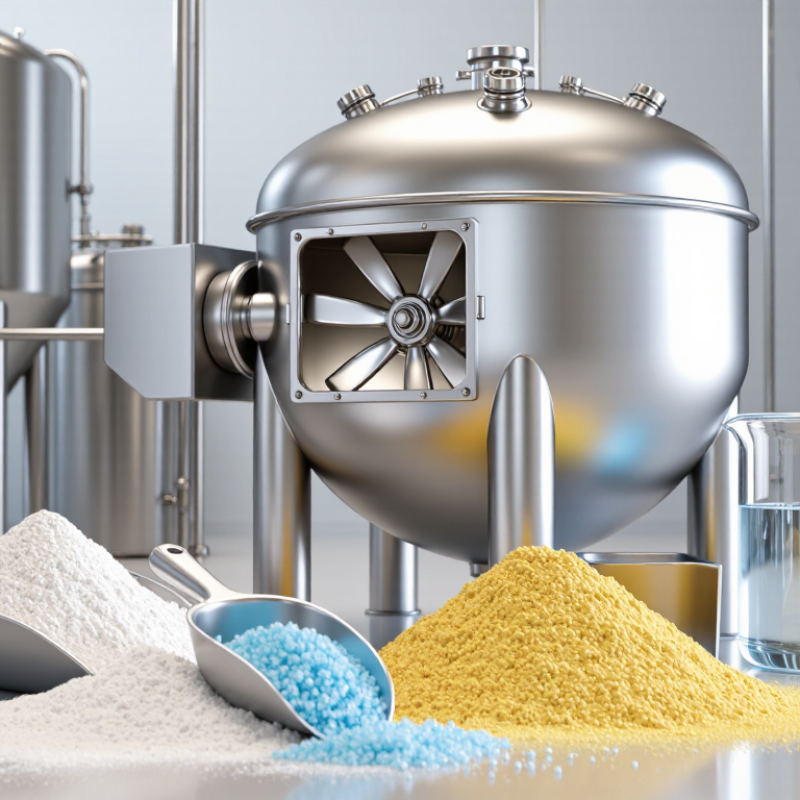
A high intensity powder mixer uses fast-moving blades to circulate solids through a mixing chamber. The blades lift, split, and recombine powder, while a rotating chopper can break soft lumps. Picture pale flour folding around darker mineral particles. The goal is even distribution, not simply maximum speed. Excessive shear can warm sensitive ingredients or damage fragile particles. Small details matter.
Mixing quality depends on fill level, blade speed, batch size, and material properties. A fine powder may cling to the vessel wall, while heavier granules settle quickly.
The International Energy Agency’s Tracking Industry 2023 report estimates that industry uses about 37% of global final energy. That figure is not mixer-specific, but it underlines why efficient mixing time and motor settings deserve attention.
A uniform-looking sample can still hide uneven distribution, so test samples from several locations before approving a batch.
Tips: Start with a small trial batch. Record speed, mixing time, and temperature, then check samples from the top, center, and bottom. Don’t assume one setting suits every powder. Real materials can be stubborn.
Choosing a high intensity powder mixer starts with the material, not the machine’s rated capacity. Record bulk density, particle size, moisture, and whether the powder clumps or flows freely. Note fragile particles, abrasive ingredients, and heat-sensitive materials; high-speed mixing can create unwanted breakage or temperature rise. Small details matter. A quick visual check is useful, but it cannot replace a representative material test.
Map the process conditions, too. Define batch size, required mixing time, target uniformity, and any liquid addition. Consider how the mixture will be discharged and how often the vessel needs cleaning. These details affect mixer geometry, tool speed, and whether temperature monitoring or a jacket is appropriate. A tidy specification sheet can still miss how a powder behaves after several minutes of mixing.
Tips: Test a representative sample at realistic fill levels. Check for segregation after discharge, not just uniformity inside the vessel. Ask how results are measured and repeated. If the powder changes with humidity or storage time, include those conditions in the test. Scaling up is not always a straight line; that part deserves a second look.
High-intensity powder mixers differ in how they move material. A ploughshare mixer lifts and folds powder through a horizontal vessel, while fast-moving choppers break soft lumps and disperse small additions. It can suit recipes that need both bulk blending and deagglomeration. A paddle mixer usually offers gentler movement, but may struggle with stubborn clumps. For fragile particles, excessive shear can create fines or heat.
Look beyond the mixer label. Check the vessel shape, impeller clearance, chopper position, and discharge design. Dead zones near the end plates can leave visible streaks in a test blend. Small details matter. A flush outlet helps reduce retained material, while accessible seals and smooth internal surfaces simplify cleaning. Ask for tests using your actual powder, including its particle size, moisture, and fill level. Measure blend uniformity and temperature, not just mixing time. Motor power is often overemphasized; a powerful drive cannot fix poor circulation. There is no perfect setup, and a lab test may not predict scale-up exactly. That uncertainty deserves attention.
How to read this chart: These are representative equipment layouts, not performance ratings. A chopper is a separate high-speed tool used in some configurations to break up agglomerates; its availability and the number of tools vary by mixer design. Choose a mixer based on the powder’s flow and cohesion, required blend uniformity, heat sensitivity, and cleaning needs.
A high intensity powder mixer should match the batch you actually run, not just the largest number on its nameplate. Compare usable working volume with your powder’s bulk density and required fill range. A light, fluffy blend may behave differently from a dense mineral mix. Ask for a trial using your hardest-to-disperse material. Watch for dead zones, excess heat, and powder left on the vessel walls. Capacity needs room to grow, but an oversized mixer can mix small batches poorly.
Installation details can decide whether a good machine works well in practice. Measure doorway width, ceiling height, discharge clearance, and space for maintenance access. Check floor loading, power supply, compressed air, and dust extraction before delivery. Operators need clear access to controls and discharge points. Confirm that guards, emergency stops, and interlocks suit the mixer’s actual setup. Document cleaning and isolation steps; a rushed procedure is not a safe one.
Tips: Ask for a layout drawing before ordering. Keep service panels reachable. Verify batch times with your own powder. Small details matter. One overlooked beam or cable route can delay installation, and that is easy to underestimate. Recheck the plan with operators and maintenance staff; their practical feedback may reveal a problem the equipment specification does not.
Maintenance costs begin with the mixer’s construction, but they do not end at the purchase price. Check how easily operators can inspect seals, bearings, blades, and discharge gates. If a guard blocks access, routine checks may take longer than expected. Ask how often wear parts need replacement under a duty cycle similar to yours, not only under ideal conditions.
Downtime is expensive. A mixer that is quick to clean and service can reduce labor hours and production interruptions. Look for clear maintenance instructions, accessible service points, and readily available replacement parts. During a site visit, notice whether powder collects around the outlet or behind internal fittings; residue in these areas can mean extra cleaning work. Small details matter.
Estimate total cost of ownership over several years. Include energy use, cleaning time, labor, consumables, spare parts, and the cost of planned and unplanned downtime. Compare machines using the same batch size and operating schedule. A spreadsheet can still mislead if its assumptions are too optimistic. For example, maintenance intervals may stretch on paper but shrink with abrasive powders or frequent changeovers. Ask operators to review the estimate, then leave room for uncertainty. That last step is easy to skip.
Fast-moving blades lift, split, and recombine powders inside the chamber. A rotating chopper can break soft lumps.
No. Excessive speed can heat sensitive ingredients or damage fragile particles. More speed is not always better.
Fill level, blade speed, batch size, and material properties all matter. Fine powders may cling to walls, while heavier granules settle.
Take samples from the top, center, and bottom, then compare them. One sample can miss hidden differences.
A ploughshare design lifts and folds powder, while choppers help disperse small additions. Paddle mixers move materials more gently but may leave stubborn clumps.
Check vessel shape, blade clearance, chopper position, and the outlet. Dead zones near end plates can leave streaks.
Usually not. Test a small batch and record speed, time, and temperature. Powders can be stubborn.
No. Larger equipment may circulate material differently, so test using the actual powder and fill level. I would not treat a lab result as a guarantee.
Choosing the right High Intensity Powder Mixer starts with understanding how it blends materials and how its mixing action suits the intended process. Consider the characteristics of the powders, including their flowability, particle size, and sensitivity to heat or shear. These requirements help determine which mixer type and design features can deliver consistent results while protecting material quality.
Next, compare practical factors such as batch capacity, available floor space, installation needs, and operator safety. Evaluate how easily the mixer can be cleaned, inspected, and maintained, since these needs affect uptime and long-term operating costs. Looking beyond the initial purchase price to energy use, labor, maintenance, and expected service life provides a more complete view of total cost of ownership. The best choice is the mixer that balances reliable performance with the specific demands of the process and facility.
