
China Top Twin Shaft Refractory Mixer Supplier?

Time:2026-10-22 Author:Madeline
0%

The question “China Top Twin Shaft Refractory Mixer Supplier?” requires more than a ranking claim. It requires measurable evidence. A reliable supplier should connect mixer design with refractory production realities, including moisture control, batch consistency, wear resistance, and service response.

The World Steel Association reports that global crude steel production reached about 1.89 billion tonnes in 2023. China contributed approximately 1.02 billion tonnes, creating significant demand for dependable refractory materials and processing equipment. The USGS Mineral Commodity Summaries 2024 also identifies China as a major producer of several industrial minerals used in refractory manufacturing. These figures explain the scale of China’s equipment market, but they do not automatically prove supplier quality.

A qualified Twin Shaft Refractory Mixer manufacturer should provide verifiable test records, material certificates, and clear performance parameters. Important details include mixing capacity, shaft speed, liner material, discharge time, motor power, and batch uniformity. Site references matter too. A supplier serving steel plants may understand abrasive magnesia mixes better than a general concrete equipment producer.

Look closely at the mixing chamber. Inspectors should examine weld quality, shaft sealing, paddle geometry, and replaceable wear plates. Ask for laboratory results using your actual recipe, not a convenient substitute.

No supplier is perfect.

Even strong manufacturers may have limitations in overseas installation, spare-part delivery, or customized control systems. This point deserves honest discussion. Buyers should compare factory experience, independent documentation, after-sales capability, and total operating cost before naming China’s top Twin Shaft Refractory Mixer supplier. Data can narrow the choice. Practical testing should make the final decision.
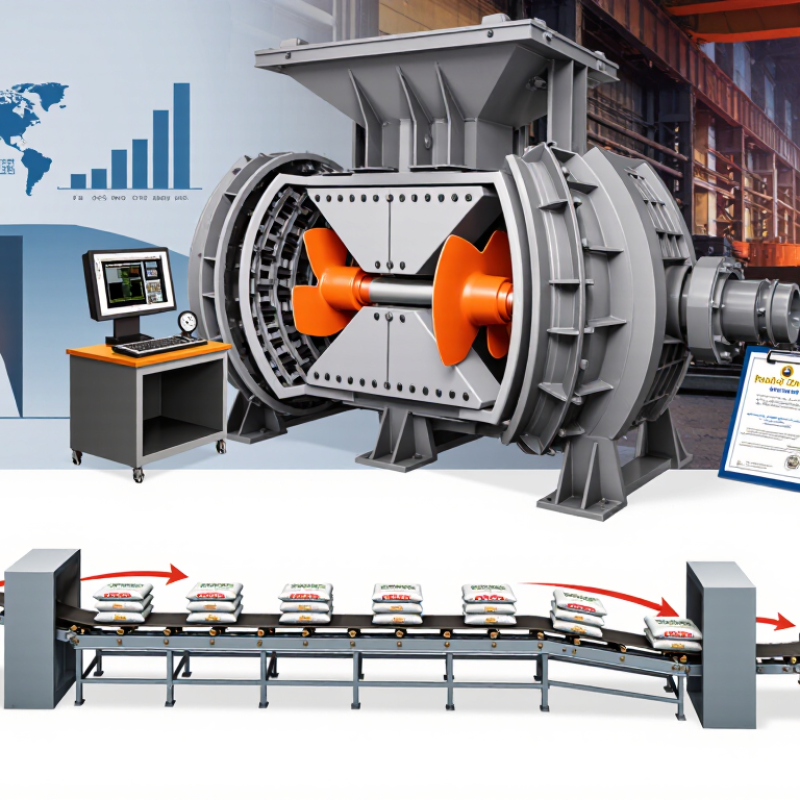
China Top Twin Shaft Refractory Mixer Supplier?

Twin Shaft Refractory Mixers: Definition and Core Functions

Twin Shaft Refractory Mixers: Definition and Core Functions

A twin shaft refractory mixer is an industrial machine with two parallel shafts rotating inside a horizontal mixing chamber. Each shaft carries overlapping paddles or blades. Their counter-rotating movement folds, lifts, and compresses refractory materials during mixing. The machine commonly processes alumina, magnesia, silica, castable aggregates, binders, and controlled amounts of water. It is built for dense and abrasive materials.

Its core function is uniform material distribution. The paddles break dry pockets and spread fine powders around larger grains. They also help coat aggregates with binder and moisture. This action improves castable consistency before placement or forming. Proper mixing can reduce weak areas, uneven setting, and material waste. However, water alone does not guarantee quality. Mixing time, batch size, shaft speed, and material temperature all affect the result.

In practical production, operators should watch motor current, discharge behavior, and liner wear. Unusual power changes may indicate overloading, excess moisture, or hardened residue. A short cycle may leave dry powder near the chamber corners. A long cycle can increase heat and wear without improving uniformity. That assumption is easy to miss. Regular inspection of paddles, seals, and bearings supports stable operation. The best equipment choice depends on formulation, output, abrasion level, and cleaning requirements, not capacity alone.

Mixer Design, Components, and Operating Principles

China Top Twin Shaft Refractory Mixer Supplier?

Mixer Design, Components, and Operating Principles

A twin shaft refractory mixer uses two parallel shafts with overlapping paddles. The shafts rotate in opposite directions, lifting and folding material through the mixing zone. This action distributes refractory aggregates, fine powders, binders, and controlled moisture more evenly than simple drum mixing.

The main components include a reinforced trough, two alloy steel shafts, wear-resistant paddles, bearings, seals, a geared drive, and a discharge gate. Replaceable liners protect the trough from abrasive particles. A covered inlet helps control dust, while a calibrated spray system introduces water or liquid binder. Small changes matter. Paddle clearance should support strong circulation without causing excessive wear.

Operation normally begins with dry aggregate loading. The mixer blends the dry fractions before liquid enters. This reduces powder clumps and improves binder contact. Operators then monitor motor load, mixing time, moisture, and discharge consistency. A practical inspection checks shaft seals, paddle bolts, liner thickness, and gate movement before each shift. Never trust timing alone. Material temperature, particle shape, and batch size can change the result. No mixer is perfect. A longer cycle may improve uniformity, but it can also increase heat, wear, and energy use. Test batches and recorded adjustments remain more reliable than fixed settings.

Key Performance Standards for Refractory Material Mixing

China Top Twin Shaft Refractory Mixer Supplier?

Key Performance Standards for Refractory Material Mixing

Choosing a twin shaft refractory mixer requires more than checking motor power. The mix must remain uniform under heavy aggregate loading, low moisture, and short processing cycles. World Steel Association data recorded about 1.89 billion tonnes of crude steel production in 2023. This scale explains why refractory plants demand repeatable batches and limited downtime. Grand View Research estimated the global refractory market at approximately USD 28 billion in 2023, increasing pressure on equipment consistency.

A practical performance review should measure mixing uniformity, discharge time, shaft torque, and liner wear. ISO 1927 guidance emphasizes controlled preparation and testing of monolithic refractory products. EN 1402 also supports systematic evaluation of unshaped refractories. A suitable mixer should handle dense aggregates without dead zones. Operators often inspect samples from the beginning, middle, and end of discharge. Visible color changes can reveal poor distribution, even when laboratory results appear acceptable.

Moisture control deserves careful attention. Too little water creates dry pockets. Too much water may reduce final strength and increase drying energy. The American Concrete Institute reports that water control strongly affects cement-based material performance, although refractory mixes behave differently. That difference matters. A 2% moisture adjustment can change torque, workability, and compaction behavior. Supplier claims should therefore be tested with actual alumina, magnesia, or silicon carbide recipes. A perfect blend is not always realistic. The specification may need revision after field trials.

How to Evaluate Chinese Twin Shaft Mixer Suppliers

How to Evaluate Chinese Twin Shaft Mixer Suppliers

Evaluating a Chinese twin shaft mixer supplier requires more than comparing prices. Start with the mixer’s working conditions, including batch weight, refractory recipe, moisture level, and cycle time. A suitable supplier should explain shaft torque, paddle speed, liner material, and discharge design clearly. Vague answers deserve caution.

Ask for detailed drawings, inspection records, material certificates, and a documented factory test procedure. During a video inspection, check weld quality, shaft alignment, gearbox protection, and access to wear parts. Request a trial with your actual refractory mix, not only a clean laboratory material. Observe mixing uniformity, discharge residue, noise, and temperature rise. Small details matter.

Service quality often decides the real cost. Confirm spare-part availability, installation guidance, response times, and technician experience with refractory applications. Speak with recent customers when possible, but remember that references may show ideal conditions only. The lowest quotation can hide thinner liners, limited testing, or expensive replacement parts. I have seen attractive specifications fail to explain maintenance hours. That gap should be questioned.

A reliable supplier should accept technical revisions and record every agreed detail. It should also disclose production limits instead of promising everything. Some evaluation methods remain imperfect. A successful factory test cannot fully predict dust, operator habits, or seasonal humidity at your plant. Keep a written risk list before signing.

How to Evaluate Chinese Twin Shaft Refractory Mixer Suppliers

The chart presents a practical 100-point procurement evaluation model for twin shaft refractory mixer suppliers. Technical performance and mixing consistency receive the highest weighting, followed by material durability, quality control, after-sales support, delivery capability, and documentation. Buyers can adjust the weighting according to project requirements.

Applications, Maintenance, and Supplier Selection Criteria

China Top Twin Shaft Refractory Mixer Supplier?

Twin shaft mixers serve refractory plants, foundries, and high-temperature lining projects. They blend castables, ramming masses, dry aggregates, and carefully measured binders. Counter-rotating shafts create strong shearing action, helping distribute powders around coarse grains. This matters when a batch contains alumina, magnesia, fibers, or other abrasive ingredients. Consistent mixing reduces dry pockets and uneven lining strength. Keep water addition controlled. Small errors can change workability.

Maintenance begins with inspection, not emergency repair. Operators should check shaft seals, gearbox oil, paddle wear, liners, and discharge gates regularly. Remove hardened material before it increases motor load. Measure vibration and temperature near bearings during production. Record these readings. Records reveal gradual problems that noise may hide. Still, maintenance plans are rarely perfect. A forgotten seal inspection can become an expensive shutdown.

When selecting a Chinese supplier, request a trial batch using your actual recipe. Review mixing time, residual material, power consumption, and discharge cleanliness. Ask for drawings, material specifications, load calculations, and documented quality checks. The supplier should explain shaft alignment, liner replacement, and spare-parts availability clearly. Factory inspection can reveal welding quality and assembly discipline. A polished catalog proves little. Reliable support, realistic delivery schedules, and transparent communication matter more. Also question performance claims that lack test conditions. The best choice may not be the cheapest quotation.

China Top Twin Shaft Refractory Mixer Supplier? - Applications, Maintenance, and Supplier Selection Criteria

Evaluation Dimension Typical Requirement or Data Practical Application Supplier Selection Focus
Suitable Materials Castable refractories, low-cement castables, dry-mix refractories, ramming materials, and other cohesive powder-based mixtures Production of furnace linings, kiln linings, ladle linings, burner blocks, and precast refractory components Confirm that the mixer is designed for abrasive, high-density, and low-moisture materials
Mixing Principle Two counter-rotating shafts fitted with paddles or mixing tools create intensive convective and shearing action Promotes rapid distribution of cement, aggregates, additives, and process water throughout the batch Review paddle arrangement, shaft design, mixing-zone geometry, and discharge configuration
Batch Capacity Common industrial designs are available in several batch sizes; effective output depends on bulk density, recipe, fill level, and cycle time Supports laboratory-scale trials, medium production lines, and continuous precast manufacturing operations Compare effective working volume rather than only the nominal vessel volume
Mixing Quality Uniformity is influenced by mixing time, moisture distribution, particle-size range, additive dosage, and loading sequence Helps achieve consistent workability, density, strength development, and installation performance Request test results based on the customer’s actual recipe instead of relying only on general specifications
Wear Protection Mixing tools, liners, and discharge areas require protection against abrasion from alumina, silica, magnesia, and other hard aggregates Extends service life and helps maintain the designed clearance between paddles and the mixing chamber Check liner material, replaceable-part design, wear thickness, and availability of spare components
Routine Maintenance Inspect paddles, liners, seals, bearings, couplings, gearbox oil, fasteners, and discharge gates at scheduled intervals Reduces unplanned downtime, material leakage, shaft damage, and contamination between batches Select equipment with accessible inspection ports, clear maintenance procedures, and replaceable wear parts
Cleaning and Cross-Contamination Control Residual material should be removed after production changes; dry cleaning or controlled wet cleaning should follow the process specification Protects recipe accuracy when switching between different refractory grades or binder systems Evaluate internal accessibility, discharge completeness, cleanout time, and compatibility with dust-control systems
Drive and Safety System The drive should provide sufficient starting torque; guards, emergency stops, interlocks, and overload protection are essential Improves operational safety and helps prevent damage caused by overloading or foreign objects Verify motor sizing, torque transmission, electrical standards, safety documentation, and control-panel compatibility
Dust and Environmental Control Powder handling may require sealed covers, extraction connections, and suitable dust-collection equipment Limits airborne refractory dust and improves working conditions around charging and discharge points Check sealing quality, extraction-flange dimensions, enclosure design, and compliance with applicable workplace requirements
Customization Capability Possible options include wear-resistant liners, special paddle profiles, automatic dosing, moisture control, weighing systems, and customized discharge layouts Allows integration into existing batching, conveying, molding, and quality-control systems Assess engineering drawings, interface details, testing procedures, and the supplier’s ability to manage complete-system integration
Quality Verification Important checks include no-load testing, loaded testing, discharge inspection, vibration monitoring, leakage checks, and trial-batch uniformity Confirms that the mixer performs reliably before shipment or installation Request inspection records, acceptance criteria, operating videos, and recipe-specific trial data where available
After-Sales Support Technical documentation should cover installation, lubrication, operating limits, troubleshooting, spare parts, and recommended inspection intervals Reduces training time and supports stable operation throughout the equipment lifecycle Compare response time, spare-parts availability, remote support, installation assistance, and warranty terms

FAQS

How does a twin shaft refractory mixer work?

Two parallel shafts rotate in opposite directions. Overlapping paddles lift, fold, and circulate the material. This creates stronger movement than simple drum mixing.

What materials can this mixer process?

It can mix refractory aggregates, fine powders, binders, and controlled moisture. Common recipes may include alumina, magnesia, or silicon carbide. Actual trials remain necessary.

Which components need the most attention?

Check the shafts, paddles, bearings, seals, liners, drive system, and discharge gate. Replaceable liners protect the trough from abrasive particles. Small clearances matter.

What is the recommended loading sequence?

Load dry aggregates first. Blend the dry fractions before adding water or liquid binder. This helps reduce powder clumps and improves binder contact.

How can operators judge mixing quality?

Inspect samples from the beginning, middle, and end of discharge. Look for color changes, dry pockets, or uneven texture. Laboratory results alone may not reveal every problem.

How does moisture affect refractory mixing?

Too little moisture can create dry pockets. Too much may lower final strength and increase drying energy. A small adjustment can change torque and workability.

What should operators inspect before each shift?

Inspect shaft seals, paddle bolts, liner thickness, and gate movement. Check for leaks or unusual looseness. A quick inspection prevents some avoidable failures.

Does a longer mixing cycle always improve the batch?

Not always. Longer cycles may improve uniformity, but they can increase heat, wear, and energy use. Timing alone is not enough.

Which performance measures are useful during equipment evaluation?

Review mixing uniformity, discharge time, shaft torque, moisture consistency, and liner wear. Dense aggregates should move without obvious dead zones. The specification may need revision after field trials.

Conclusion

A Twin Shaft Refractory Mixer is designed to blend refractory materials such as castables, dry powders, aggregates, binders, and additives into a consistent mixture. Its twin horizontal shafts use synchronized mixing arms or paddles to create strong shearing, folding, and counterflow movement, helping distribute ingredients evenly while reducing dead zones. Key design elements include the mixing chamber, wear-resistant liners, drive system, discharge gate, sealing structure, and control panel. Reliable performance depends on stable torque, appropriate mixing time, uniform moisture distribution, low residue, and durable construction suited to abrasive materials.

When evaluating Chinese suppliers, buyers should review equipment capacity, shaft speed, material compatibility, manufacturing quality, testing procedures, technical support, spare-parts availability, and customization capabilities. The mixer should match the required batch size, material formulation, production schedule, and site conditions. Regular inspection of liners, paddles, seals, bearings, and lubrication systems can extend service life and maintain mixing accuracy. A suitable supplier should provide clear specifications, practical maintenance guidance, responsive communication, and dependable after-sales support.

Madeline

Madeline

Madeline is a dedicated marketing professional with a wealth of expertise in our company's core offerings. With a keen understanding of the industry, she brings a unique perspective to her role, consistently delivering high-quality content that highlights the superior aspects of our products. As......