
China Top Planetary Rotor Sand Mixer Supplier?

Time:2026-10-02 Author:Isabella
0%

Choosing a China top Planetary Rotor Sand Mixer supplier requires more than comparing prices and catalog images. Foundries need stable mixing, reliable equipment, and technical support that continues after delivery. The right supplier should understand sand behavior, binder distribution, rotor speed, discharge timing, and daily production pressure. A Planetary Rotor Sand Mixer must create a consistent mixture without damaging sensitive additives or creating unnecessary maintenance work.

Experienced manufacturers usually provide clear specifications, including batch capacity, motor power, mixing cycle, rotor configuration, and material options. They should also explain how each model performs with different sand types and binder systems. Factory visits, production videos, inspection records, and customer references can strengthen confidence. Practical details matter. Look for reinforced liners, accessible maintenance doors, sealed bearings, and controls that operators can understand quickly. Small design choices often affect long-term operating costs.

Still, no supplier is perfect. Product claims may sound stronger than real workshop results. Ask for test mixing with your own materials whenever possible. Check temperature rise, discharge uniformity, noise, and cleaning time. A dependable Chinese supplier should welcome technical questions and admit where a model has limitations. That honesty is valuable. This guide explores supplier selection, manufacturing experience, quality control, customization, export service, and after-sales support. It aims to help buyers make a careful decision based on evidence, not attractive wording alone. Even a well-built mixer needs suitable installation, trained operators, and regular inspection to deliver its promised performance.
China Top Planetary Rotor Sand Mixer Supplier?

Planetary Rotor Sand Mixer: Definition and Working Principle

Planetary Rotor Sand Mixer: Definition and Working Principle

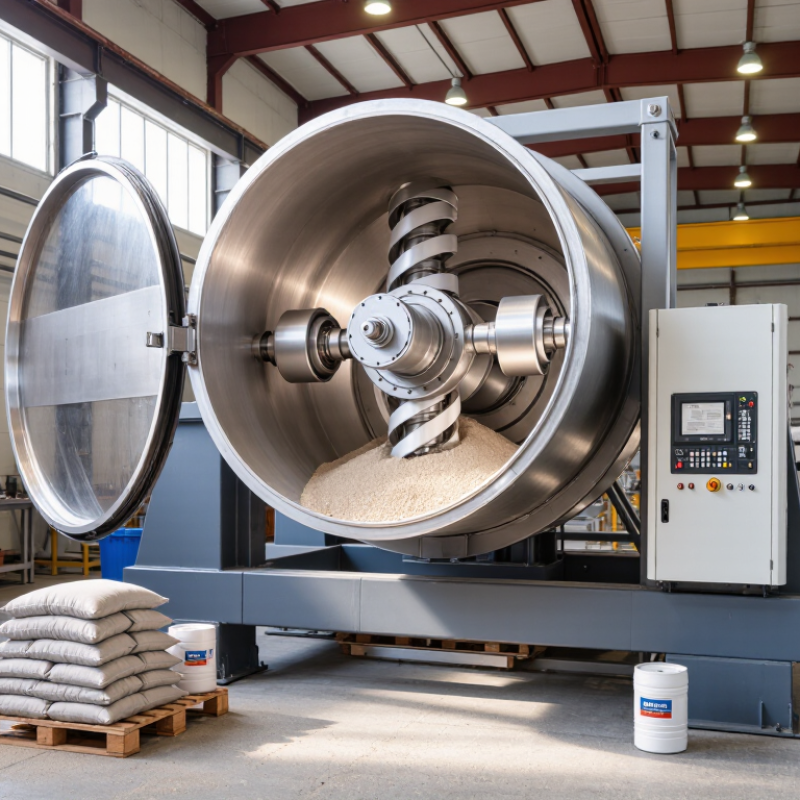
A planetary rotor sand mixer combines rotation with orbital movement inside a fixed mixing chamber. The rotor spins on its own axis while traveling around the vessel. This compound motion repeatedly lifts, folds, and shears sand, binder, water, and additives. Unlike a simple paddle, it reduces dead zones near the wall and bottom. The result is a more even coating on each sand grain. That matters in green sand molding, where small moisture changes can affect compactability, strength, and casting surface quality.

The American Foundry Society’s 2023 World Census reported global metalcasting output of roughly 110 million metric tons. Such production volumes make stable, repeatable sand preparation commercially important. In practice, many green-sand systems operate near 2.5% to 4% moisture, although the correct value depends on sand type and binder chemistry. The rotor should not be judged by speed alone. Torque, fill level, residence time, and discharge consistency reveal more about real performance. A 30-to-90-second cycle may be suitable for some lines, but laboratory trials remain necessary.

During operation, dry sand enters first. Water and additives follow through controlled dosing. The rotor breaks lumps, distributes liquid films, and creates frictional heat. Operators should inspect samples from several discharge points. One sample can mislead. Energy use also deserves attention; the U.S. Department of Energy identifies motors and process control as key industrial efficiency opportunities. However, higher shear is not automatically better. Excessive action may damage sand grains or waste power, so tuning should remain evidence-based and slightly skeptical.

Key Features of High-Performance Sand Mixing Equipment

Choosing a China top planetary rotor sand mixer supplier requires more than comparing prices. High-performance equipment should deliver uniform mixing, stable output, and practical maintenance access. A planetary rotor mixer combines powerful orbital movement with controlled rotor speed. This action helps distribute sand, binder, moisture, and additives through dense material.

Look for a reinforced mixing chamber, wear-resistant liners, and a sealed drive system. These features support demanding foundry work and reduce contamination risks. Variable-speed control is valuable when recipes change. A lower speed may protect fragile additives, while higher speed can shorten mixing cycles. Reliable discharge gates also matter. Material should leave the chamber cleanly, without large residue pockets. In real production, small residues can affect the next batch. This detail is easy to underestimate.

Tips: Ask for test data using your actual sand formulation. Check mixing uniformity, cycle time, power consumption, and discharge residue. Request service records and inspect replacement-part availability. Do not rely on catalog capacity alone. A machine rated for ten tons may perform differently with wet or compacted sand. Confirm rotor clearance, liner thickness, safety interlocks, and control-system access before purchase. Operator feedback is useful here. They notice vibration, awkward cleaning points, and delays that specifications may miss. No machine is perfect. Careful trial testing reveals weaknesses before installation.

How to Evaluate a Top Chinese Planetary Rotor Sand Mixer Supplier

China Top Planetary Rotor Sand Mixer Supplier?

How to Evaluate a Top Chinese Planetary Rotor Sand Mixer Supplier

Choosing a Chinese planetary rotor sand mixer supplier requires more than comparing catalog prices. Ask for a live mixing test using your actual sand, moisture level, and batch size. Observe whether the material moves evenly across the mixing chamber. Check discharge time, temperature rise, dust control, and power consumption. Small details often reveal engineering quality.

Request drawings, rotor speed ranges, liner materials, and motor specifications before placing an order. A reliable supplier should explain why each component suits your process. Inspect welds, access doors, seals, and wear plates during a factory visit or video inspection. Ask for production records and clear quality-control procedures. Traceable parts matter.

I once found that a polished demonstration used unusually dry sand. The result looked excellent, but it did not represent normal production. That mistake changed my evaluation method. Require samples from routine production, not only selected tests. Review installation guidance, spare-part availability, response times, and warranty limits. Speak with recent customers if possible. A supplier may offer strong equipment but weak after-sales support. That gap deserves careful attention.

How to Evaluate a Top Chinese Planetary Rotor Sand Mixer Supplier

A reliable evaluation should balance process performance, equipment durability, safety, compliance, and long-term service capability. The weighting below reflects practical buyer priorities for industrial sand-mixing applications and does not represent any specific company or brand.

Higher percentages indicate greater importance during supplier qualification. Buyers should verify each category through technical documents, factory audits, sample testing, references, and after-sales support records.

Manufacturing Quality, Customization, and Compliance Standards

China Top Planetary Rotor Sand Mixer Supplier?

A reliable supplier proves quality through repeatable manufacturing, not attractive brochures. Inspect the mixer body, rotor clearance, shaft seals, and discharge gate. Welds should be even, with no visible cracks or sharp unfinished edges. Ask for material certificates, dimensional records, and factory test reports. Experienced manufacturers can explain mixing time, batch capacity, motor load, and wear behavior. Small details matter. A poorly aligned rotor may increase vibration and maintenance costs. Factory acceptance testing should include empty running, loaded mixing, noise checks, and emergency-stop verification.

Tips: Request a sample batch test using your actual materials. Confirm moisture levels, additives, and target mixing uniformity. Keep test results in writing. Do not accept vague promises.

Customization should solve a defined production problem. Options may include rotor geometry, liner materials, feeding systems, discharge height, control panels, and dust-handling connections. However, every modification needs engineering review. An oversized motor may waste energy. An undersized drive may fail under heavy loads. This is where practical communication matters. Provide drawings, installation limits, cleaning requirements, and expected operating hours. Compliance also requires careful documentation. Check electrical safety, guarding, pressure-related risks, and local installation rules. Request manuals, wiring diagrams, inspection records, and conformity documents suited to the destination market. Standards can vary. A supplier may meet one requirement but miss another. That gap deserves honest review before payment or shipment.

China Top Planetary Rotor Sand Mixer Supplier? - Manufacturing Quality, Customization, and Compliance Standards

Evaluation Dimension Typical Technical Benchmark Quality and Manufacturing Evidence Customization Considerations Compliance and Verification
Mixer Capacity Common industrial configurations range from approximately 50 kg to more than 3,000 kg of sand per batch, depending on the model and material density. Verify usable working volume, rated batch weight, loading factor, and actual test results rather than relying only on nominal vessel volume. Capacity should be matched to mold size, hourly production target, sand formulation, and available installation space. Request a signed technical datasheet and factory acceptance test record for the specified batch size.
Mixing Performance The machine should provide uniform distribution of moisture, clay, binders, additives, and reclaimed sand within the validated mixing cycle. Evaluate sample consistency, mixing-time repeatability, discharge completeness, and the absence of significant dead zones. Rotor geometry, scraper arrangement, mixing tools, and spray-nozzle location can be adapted for different sand recipes. Use documented performance tests with the customer’s actual sand and binder system where possible.
Rotor and Mixing Tools Planetary rotors and high-wear mixing tools are typically designed to maintain intensive circulation and rapid homogenization. Check rotor balance, shaft runout, weld quality, tool attachment security, and replaceable wear-part design. Wear tools may be configured with different profiles, materials, hard-facing treatments, or clearances. Confirm material certificates, hardness data, spare-part drawings, and documented replacement procedures.
Wear Resistance High-wear zones commonly include the mixing pan, rotor arms, blades, scrapers, liners, and discharge areas. Review liner thickness, wear allowance, surface treatment, service-life records, and ease of inspection. Options may include replaceable liners, abrasion-resistant steel, cast wear parts, or hard-faced surfaces. Material traceability and incoming inspection records should be available for critical wear components.
Drive System Industrial units generally use geared drives with appropriately sized motors; variable-frequency drives can support controlled starting and speed adjustment. Verify motor power, torque margin, gearbox rating, coupling alignment, overload protection, and operating temperature. Electrical supply, motor efficiency class, control voltage, speed range, and enclosure rating can be specified for the installation site. Electrical components should be selected according to the destination market and declared voltage and frequency.
Moisture and Binder Dosing Water and liquid additives are normally introduced through controlled spray systems to improve dispersion and reduce localized wet spots. Check nozzle coverage, flow-meter accuracy, pump stability, calibration procedures, and line-cleaning access. The system may be configured for water, bentonite slurry, resin, hardener, or other process-specific liquids. Verify chemical compatibility of seals, hoses, valves, pumps, and control-system materials.
Vessel and Structural Fabrication The frame and mixing vessel should withstand cyclic loads, vibration, abrasive materials, and repeated thermal or moisture exposure. Inspect plate thickness, weld quality, dimensional tolerances, lifting points, surface preparation, and corrosion protection. Discharge height, access doors, inspection ports, foundations, platforms, and inlet connections can be adapted to the production line. Request general-arrangement drawings, load data, foundation requirements, and documented inspection checkpoints.
Automation and Data Control PLC-based control can manage recipes, mixing time, rotor speed, dosing sequences, alarms, and batch records. Evaluate control-panel build quality, alarm history, recipe protection, emergency-stop logic, and communication stability. Interfaces may support local language, remote diagnostics, production-management systems, weighing systems, and barcode or batch identification. Confirm software documentation, access levels, backup procedures, and cybersecurity requirements for networked equipment.
Safety Design Typical safeguards include access-door interlocks, emergency stops, overload protection, guarding, lockout points, and safe discharge access. Review the risk assessment, safety-circuit test records, guard construction, warning labels, and maintenance isolation procedures. Guarding, access platforms, interlocks, and emergency-stop locations should be adapted to the site layout and local regulations. Design reviews commonly reference ISO 12100 and, where applicable, IEC 60204-1 or EN 60204-1.
Dust and Environmental Control A sealed cover, extraction connection, dust-tight inspection points, and suitable housekeeping provisions help reduce airborne foundry dust. Check sealing design, extraction-port dimensions, leakage control, cleanout access, noise behavior, and dust-collection compatibility. Extraction layout, hood locations, covers, acoustic treatment, and plant ventilation interfaces can be customized. The complete installation should satisfy applicable workplace exposure, noise, dust, and environmental requirements in the destination country.
Quality Management A documented quality system should control design review, procurement, fabrication, assembly, testing, nonconformities, and corrective actions. Request quality-manual excerpts, inspection and test plans, calibration records, welding procedures, and final inspection reports. Project-specific inspection points, witness tests, documentation packages, and acceptance criteria can be included in the purchase contract. ISO 9001:2015 certification may be used as a quality-system reference, subject to certificate verification and scope review.
Testing and Acceptance Factory testing should cover no-load operation, loaded operation, rotation direction, discharge, controls, alarms, vibration, and emergency-stop functions. A formal factory acceptance test should record measured values, deviations, corrective actions, and customer approval status. Performance testing may use representative sand, target moisture, binder dosage, batch weight, and cycle time defined by the buyer. Use measurable acceptance criteria for capacity, mixing uniformity, cycle time, power consumption, and safety functions.
Documentation Package A complete package normally includes manuals, drawings, parts lists, wiring diagrams, lubrication schedules, and recommended maintenance intervals. Confirm document revision control, component identification, spare-part codes, troubleshooting instructions, and language requirements. Documentation can include customized layouts, interface drawings, recipe parameters, training materials, and commissioning checklists. Export documentation should align with customs, installation, electrical, safety, and local inspection requirements.
After-Sales Support Reliable support includes commissioning guidance, operator training, preventive-maintenance advice, spare-parts availability, and technical troubleshooting. Evaluate response procedures, service personnel qualifications, escalation routes, spare-parts lead times, and warranty terms. Support can be structured around remote assistance, on-site commissioning, scheduled inspections, and production-process optimization. Define service scope, warranty exclusions, response targets, training deliverables, and spare-parts obligations in the contract.

Applications, Maintenance, and Supplier Selection Criteria

China Top Planetary Rotor Sand Mixer Supplier?

Planetary rotor sand mixers serve foundries, refractory plants, and construction-material workshops. They blend sand, binders, water, and additives under controlled shear. In daily production, operators often judge performance by discharge uniformity, mixing time, and residue left inside the bowl. A good mixer should handle demanding batches without creating dry pockets. It should also support stable production during seasonal changes in material moisture.

Maintenance begins with inspection, not emergency repair. Check rotor clearance, scraper edges, seals, and gearbox oil at scheduled intervals. Remove hardened sand from corners before it damages moving parts. Listen for unusual vibration. Small changes can reveal bearing wear early. Keep a written maintenance record with operating hours, batch weights, and replaced components. This simple habit improves reliability, although many workshops neglect it during busy shifts.

Supplier selection requires more than comparing motor power and purchase price. Request test data using your actual sand, binder, and moisture range. Ask for drawings, wear-part specifications, safety documentation, and service response times. Review the supplier’s production experience, quality controls, inspection records, and export support. A factory visit can reveal machining accuracy and assembly discipline. Confirm whether technicians understand your process, not just the equipment catalogue. One overlooked detail is cleaning access. Difficult access increases labor costs. I would also question any supplier promising perfect results without a trial, because real materials rarely behave perfectly.

FAQS

How can I evaluate a planetary rotor sand mixer supplier?

Request a live test with your actual sand, moisture level, and batch size. Observe material movement inside the chamber. Check discharge time, temperature rise, dust control, and power use. Catalog prices are not enough.

What technical documents should I request?

Ask for drawings, rotor speed ranges, liner materials, and motor specifications. Request manuals, wiring diagrams, inspection records, and conformity documents. The supplier should explain each component clearly. Vague answers are warning signs.

Why should testing use routine production materials?

Selected samples may create unusually good results. Very dry sand can make mixing look better than normal. Test ordinary production material instead. Record moisture, additives, mixing time, and uniformity.

What should I inspect during a factory visit?

Inspect welds, access doors, shaft seals, rotor clearance, wear plates, and discharge gates. Look for cracks, sharp edges, and poor alignment. Check whether parts have traceable records. Small details matter.

What should factory acceptance testing include?

Testing should include empty running and loaded mixing. Check noise, vibration, motor load, discharge performance, and emergency-stop operation. Keep every result in writing. Do not accept promises alone.

How should I judge customization options?

Customization should solve a specific production problem. Possible changes include rotor geometry, liner materials, feeding systems, discharge height, and control panels. Provide drawings, cleaning needs, installation limits, and operating hours. More customization is not always better.

How can I avoid choosing the wrong motor size?

An oversized motor may waste energy. An undersized drive may fail under heavy loads. Ask for load calculations based on your materials and batch size. The answer may still need independent review.

How important is after-sales support?

Ask about installation guidance, spare parts, response times, and warranty limits. Speak with recent customers when possible. Strong equipment can still have weak support. That gap matters.

What compliance checks are necessary before shipment?

Check electrical safety, guarding, pressure-related risks, and local installation rules. Request suitable conformity documents for the destination market. Standards can differ between locations. One requirement may be missed. Review everything before payment or shipment.

Conclusion

A Planetary Rotor Sand Mixer is an advanced industrial machine designed to blend sand, binders, additives, and other molding materials into a consistent mixture. Its planetary mixing motion, combined with rotor rotation, promotes thorough dispersion, efficient material movement, and stable mixing performance. High-performance equipment should offer strong construction, adjustable mixing speed, reliable sealing, energy efficiency, easy cleaning, and precise control over mixing time and material quality.

When evaluating a top Chinese supplier, buyers should examine manufacturing capabilities, quality-control procedures, testing processes, customization support, and compliance with applicable safety and environmental standards. A dependable supplier should be able to provide suitable configurations for different production requirements, clear technical documentation, responsive service, and practical maintenance guidance. Common applications include foundry sand preparation, construction-material processing, and other industries requiring uniform bulk-material mixing. Supplier selection should consider equipment durability, spare-parts availability, operating costs, delivery capability, and long-term technical support.

Isabella

Isabella

Isabella is a dedicated marketing professional with a sharp focus on driving brand growth and engagement through strategic content creation. With an extensive background in digital marketing, she combines her passion for storytelling with her keen understanding of industry trends to deliver......