
Choosing High Intensity Mixer Blades in 2026 is not a contest of which design looks strongest. The right blade must suit the material, batch size, vessel, and required mixing action. A blade that disperses dry powder quickly may not handle a thick, heat-sensitive paste well. The difference shows up in practical details: uneven color, stubborn residue near the vessel wall, excess heat, or longer cleaning time.
Edward L. Paul, co-editor of Handbook of Industrial Mixing, is a respected authority on process mixing. His published work supports a useful principle: mixer performance depends on matching equipment to the process. That is a paraphrase, not a direct quotation. A verifiable interview or source is needed before assigning him exact quoted words.
Small details matter. Blade diameter, edge profile, material, and rotational speed can all affect flow and wear. So can the batch’s changing behavior as ingredients combine. A polished blade may resist buildup, yet its finish alone cannot guarantee better results. Real trials tell more.
This guide compares blade designs by application, construction, durability, and maintenance needs. It also considers what buyers should ask manufacturers, including wear data and compatibility with existing equipment. No single blade wins every time. That is the part many product comparisons miss. A careful choice starts with the actual process, not a broad promise on a catalog page.
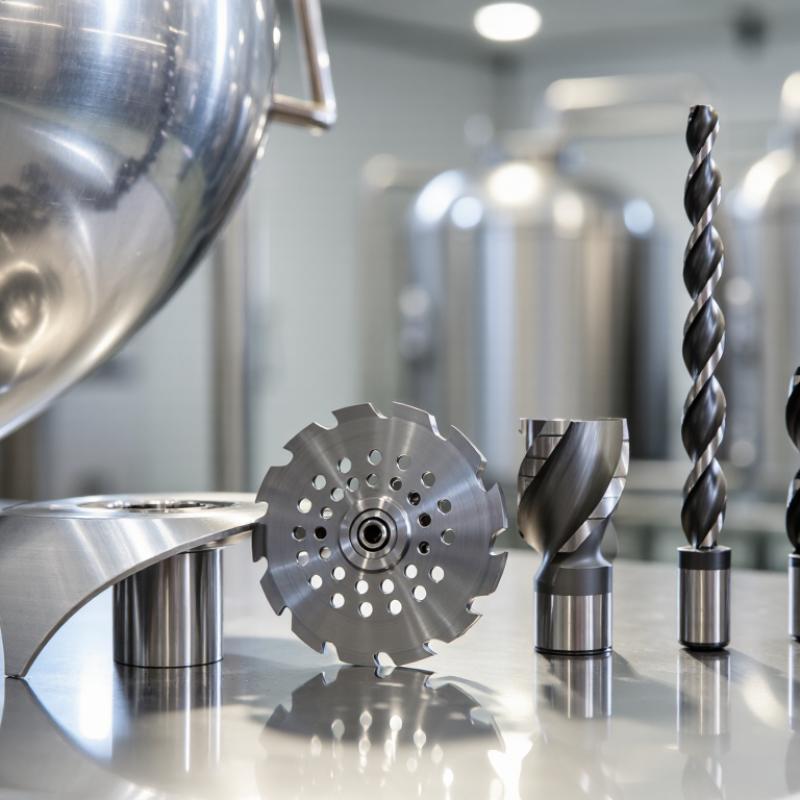
High-intensity mixer blades are designed to move material quickly and create strong shear. Unlike a simple paddle, a rotor-and-stator head draws liquid or soft solids into a narrow gap. The rotating blades accelerate the material, while the stationary openings redirect it. This repeated action can break apart lumps, disperse powders, and reduce droplets in an emulsion. The exact result depends on blade geometry, speed, batch size, and ingredients.
You can often see the process in a small test batch. A powder may first float on the surface, then disappear as circulation pulls it downward. Watch for dead zones near the vessel wall, excessive foam, or rising product temperature. These signs may mean the blade is moving material poorly or adding too much energy. More speed is not always better. A high-shear head can improve dispersion, but it cannot fix every formulation problem. And it may damage fragile particles. Choosing a blade means matching its design to the material and desired texture, then checking the result under real operating conditions. One detail is easy to miss: viscosity can change during mixing, so a setup that works at the start may behave differently later.
High-intensity mixer blades must move material quickly without creating excessive heat or dead zones. Their shape matters as much as motor speed. A pitched blade can lift and fold a batch, while a more aggressive profile may shear dense clumps. Small details matter. Blade angle, spacing, and clearance from the vessel wall affect circulation and product consistency.
Stainless steel is common because it resists corrosion and tolerates repeated cleaning. Hardened alloys can help where abrasive powders cause rapid wear, though greater hardness does not guarantee longer service life in every process. Coatings may reduce sticking, but damaged coatings can become a maintenance concern. Material choice should match the ingredients, cleaning routine, and expected operating temperature. There is no universal winner.
Look closely at blade edges, welds, and attachment points. Rounded edges may reduce product damage, while sharper profiles can improve breakup but increase wear or heat. During trials, track batch temperature, mixing time, and visible residue on the vessel wall. Compare results at the same fill level and speed. A small test batch can reveal problems that a specification sheet misses. It is tempting to select the most aggressive design, but that choice may create more friction than the process needs. Recheck performance as blades wear. A slight loss of edge can change the blend.
Comparing high-intensity mixer blades starts with the material, not the catalog rating. A thin, fast rotor can break agglomerates in a pigment slurry, yet may pull air into a shallow batch. That matters. For a thick paste, a broader blade may move material more reliably, even when its tip speed is lower. Watch the vessel walls and bottom for unmixed bands.
Performance should be tested under matched conditions: batch volume, temperature, ingredient order, and mixing time. Record power draw, temperature rise, and the time needed to reach a consistent sample. Dry pockets after five minutes may call for a position or feed-rate change, not just higher speed. Check samples from the top, center, and bottom. Small details matter.
Compare results across repeated runs, since one smooth batch can hide inconsistent dispersion. Note whether the blade heats sensitive ingredients, traps foam, or needs frequent cleaning. These trade-offs depend on formulation and vessel geometry; a ranking without both can mislead. I would not overread one test.
| Blade or rotor type | Relative shear | Circulation and flow | Best suited applications | Key advantages | Main limitations |
|---|---|---|---|---|---|
| Rotor–stator head | Very high, concentrated in the rotor–stator gap | Strong local draw-through; bulk circulation depends on the vessel and head position | Emulsions, fine dispersions, and breaking down agglomerates | Creates intense localized shear and can produce a fine, uniform dispersion | Can add heat; may require multiple passes or recirculation for large batches |
| Sawtooth dissolver blade | High near the blade edge | Good tank turnover when correctly sized and positioned | Wetting and dispersing powders, pigments, and fillers in liquid | Versatile, relatively simple, and effective for many medium- to low-viscosity batches | Less effective than a rotor–stator for very fine emulsification; can entrain air if poorly operated |
| High-shear toothed disc | High, with strong local turbulence around the teeth | Moderate to good, depending on disc diameter and vessel geometry | Pigment dispersion, powder incorporation, and breaking soft agglomerates | Combines useful batch circulation with strong local mixing action | May not achieve the same droplet-size reduction as a purpose-built rotor–stator head |
| Axial-flow hydrofoil | Low to moderate | High axial pumping and efficient whole-vessel circulation | Blending, suspension, and heat or mass transfer in lower-viscosity liquids | Moves substantial liquid with comparatively efficient mixing and less localized shear | Not intended for intensive particle-size reduction or fine emulsification |
| Axial-flow pitched-blade turbine | Low to moderate | Good axial circulation with some radial flow | General blending, solids suspension, and liquid–liquid mixing | A flexible choice when bulk turnover matters more than intense local shear | Usually less effective for difficult deagglomeration and fine dispersion |
| Radial-flow flat-blade turbine | Moderate to high near the blade tips | Strong radial discharge; vessel baffles help limit bulk swirling | Gas dispersion, liquid–liquid dispersion, and processes needing strong radial flow | Produces strong local turbulence and effective radial mixing | Can require more power than an axial-flow impeller for comparable bulk circulation |
Comparison note: “High intensity” depends on the material, blade diameter, operating speed, vessel geometry, and batch size. Relative shear and circulation are qualitative comparisons; validate blade selection with process trials and the mixer supplier’s operating guidance.
For high-intensity mixing, the best blade depends on the material and the result you need. A saw-tooth disc can disperse dry powders or break down pigment clumps in a low-viscosity liquid. For thicker blends, a pitched blade may move material through the vessel more effectively. Very viscous products often need an anchor-style blade with close wall clearance. It can reduce stagnant zones, though it may not create enough shear for fine emulsions. Match the blade to the job.
Consider viscosity, abrasiveness, batch size, and temperature before choosing. A rotor-stator head, with its narrow working gap, can produce fine dispersions, but it may add heat and require careful cleaning. For abrasive solids, check blade material and wear resistance; worn edges can change mixing performance.
Also confirm vessel clearance and operating speed, rather than relying on motor power alone. Watch the flow. A blade that performs well in a small trial may behave differently in a full tank. That part is easy to underestimate. Run a representative test and inspect for clumps, settling, excess heat, or material left on the vessel wall.
High-intensity mixer blades face repeated impact, abrasion, and heat, so inspect them at planned intervals and after unusual vibration or noise. Isolate the mixer and confirm it cannot start before opening the vessel. Use suitable lighting to check blade edges, welds, hubs, and fasteners for cracks, bends, pitting, or looseness. Small signs matter. A smooth-looking blade can still have damage near its mounting point.
Clean residue with tools and methods approved for the blade material; trapped product can hide wear and encourage corrosion. Check blade clearance against the vessel and compare measurements with the equipment specifications. Record changes between inspections, including unusual deposits or uneven wear. A quick visual check can miss subtle distortion, so measurements and vibration trends provide useful context. They are clues, not proof.
Replace a blade if it is cracked, permanently bent, badly eroded, or outside specified tolerances. Do not guess. Confirm the replacement’s dimensions, material, orientation, and fastening requirements against the equipment documentation. After installation, verify fastener torque using the specified value, then check clearance and rotation before returning the mixer to service. If wear keeps returning in the same spot, review the process conditions too; replacing the blade alone may not solve the cause.
A rotor-and-stator head pulls material through a narrow gap. This creates strong shear and can break up lumps or disperse powders. Not magic.
A saw-tooth disc can help break down powder clumps in low-viscosity liquids. Watch whether floating powder gets pulled into circulation.
A pitched blade can move thicker material through the vessel. Very viscous products may need an anchor-style blade with close wall clearance.
No. It may add heat or damage fragile particles. More speed isn't always better.
Look for clumps, foam, rising temperature, settling, or material stuck near the vessel wall. Viscosity can change as mixing continues.
Flow patterns can change with batch size and vessel geometry. Test under representative conditions; a small trial may not tell the whole story.
With the mixer isolated, inspect edges, welds, hubs, and fasteners under good lighting. Look for cracks, bends, pitting, or looseness. Appearance alone can mislead.
Replace it if it is cracked, permanently bent, badly eroded, or outside specified tolerances. Confirm dimensions and orientation before installation, then check clearance and rotation. A recurring wear spot may point to a process issue.
High Intensity Mixer Blades are designed to move, disperse, and blend materials efficiently in demanding mixing processes. Their performance depends on factors such as blade shape, size, material, and operating conditions. Different designs create distinct flow patterns and levels of shear, so comparing blades requires considering the application, the material’s viscosity and characteristics, and the desired mixing result—not just speed or power.
Choosing the right blade means matching its design and construction to the process, including the material being handled and the required consistency. Regular inspection can help identify wear, damage, or buildup that may affect performance. Cleaning and maintenance should follow suitable procedures for the equipment and application, and blades should be replaced when their condition compromises safe, reliable, or consistent mixing.
